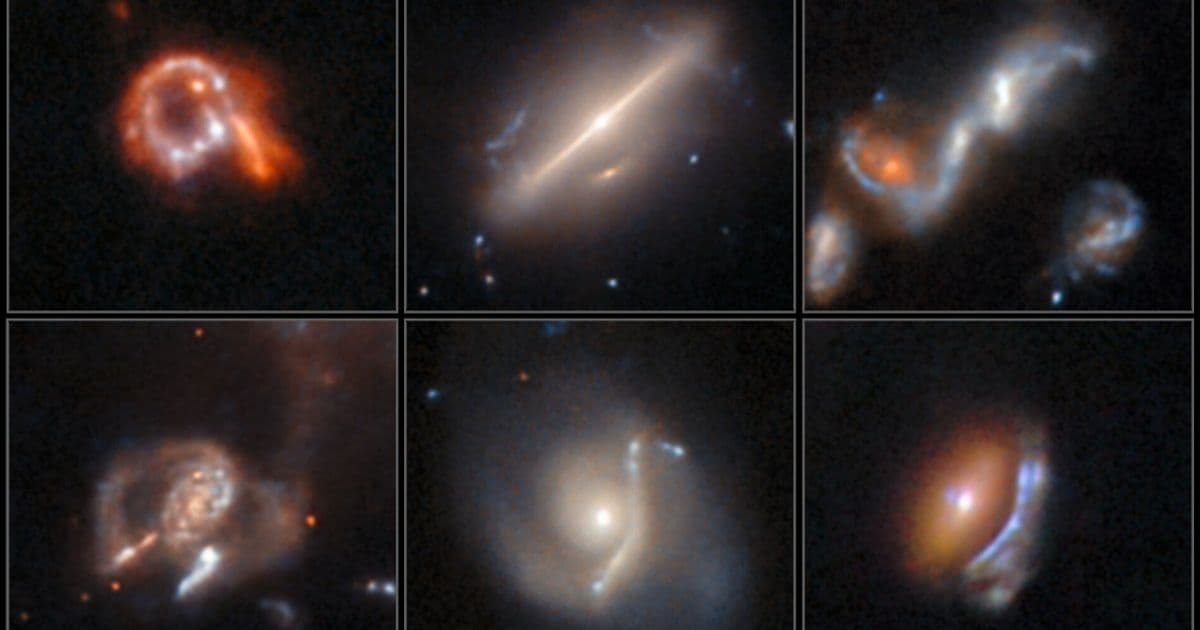
ESA astronomers used AnomalyMatch AI to scan Hubble Legacy Archive in 2.5 days, discovering unusual celestial objects including jellyfish galaxies.
Astronomers have discovered a treasure trove of unusual cosmic objects by turning artificial intelligence loose on one of astronomy's largest image archives. The European Space Agency announced that its AnomalyMatch AI model scanned through 100 million image cutouts from the Hubble Space Telescope's Legacy Archive, identifying approximately 1,400 "anomalous objects" in just 2.5 days of processing time.
The AI's findings include rare phenomena like jellyfish galaxies - spiral galaxies with long tendrils of gas and stars trailing behind them as they move through galaxy clusters. These objects are particularly interesting to astronomers because they provide insights into how galaxies evolve and interact with their environments.
The scale of this automated search represents a significant leap in astronomical data processing. Manually examining 100 million images would take human astronomers years, if not decades. The AnomalyMatch model, trained to recognize patterns and deviations from typical astronomical objects, completed the task in less than three days, flagging objects that warrant closer human examination.
This approach demonstrates how AI is transforming astronomical research, allowing scientists to efficiently sift through massive datasets to find rare and scientifically valuable objects. The Hubble Legacy Archive contains decades of observations, and as telescope technology advances, the volume of astronomical data continues to grow exponentially.
ESA plans to make the full dataset of anomalous objects available to the astronomical community, enabling researchers worldwide to study these unusual findings. The success of this automated search suggests similar AI approaches could be applied to other astronomical surveys and archives, potentially accelerating discoveries across the field.
The project highlights the growing partnership between artificial intelligence and traditional astronomical methods, where AI handles the heavy lifting of data processing while human experts focus on interpretation and deeper analysis of the most promising findings.
Comments
Please log in or register to join the discussion