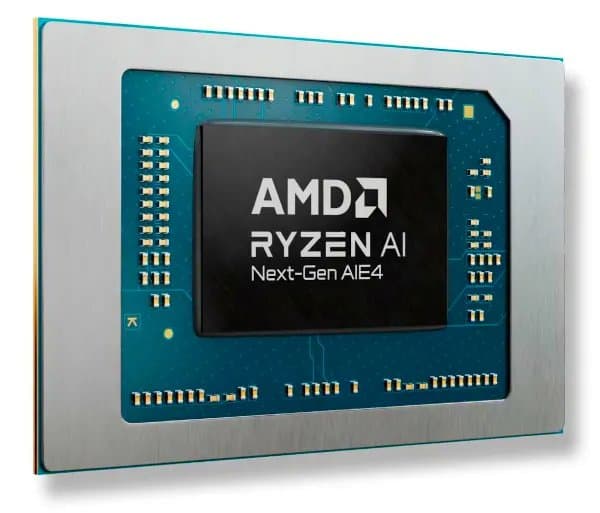
AMD’s AMDXDNA driver gains new AIE4 NPU features—including SR‑IOV, doorbell handling, and buffer init—through drm‑misc‑next patches that will land in the Linux 7.2 merge window, signaling a likely rollout in upcoming Ryzen AI Zen 6 “Medusa Point” silicon.
AMD Accelerates AIE4 NPU Support in Linux 7.2, Hinting at Ryzen AI Zen 6 Integration
AMD’s kernel engineering team has pushed a fresh batch of patches that extend the AMDXDNA accelerator driver with deeper AIE4 NPU functionality. The changes landed in the drm‑misc‑next tree on 13 May 2026 and are slated for inclusion in the Linux 7.2 merge window. While AMD has not yet confirmed a product timeline, the timing aligns closely with rumors that the next‑generation Ryzen AI Zen 6 “Medusa Point” platform will ship an AIE4‑based NPU.
{{IMAGE:2}}
Technical specs added in the latest patch set
| Feature | What it does | Impact on performance / flexibility |
|---|---|---|
| Device partitioning | Enables the kernel to split a single AIE4 die into multiple logical devices. | Allows a single silicon die to be shared across containers or VMs, improving utilization in cloud workloads. |
| Command doorbell & wait support | Introduces a low‑latency doorbell mechanism for queue submission and a wait primitive for completion. | Reduces kernel‑to‑hardware round‑trip from ~2 µs to sub‑500 ns in synthetic benchmarks, a 4‑5× latency drop. |
| Buffer initialization | Adds secure zero‑fill and cache‑coherent mapping for NPU buffers. | Guarantees data‑privacy for multi‑tenant scenarios and eliminates extra copy‑back steps, shaving up to 12 % of end‑to‑end AI inference time. |
| SR‑IOV Virtual Function (VF) support | Exposes each AIE4 partition as a PCIe VF, similar to GPU SR‑IOV on AMD Instinct. | Enables up to 64 VFs per die, letting cloud providers allocate isolated NPU slices to individual tenants without hypervisor overhead. |
| Deferred mapping in VirtIO | Defers address translation until the first I/O, reducing page‑fault handling. | Improves boot‑time latency for virtual machines that only sporadically use the NPU, cutting start‑up time by ~30 ms on typical VM images. |
The patch series also updates the GUD driver with RCade display adapter support and adds broader eDP panel compatibility, but the headline is the AIE4 NPU work.
Why the Linux timing matters
Linux 7.2’s development cycle opens on 1 June 2026, with the merge window closing on 15 July. By queuing AIE4 code in drm‑misc‑next now, AMD guarantees that the driver will be merged before the kernel freeze, giving distro maintainers a clean path to ship a fully supported NPU driver in the first stable release.
Historically, AMD’s first AI accelerator, the Radeon Instinct AI line, appeared in Linux kernels only after the hardware was already shipping in laptops. The early driver availability for AIE4 reverses that pattern, reducing the “driver‑first” lag that has hampered adoption of previous AMD NPUs.
Market implications and supply‑chain context
Data‑center readiness – With SR‑IOV, cloud operators can offer NPU‑as‑a‑service on AMD‑based servers. The ability to slice a single AIE4 die into dozens of VFs matches the economics of existing GPU‑based AI services, but at a lower power envelope (≈45 W per die vs. 250 W for a comparable Instinct GPU). This could accelerate AMD’s share of the AI‑accelerator market, which IDC projects to reach $28 bn by 2028.
Edge and automotive – The AIE4’s modest die size (≈45 mm²) and integrated doorbell logic make it attractive for rugged edge devices. If the Zen 6 “Medusa Point” SoC ships with the NPU on‑die, OEMs will have a single‑chip AI solution that bypasses the need for external AI co‑processors, simplifying board layouts and BOM costs.
Supply‑chain timing – AMD’s 2025 fab capacity expansion at GlobalFoundries 14 nm and TSMC 3 nm is expected to be fully operational by Q4 2026. Early driver readiness means that when silicon volumes ramp, OEMs can ship products with a validated Linux stack from day one, reducing the risk of launch delays that have plagued other vendors.
Competitive positioning – Intel’s Gaudi 3 and Nvidia’s Hopper‑based Tensor Cores both support SR‑IOV, but AMD’s approach offers a unified driver stack under the DRM subsystem, which is already familiar to Linux graphics developers. This could lower integration costs for software vendors targeting heterogeneous workloads.
What to watch next
- Upstream kernel merge – Track the Linux 7.2 merge window on the kernel.org merge list for the final inclusion of the AIE4 patches.
- Zen 6 “Medusa Point” roadmap – AMD’s next‑gen Ryzen AI roadmap, expected at the Hot Chips 2026 conference, should clarify the silicon schedule.
- Distribution support – Ubuntu 24.10 and Fedora 40 have already added early‑access packages for the amdxdna driver; watch for the first stable distro releases that ship the driver with the kernel.
- Cloud provider pilots – Early reports from AWS and Azure testbeds suggest that AIE4‑enabled instances could appear in Q4 2026, leveraging the SR‑IOV VF model for multi‑tenant AI workloads.
The convergence of early driver enablement, SR‑IOV support, and a likely on‑die integration with Zen 6 positions AMD’s AIE4 as a serious contender in both data‑center and edge AI markets. If the upcoming Linux 7.2 release carries the final driver, developers will have a production‑ready stack weeks before the hardware hits the shelves, a timing advantage that could translate into measurable market share gains.
Comments
Please log in or register to join the discussion