AMD's ROCm TheRock 7.11 experimental release brings latest GPU compute components while Ubuntu advances toward native ROCm package support in 26.04 LTS.
AMD has released ROCm TheRock 7.11, the latest experimental build in their GPU compute stack development, while Ubuntu makes significant progress toward shipping ROCm packages natively in their upcoming 26.04 LTS release. These developments represent important steps for AMD's open-source GPU computing ecosystem and Linux users looking to leverage AMD hardware for high-performance computing tasks.
ROCm TheRock 7.11: Experimental Build with Latest Components
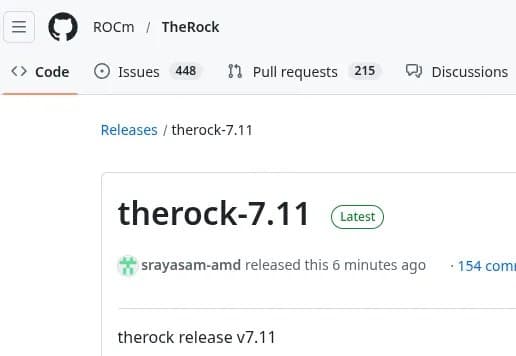
ROCm TheRock 7.11 is now available as a technology preview release, continuing AMD's shift toward TheRock build system that began with ROCm 7.9 last October. This experimental release ships the latest ROCm components paired with TheRock for building AMD GPU compute software packages.
The release follows the pattern established with ROCm 7.10 in December, maintaining the technology preview designation while incorporating ongoing development work. While no concise changelog has been published, the GitHub repository shows significant Git activity focused on improving hardware support, implementing new optimizations, and adding features across the ROCm stack.
For developers and enthusiasts wanting to work with the leading-edge ROCm/HIP stack, the 7.11 release is available on GitHub. This experimental nature means it's primarily targeted at users who need the latest capabilities and are comfortable working with pre-release software, as it represents the ongoing development toward what will presumably be ROCm 8.0 later this year.
Ubuntu's Native ROCm Package Integration Progress
In parallel with the ROCm release, Canonical is making concrete progress on integrating AMD ROCm packages directly into the Ubuntu archive. This initiative aims to provide Ubuntu users with an improved experience for using AMD ROCm without requiring additional third-party repositories.
A Canonical engineer, Talha Can Havadar, has applied for Ubuntu Developer Membership to gain the necessary upload rights for the new ROCm packages. This application represents a formality given Havadar's position at Canonical and the strategic importance of ROCm support for Ubuntu 26.04 LTS, scheduled for release in April.
The comprehensive package list being prepared for Ubuntu includes:
- Core components: amdsmi, rocm-llvm, rocm, rocm-cmake, rocm-smi-lib, pkg-rocm-tools
- Runtime and libraries: rocruntime, hipify, rocm-core, hipblas-common, rocalution
- AMD-specific tools: rocm-hipamd, rocminfo, rocrand, rocdbgapi, rccl
- Compute libraries: composable-kernel, hiprand, rocprim, roctracer, rocblas, rocfft, rocsparse, rocthrust, hipcub, hipfft, hipsparse, rocsolver, rocwmma, hipblas, hipsolver, hipblaslt, hipsparselt
- Machine learning: MIOpen
This extensive package list demonstrates the comprehensive nature of ROCm support being integrated into Ubuntu. The packages cover everything from basic GPU monitoring and control to advanced machine learning and high-performance computing libraries.
Implications for AMD GPU Computing on Linux
These developments signal AMD's continued commitment to improving their ROCm ecosystem and making it more accessible to Linux users. The experimental TheRock releases provide developers with early access to new features and optimizations, while Ubuntu's native package integration will significantly lower the barrier to entry for users wanting to leverage AMD GPUs for compute workloads.
For Ubuntu 26.04 LTS users, the native ROCm packages will eliminate the need to add third-party repositories or build from source, providing a more stable and integrated experience. This is particularly important for enterprise and production environments where package management and system stability are critical concerns.
The combination of experimental releases for cutting-edge development and stable package integration for production use creates a comprehensive ecosystem that should help AMD compete more effectively in the GPU computing space, particularly against NVIDIA's CUDA platform.
The progress on both fronts - experimental development and production integration - suggests AMD is taking a dual-track approach to ROCm development, ensuring both rapid innovation and broad accessibility for their GPU computing platform.
Comments
Please log in or register to join the discussion