
Federal race classification systems, designed decades ago, are buckling under demographic shifts and technological demands, forcing businesses and policymakers to confront whether current categories still serve their intended purpose.
The categories America uses to sort people by race are under unprecedented pressure. Decades-old federal classifications, originally designed for civil rights enforcement, are straining to accommodate rapid demographic shifts, evolving self-identification patterns, and the data demands of modern technology systems.
The Numbers Behind the Stress Test
The U.S. Census Bureau's race categories, established in their current form in 1997, recognize six minimum races: White, Black or African American, American Indian or Alaska Native, Asian, Native Hawaiian or Other Pacific Islander, and a "some other race" option. These classifications flow downstream into virtually every data system in American life, from healthcare records and school enrollment forms to mortgage applications and criminal justice databases.
The 2020 Census revealed the scale of the problem. For the first time, the Hispanic or Latino population could select a race category, and the results were messy. More than 42% of Hispanics chose "some other race" rather than fitting neatly into the existing framework. The multiracial population surged by 276% between 2010 and 2020, reflecting both genuine demographic change and growing discomfort with rigid分类 boxes.
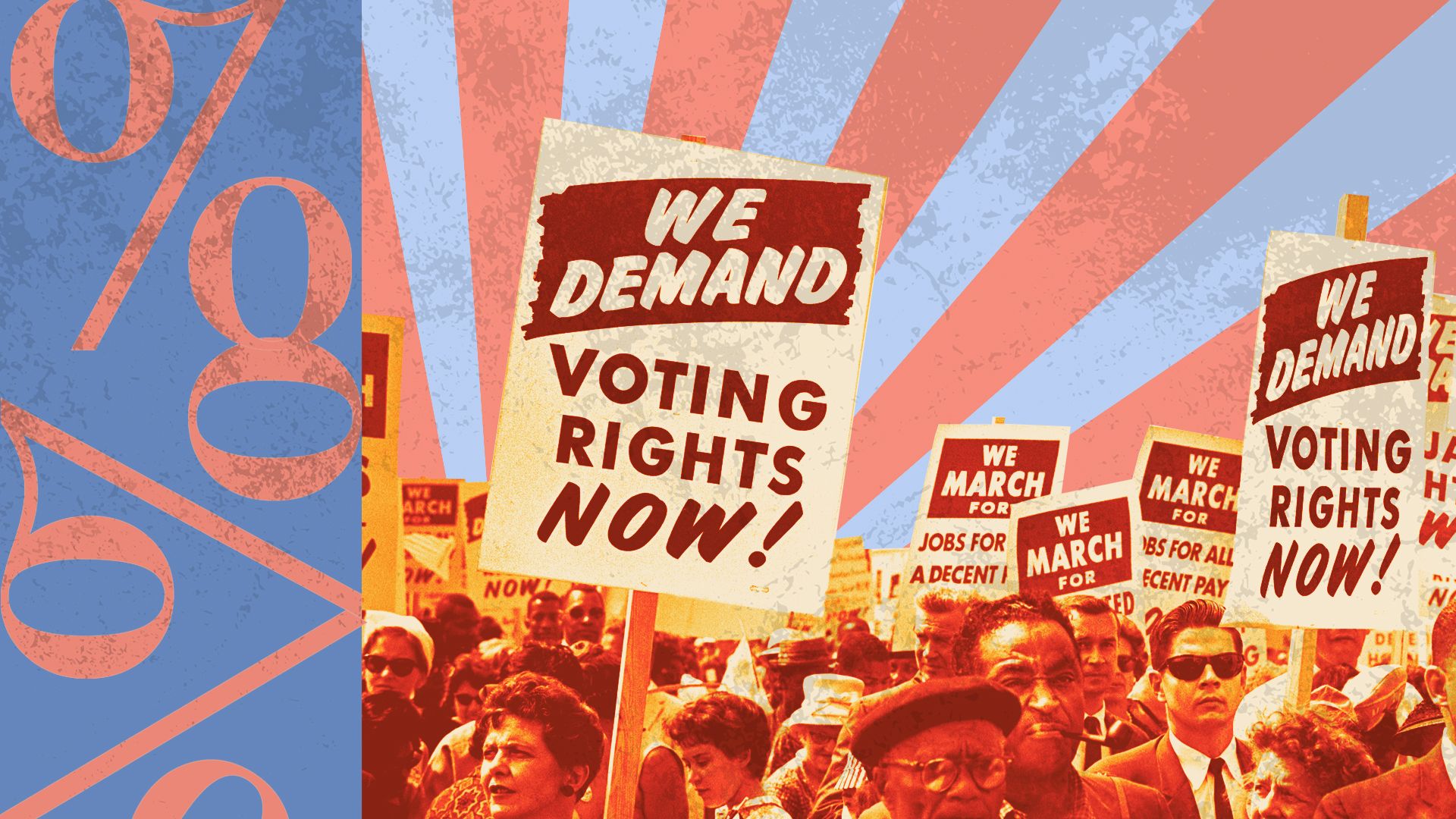
Photo illustration: Sarah Grillo/Axios. Photo: Universal History Archive/Universal Images Group via Getty Images
Why This Matters for Business
For technology companies, these classification challenges create concrete operational problems. Machine learning models trained on historical race data inherit the biases embedded in those categories. Facial recognition systems, which have documented accuracy disparities across racial groups, rely on labeled training data that uses the same federal categories now being questioned.
Healthcare technology companies face particular pressure. The Affordable Care Act requires collection of race and ethnicity data to monitor disparities in care quality. Electronic health record systems must accommodate these categories, but patients increasingly reject or are confused by the options. A 2023 study in the Journal of the American Medical Association found that 17% of patients had their race recorded incorrectly in electronic health records, with the highest error rates among multiracial individuals and Hispanic patients.
Financial services companies, including fintech startups and traditional banks, use race data for fair lending compliance under the Home Mortgage Disclosure Act. When customers don't see themselves in the available categories, the resulting data becomes less reliable, complicating compliance efforts and potentially masking real disparities.
The Technology Gap
Artificial intelligence systems face a compounding problem. When training data uses inconsistent or poorly defined race categories, the models built on that data inherit those inconsistencies. Companies like Google and Microsoft have invested in fairness research to address algorithmic bias, but their efforts depend on having reliable demographic data to work with.
The federal government has recognized this gap. The Office of Management and Budget issued revised Statistical Policy Directive No. 15 in 2024, updating race and ethnicity standards for the first time since 1997. The new directive consolidates race and ethnicity into a single question and adds detailed categories, including Middle Eastern or North African as a distinct group. Implementation across federal agencies will take years, and the private sector typically follows federal standards with a lag.
The Self-Identification Dilemma
At the heart of the stress test is a fundamental tension between administrative convenience and individual identity. The categories were designed for aggregate statistical analysis, not as definitive descriptions of individual identity. But in practice, they function as identity markers that people encounter in daily life.
Younger Americans are particularly likely to reject rigid racial categories. A 2024 Pew Research Center survey found that 38% of adults under 30 who identify as multiracial say they sometimes feel forced to choose a single race on forms, compared to 21% of multiracial adults over 50. This generational shift is accelerating as multiracial births now account for roughly 10% of all U.S. births.
The tech industry's approach to diversity, equity, and inclusion reporting follows these same federal categories. Companies like Apple, Meta, and Amazon publish annual diversity reports using OMB categories. As employee demographics shift and self-identification patterns change, comparing year-over-year data becomes increasingly difficult.
What Happens Next
The stress test won't be resolved quickly. The new OMB standards give federal agencies until 2028 to implement changes, and private sector adoption will follow. In the meantime, companies collecting demographic data face a choice: continue using categories that no longer fit their populations, or adapt ahead of federal guidance and risk data inconsistency.
For technology companies building AI systems, the implications are particularly acute. Models trained on data from the old category system may need retraining as new categories take effect. The transition period will likely produce messy, incomplete data that complicates both compliance efforts and algorithmic fairness work.
The race classification system America built for the civil rights era is being asked to serve purposes its creators never imagined. The stress test will determine whether these categories can evolve fast enough to remain useful, or whether the gap between administrative classifications and lived identity becomes too wide to bridge.
Comments
Please log in or register to join the discussion