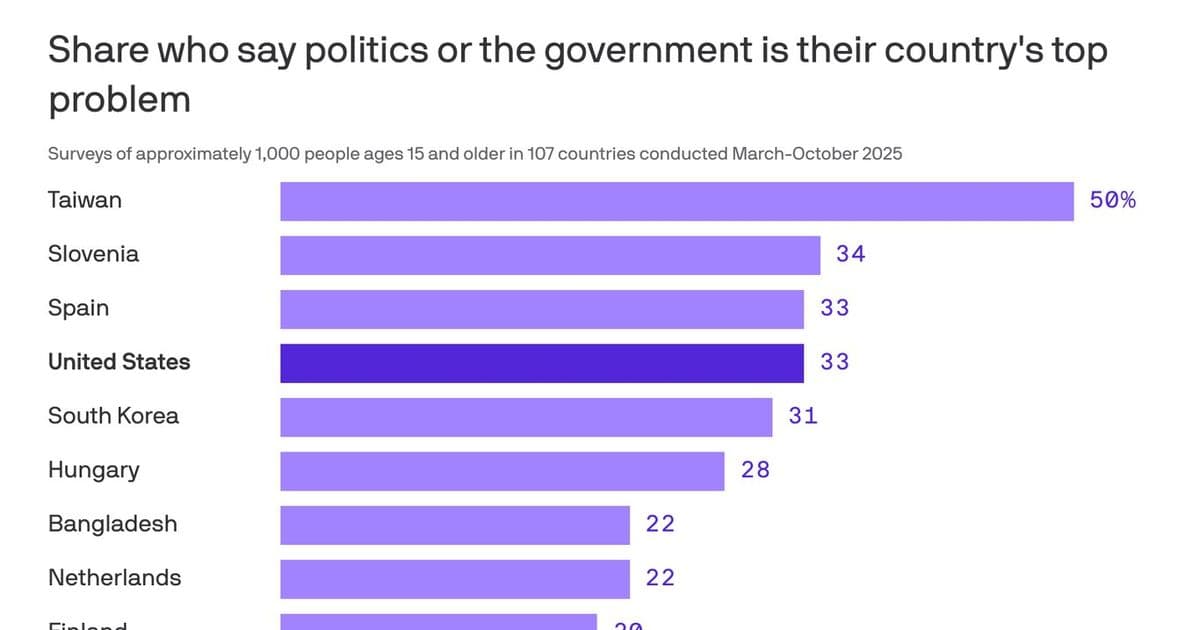
A new Axios analysis reveals a striking disconnect: while the global population ranks economic concerns as their primary worry, Americans uniquely prioritize political dysfunction as their nation's biggest challenge.
The global economic landscape faces unprecedented challenges, yet Americans view their political system rather than the economy as the nation's most pressing problem, according to a comprehensive new analysis by Axios.
Global Economic Anxiety vs. American Political Frustration
Across the world, economic concerns dominate public consciousness. From inflation and job security to housing affordability and income inequality, citizens in most countries identify financial stability as their primary worry. This global economic anxiety reflects genuine challenges: supply chain disruptions, rising interest rates, and persistent inflation have created financial uncertainty for billions.
However, the United States stands apart from this global pattern. While Americans certainly acknowledge economic difficulties, they consistently rank political dysfunction, partisan division, and governmental gridlock as their country's most significant problem.
The Numbers Tell a Story
Recent polling data reveals this disconnect clearly. When asked to identify their nation's biggest challenge, American respondents are significantly more likely to cite political polarization, congressional dysfunction, or partisan conflict than economic issues. This contrasts sharply with responses from citizens in other developed nations, where economic concerns consistently top the list.
The divergence appears particularly pronounced among different demographic groups. Younger Americans, who face significant economic challenges including student debt and housing affordability, still prioritize political reform over economic policy. Meanwhile, older Americans often cite political division as the root cause of economic problems rather than the economy itself.
Why the Disconnect Matters
This American exceptionalism in problem identification has profound implications for policy and governance. When citizens view politics rather than economics as the primary problem, they may be less likely to support economic interventions or reforms. This can create a self-reinforcing cycle where political dysfunction prevents economic solutions, which in turn fuels political frustration.
Political scientists suggest several factors contribute to this unique American perspective. The country's two-party system, highly polarized media environment, and frequent government shutdowns create constant political drama that overshadows economic policy discussions. Additionally, Americans' deep skepticism of government institutions may lead them to blame political dysfunction for economic challenges rather than structural economic issues.
Global Context
The contrast becomes even more striking when compared to other nations. In European countries facing similar economic pressures, citizens typically prioritize economic policy solutions over political reform. Asian nations dealing with economic transitions focus on industrial policy and economic development rather than political restructuring.
This American focus on politics over economics may reflect the country's unique political culture, where political identity often supersedes economic class as the primary basis for social division. It may also reflect the outsized role that politics plays in American media and public discourse.
What This Means for 2024 and Beyond
The disconnect between American and global problem identification has significant implications for the 2024 election cycle and beyond. Candidates who focus primarily on economic issues may find themselves misaligned with voter priorities, while those who address political reform may tap into this unique American concern.
As the world grapples with economic challenges that require coordinated global responses, the United States' inward focus on political dysfunction could complicate international economic cooperation. This American exceptionalism in problem identification may prove to be as significant a challenge as the problems themselves.
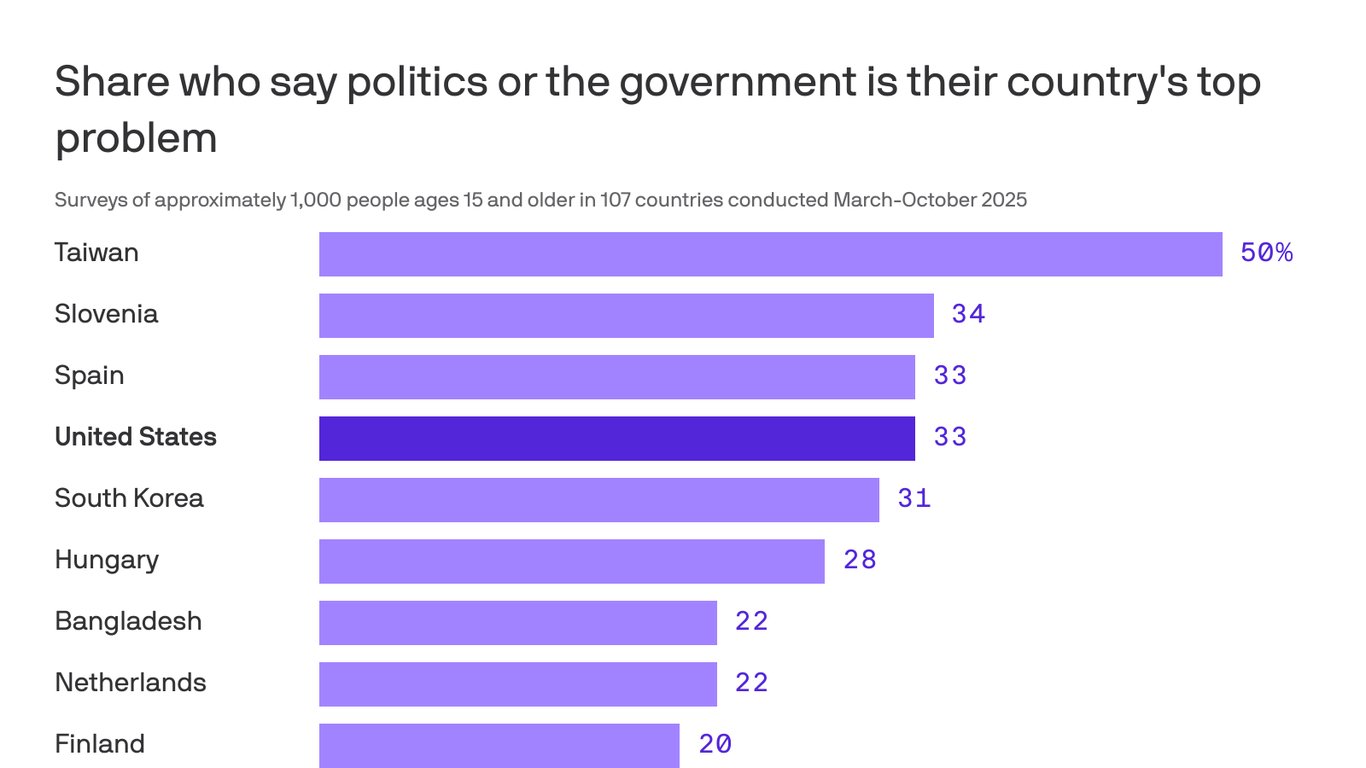
The data suggests that while the global economy faces serious challenges requiring urgent attention, Americans' unique prioritization of political reform over economic solutions may shape the nation's policy responses in ways that differ markedly from the rest of the world.
Comments
Please log in or register to join the discussion