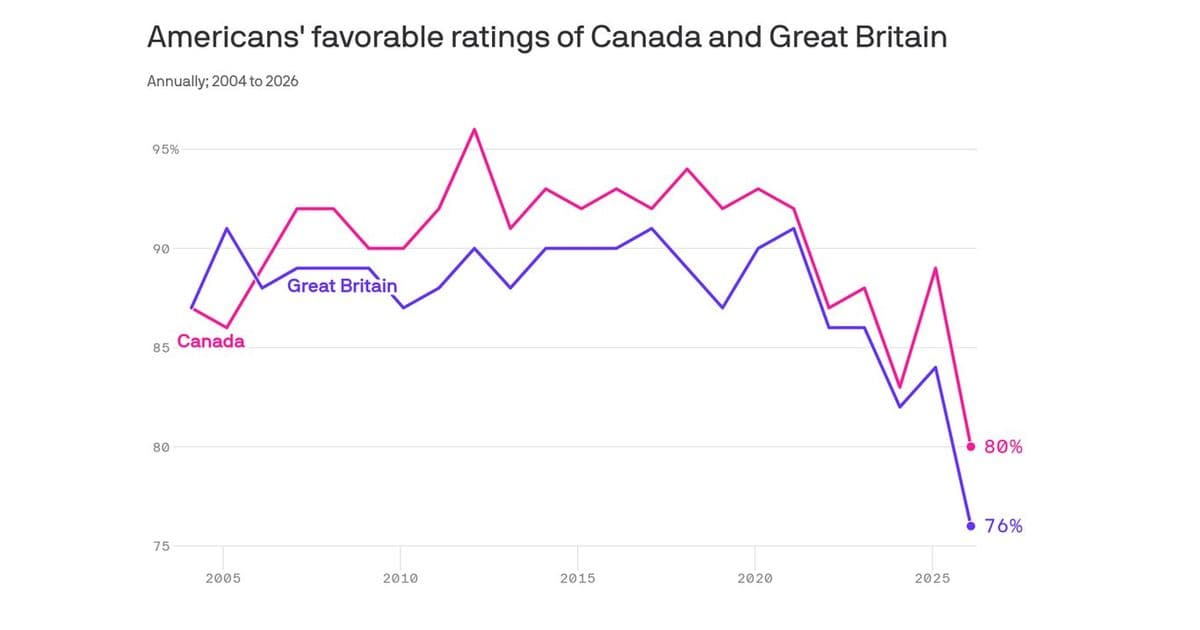
New polling shows declining favorability toward traditional U.S. allies Canada and Great Britain during Trump's presidency, reflecting shifting attitudes amid trade tensions and diplomatic disputes.
A new poll reveals that Americans' views of traditional allies Canada and Great Britain have significantly declined during the Trump presidency, highlighting how diplomatic tensions and trade disputes have affected public perception of these long-standing partners.
According to recent polling data, favorability ratings for both Canada and Great Britain among Americans have dropped notably since Donald Trump took office. The decline comes amid a series of trade disputes, diplomatic disagreements, and public spats between Trump and the leaders of these allied nations.
Canada, which has historically enjoyed high favorability ratings among Americans, has seen its positive perception drop by double-digit percentage points. The deterioration follows trade tensions over steel and aluminum tariffs, disagreements on NAFTA renegotiation, and public disagreements between Trump and Canadian Prime Minister Justin Trudeau.
Similarly, Great Britain's favorability among Americans has declined, though the drop has been somewhat less pronounced than Canada's. The shift occurs even as the U.S. and UK maintain strong military and intelligence cooperation, suggesting that diplomatic and economic factors may be outweighing traditional alliance bonds in shaping public opinion.
The polling data reflects a broader pattern of declining support for international institutions and alliances that has characterized the Trump era. The administration's "America First" approach and skepticism toward multilateral agreements appears to have influenced how Americans view their closest partners.
Political scientists note that these shifting perceptions could have long-term implications for U.S. foreign policy, as public opinion often influences diplomatic priorities and congressional support for international agreements. The decline in favorability for traditional allies comes even as Americans' views of some adversaries have remained relatively stable or even improved slightly in some polls.
Demographic analysis of the polling data shows that the decline in favorability for Canada and Great Britain is most pronounced among certain political groups, while others have maintained or even strengthened their positive views of these nations. This partisan divide in perceptions of allied nations represents a departure from the traditionally bipartisan support for close partnerships with Canada and the UK.
The findings raise questions about the durability of the "special relationship" between the U.S. and its closest allies, and whether the current tensions represent a temporary shift or a more fundamental realignment in how Americans view their place in the world and their relationships with traditional partners.
Comments
Please log in or register to join the discussion