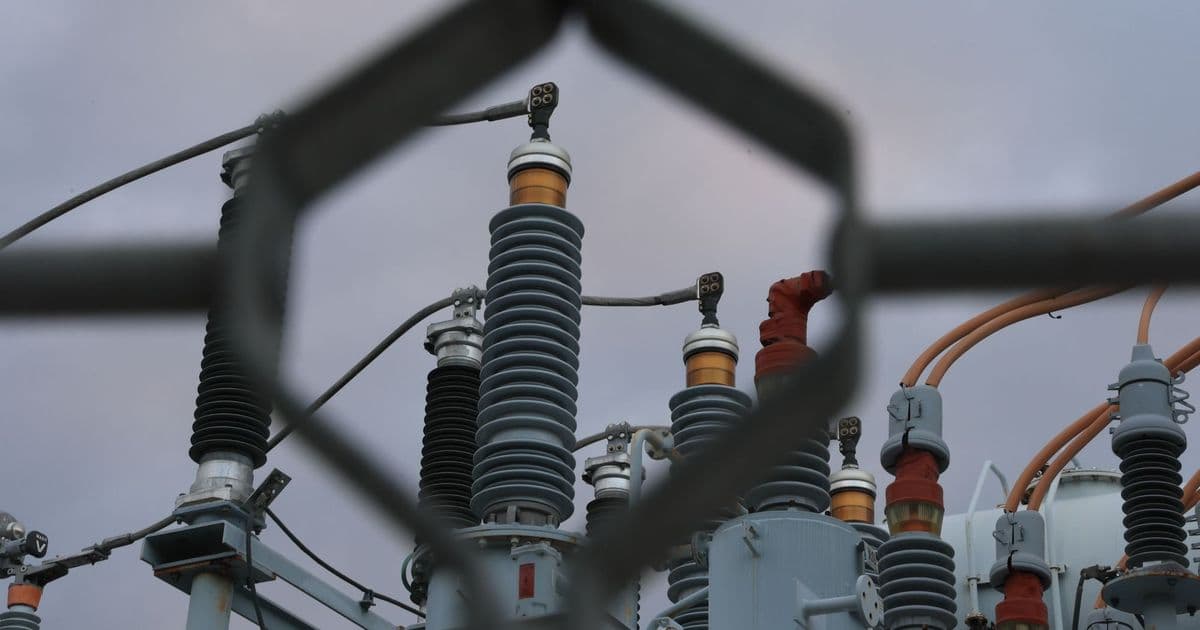
AI companies pledge to fund their own power infrastructure as data center electricity demand threatens to push wholesale prices up 267% in five years, with the sector projected to require 50 GW capacity.
Anthropic has joined Microsoft and OpenAI in pledging to fully fund the grid infrastructure upgrades required to support its AI data centers, promising to cover 100% of its grid infrastructure costs while developing new power sources. The company made this announcement as the AI sector faces mounting pressure over its massive electricity consumption, with projections showing the industry will need at least 50 gigawatts of capacity in the coming years.
The commitment comes amid growing concerns about the impact of AI data centers on American electricity prices. In some regions, wholesale electricity prices have surged 267% in just five years, driven by both increased demand from power-hungry AI servers and the capital costs that power companies pass on to consumers for grid upgrades. The situation has become severe enough that politicians from both parties have taken notice, with three Democratic U.S. senators sending demand letters to major AI hyperscalers including Amazon, Google, and Meta.
President Donald Trump has also weighed in on the issue, stating that AI companies should "pay their own way" when it comes to electricity consumption. This political pressure appears to have catalyzed a series of commitments from major AI players to address their infrastructure costs.
Microsoft was the first to respond, releasing a statement on the same day as Trump's announcement promising to "be a good neighbor" to communities near its data centers. The company unveiled its "Community-First AI Infrastructure" framework designed to ensure long-term positive impacts on surrounding areas. OpenAI followed approximately 10 days later, committing to fund grid upgrades and implement flexible loads to reduce stress on the energy supply.
Anthropic's announcement represents the latest in this series of corporate commitments to address the power infrastructure challenge. However, the company emphasized that government action is also necessary, stating that affordable power requires "systemic change" and that permitting, transmission development, and grid interconnection processes need to become faster and cheaper to bring new energy online for everyone.
The power constraint represents one of the biggest challenges facing AI companies in the United States today. Unlike China, which has abundant power capacity for its growing number of AI data centers, the U.S. is already near or at capacity in many regions. This limitation has become so acute that Microsoft CEO Satya Nadella has acknowledged the company doesn't have enough electricity to run all the AI GPUs in its inventory.
To address these constraints, AI companies are exploring various alternative power sources, though most solutions remain years away from implementation. These include small modular reactors (SMRs), with major players like Amazon, Meta, Microsoft, and Oracle investing billions in research and development. Microsoft is also investigating superconductors to reduce energy loss during transmission, while Elon Musk has proposed an orbiting AI data center system.
Musk has taken concrete steps toward this vision by merging SpaceX with xAI and formalizing plans for a million-satellite Orbital Data Center System with the Federal Communications Commission. While these futuristic solutions may eventually help address the power challenge, they highlight the severity of the current constraints facing the industry.
The commitments from Anthropic, Microsoft, and OpenAI to fund their own grid infrastructure represent a significant shift in how AI companies approach their power needs. By agreeing to cover 100% of grid upgrade costs and invest in new power sources, these companies are acknowledging the strain their operations place on local communities and the broader electrical grid.
However, the effectiveness of these voluntary commitments remains to be seen. The scale of investment required to support 50 gigawatts of new AI capacity is enormous, and questions remain about how quickly these infrastructure improvements can be implemented. Additionally, while these commitments address the immediate concern of passing costs to consumers, they don't fully resolve the underlying challenge of limited power capacity in the United States.
The situation underscores the growing tension between the rapid expansion of AI infrastructure and the existing electrical grid's capacity to support it. As AI companies continue to build out their data center networks to meet growing demand for AI services, the power challenge will likely remain a central constraint on the industry's growth in the United States.
These corporate commitments to fund infrastructure upgrades may help alleviate some of the immediate pressure on consumers, but they also highlight the need for broader systemic changes to how the U.S. approaches energy infrastructure development. Whether voluntary corporate commitments or government-mandated requirements will ultimately prove more effective in addressing this challenge remains an open question as the AI industry continues its rapid expansion.
Comments
Please log in or register to join the discussion