
Anthropic's latest Economic Index report introduces 'economic primitives' showing Claude AI's real-world impact: concentrated task usage, geographic disparities in adoption, higher productivity gains for complex tasks despite reliability tradeoffs, and potential deskilling effects across occupations.

Anthropic's January 2026 Economic Index report analyzes 2 million anonymized Claude interactions to map AI's economic impact through new "economic primives."
As generative AI rapidly integrates into workplaces, Anthropic's fourth Economic Index report provides unprecedented granularity on how people and businesses actually use Claude. By introducing five new "economic primitives"—measuring task complexity, skill levels, use cases, AI autonomy, and success rates—the study reveals how AI adoption patterns differ globally and what this means for productivity and labor markets.
Key Shifts Since Last Report
- Task Concentration Persists: Despite AI's expanding capabilities, usage remains heavily focused. The top 10 tasks accounted for 24% of Claude.ai usage (up from 23%) and 32% of API traffic (up from 28%). Software debugging dominates: 6% of consumer and 10% of enterprise interactions.
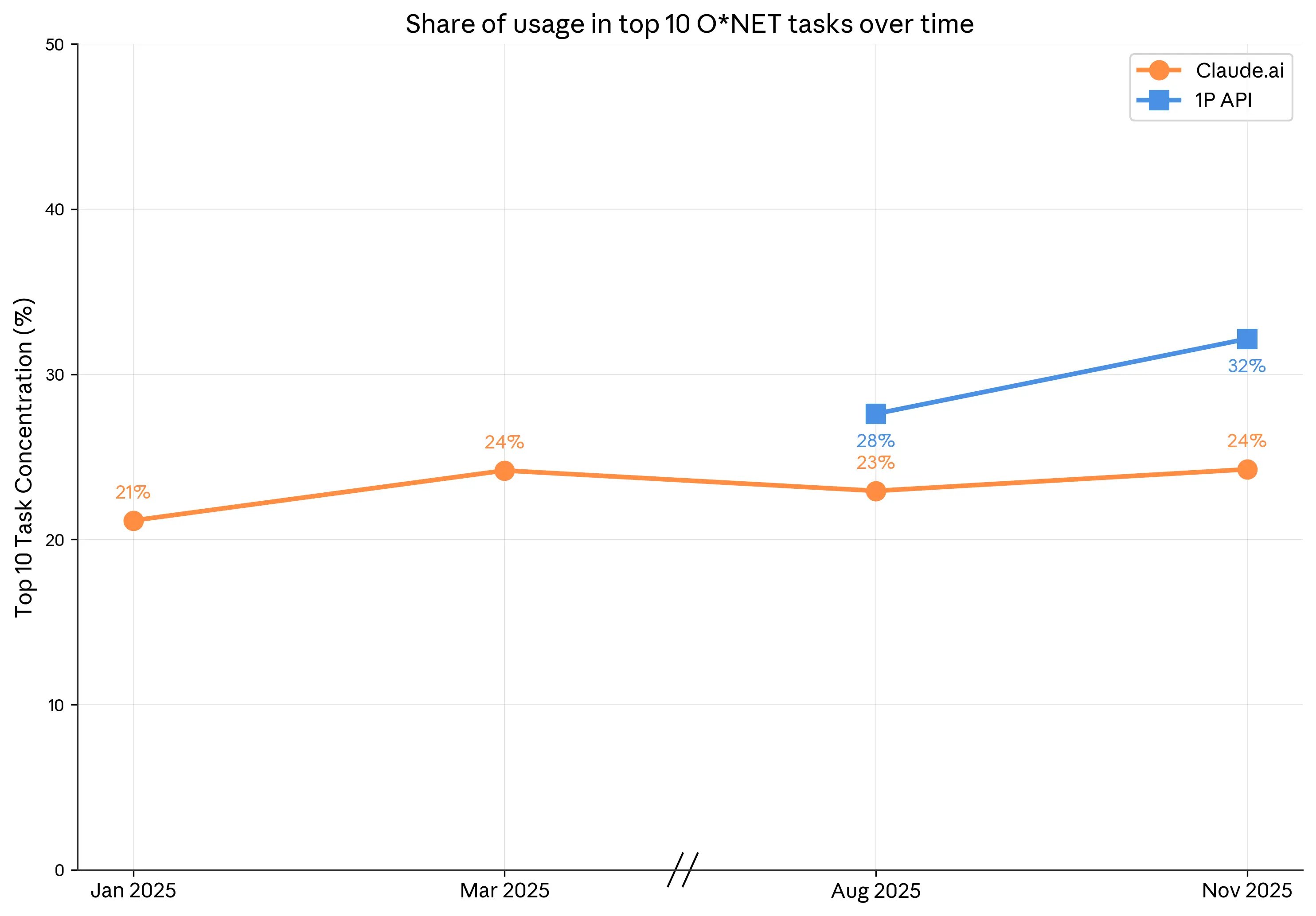 Figure 1: Task concentration increased slightly across both consumer (Claude.ai) and enterprise (API) usage.
- Augmentation Rebounds: After a brief surge in automated use (where users delegate tasks entirely), collaborative patterns regained dominance on Claude.ai (52% augmentation vs. 45% automation). Product updates like file creation and persistent memory likely drove this shift toward human-AI teamwork.
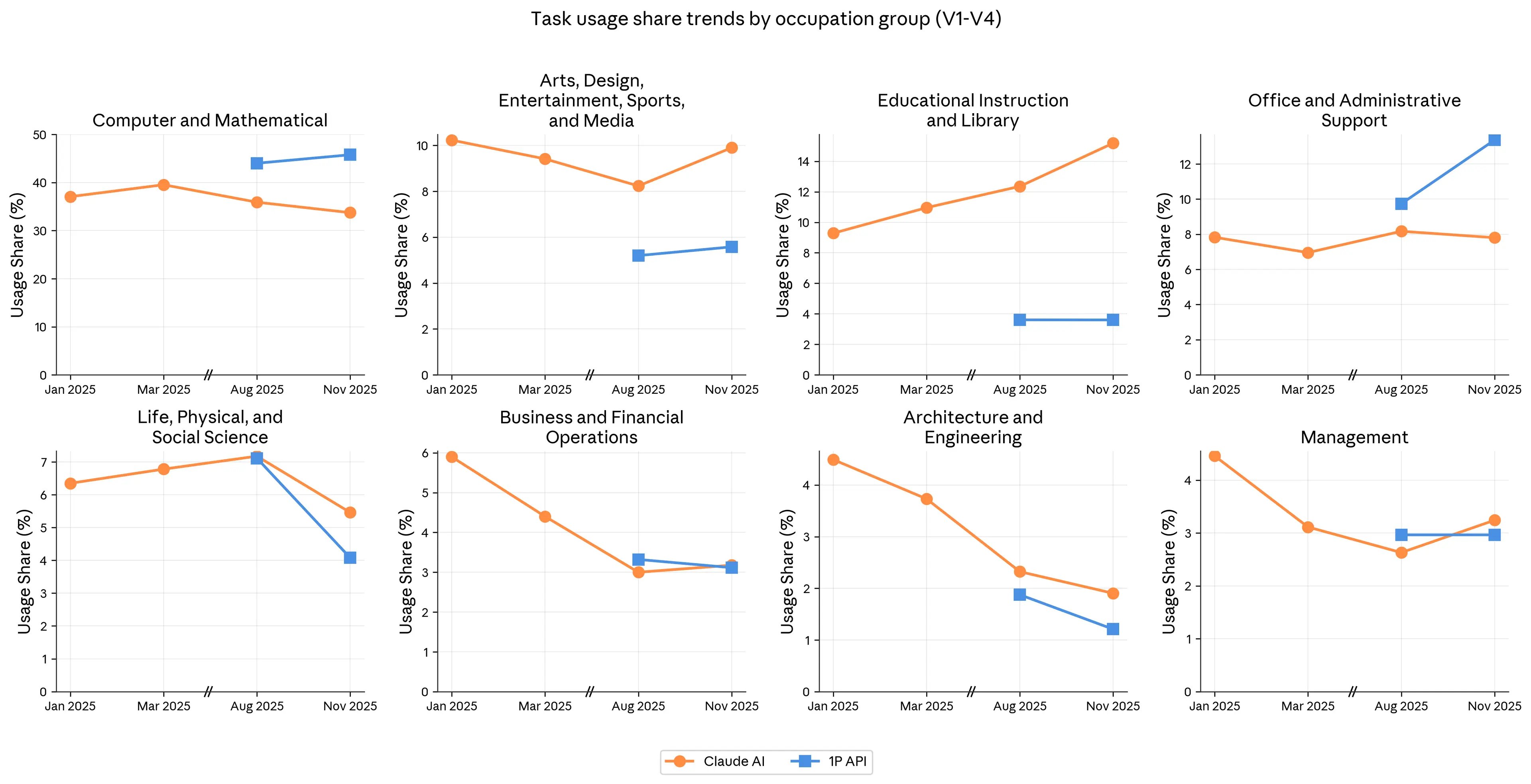 Figure 2: Automation peaked in August 2025 but declined by November as augmentation regained dominance.
- Geographic Divergence: Globally, adoption gaps remain starkly tied to GDP per capita with no convergence. Conversely, U.S. states show accelerated diffusion—lower-adoption states grew usage 10x faster than historical tech adoption rates. At current pace, per-capita usage could equalize across states within 2-5 years.
The New Economic Primitives: What They Reveal
Anthropic's novel metrics classify interactions along five dimensions:
| Primitive | Measurement Focus | Key Insight |
|---|---|---|
| Task Complexity | Human time required w/o AI | Complex tasks yield higher speedups (9-12x) |
| Human & AI Skills | Education level needed for prompts | User prompts dictate AI response sophistication (r>0.92) |
| Use Case | Work, coursework, or personal | Work dominates (46%), but personal use rises with GDP |
| AI Autonomy | Decision-making delegated to Claude | Higher in complex tasks on Claude.ai |
| Task Success | Claude's self-assessed completion rate | Declines with complexity; 67% avg on Claude.ai |
 Figure 3: Collaboration modes vary by occupation—directives dominate tech roles while learning peaks in education.
Notable findings:
- Education Gradient: Tasks requiring college-level understanding (16 years) saw 12x speedup vs. 9x for high-school level tasks, but success rates dropped from 70% to 66%.
- Global Use-Case Split: High-GDP countries use Claude more for personal tasks (35% vs avg), while low-GDP countries focus on coursework (highest in Indonesia).
- Success-Autonomy Tradeoff: Complex tasks afford Claude more autonomy but suffer lower success rates—e.g., software development tasks succeeded only 61% of the time vs. 78% for personal tasks.
Productivity Paradoxes and Labor Market Impacts
The Task Horizon Limit: Like benchmark studies, real-world success rates fall as task duration increases. For API users, Claude's 50% success threshold occurs at 3.5-hour tasks. However, Claude.ai users achieve 50% success at 19-hour tasks—suggesting iterative conversation mitigates complexity.
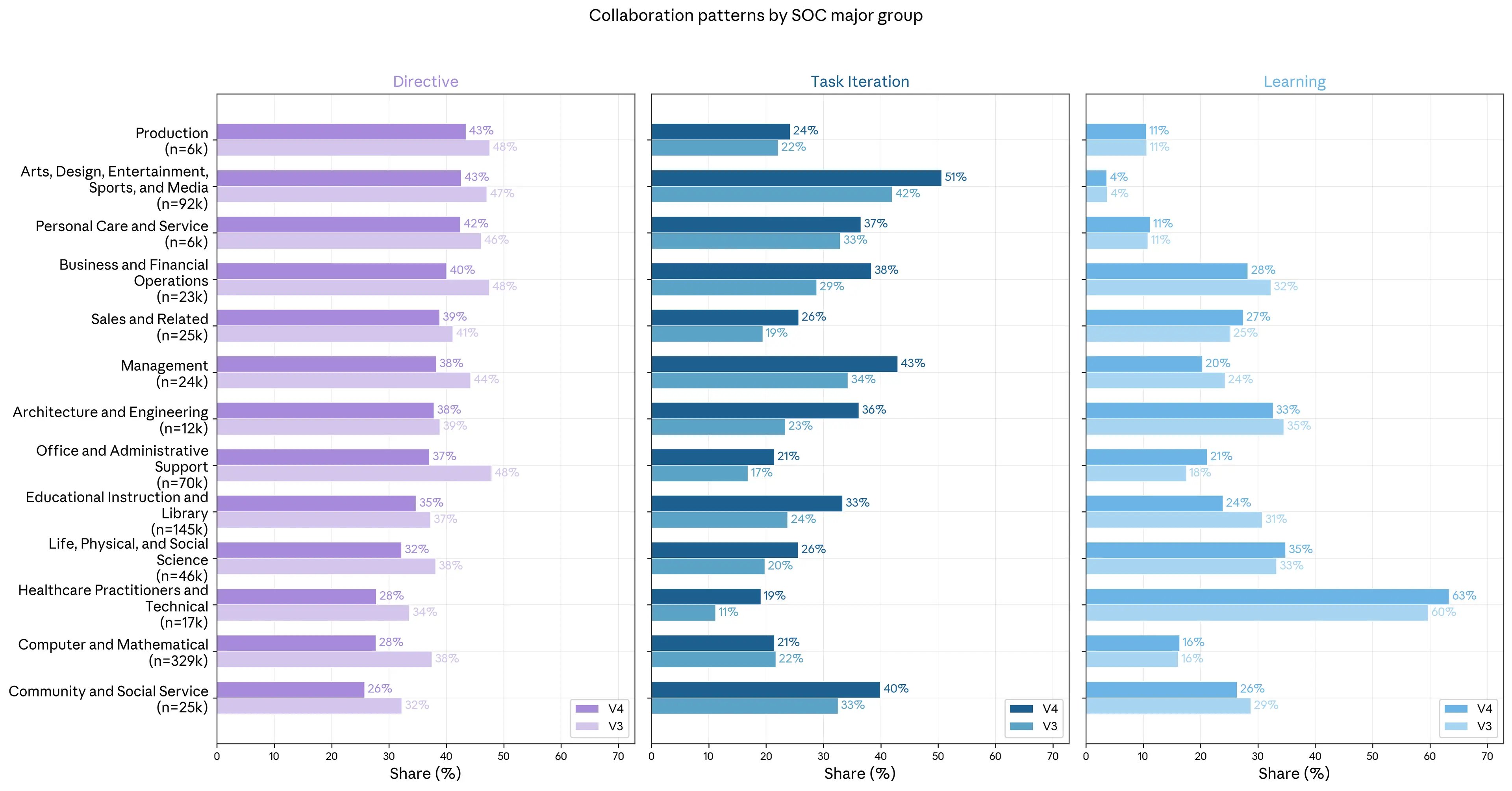 Figure 4: Directive interactions emphasize creation ("develop," "draft"), task iteration focuses on refinement ("edit," "revise"), and learning centers on explanation ("explain," "help").
Deskilling Effect: By weighting tasks by success rates and occupational importance, the study reveals AI's uneven penetration:
- High Exposure: Data entry keyers (89% effective coverage) and radiologists (62%) face significant automation potential.
- Net Deskilling: Removing AI-handled tasks from occupations leaves lower-skill work. Travel agents lose itinerary planning but keep ticket sales; teachers lose grading but retain classroom management.
Productivity Forecast Revised: Earlier estimates suggested AI could boost US labor productivity by 1.8 percentage points annually. Factoring in success rates halves this to 0.6-1.2 points—still significant but constrained by reliability bottlenecks
Comments
Please log in or register to join the discussion