Anthropic's Claude Opus 4.6-built C compiler successfully compiles Linux kernel source files but produces binaries up to 158,000x slower than GCC due to fundamental optimization gaps and linker incompatibilities.
When Anthropic announced Claude's C Compiler (CCC)—a complete C toolchain built entirely by Claude Opus 4.6—the claim that it could compile the Linux kernel warranted verification. Independent benchmarking reveals a compiler that achieves remarkable correctness but falls drastically short on performance and compatibility.
The Compiler Complexity Challenge
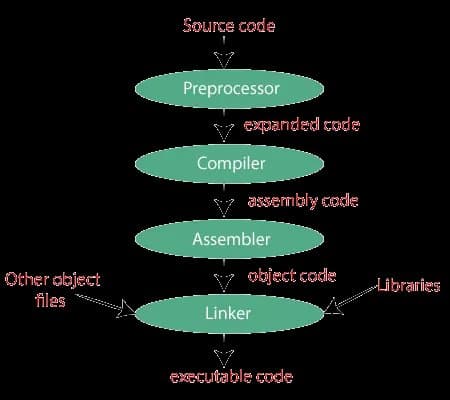
Compiling C involves four interdependent stages: preprocessing, compilation to assembly, assembly to machine code, and linking. 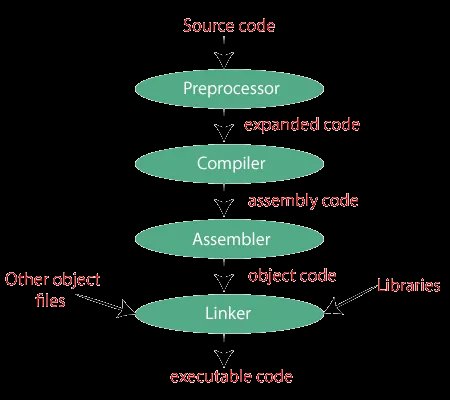 illustrates this pipeline. While CCC handles preprocessing and compilation adequately, its assembler and linker implementations show critical weaknesses—particularly problematic given GCC's 40 years of architectural optimizations.
Kernel Compilation: Partial Success
CCC compiled all 2,844 C files in Linux 6.9 without errors—a significant achievement. However, linking failed with 40,784 undefined reference errors due to malformed symbol table entries and relocation handling. 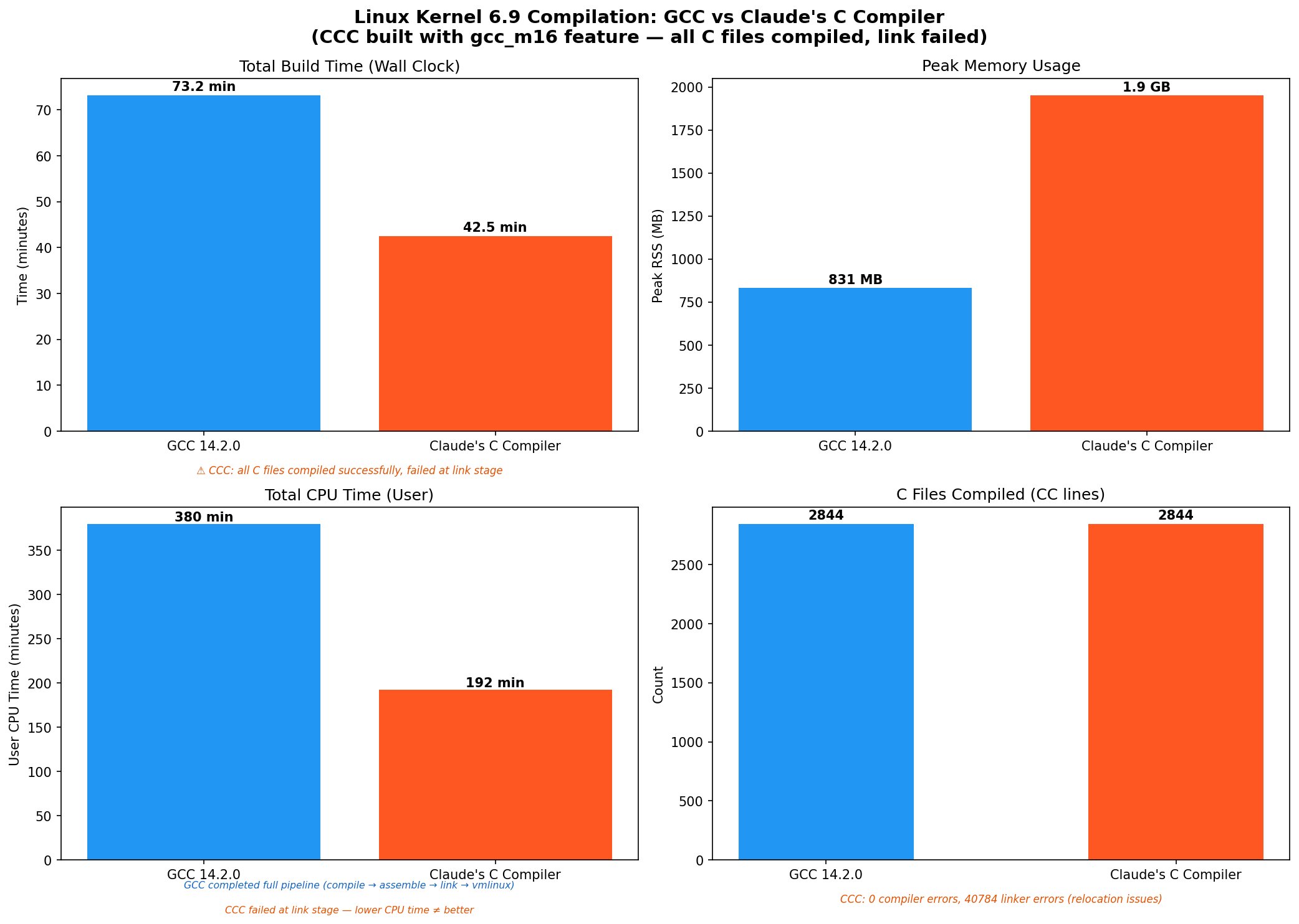 compares compilation metrics, showing CCC used 2.3x more memory (1.95GB vs 831MB) but completed C file processing faster (42.5 min vs 73.2 min).
SQLite Performance Disaster
Functional correctness was verified using SQLite 3.46, where CCC passed all crash tests. But runtime performance exposed catastrophic gaps:
- Compilation: CCC took 87s vs GCC's 65s at -O0 (no optimizations)
- Runtime: CCC required 2 hours vs GCC's 10.3s (737x slower)
- Binary size: 4.27MB vs GCC's 1.55MB
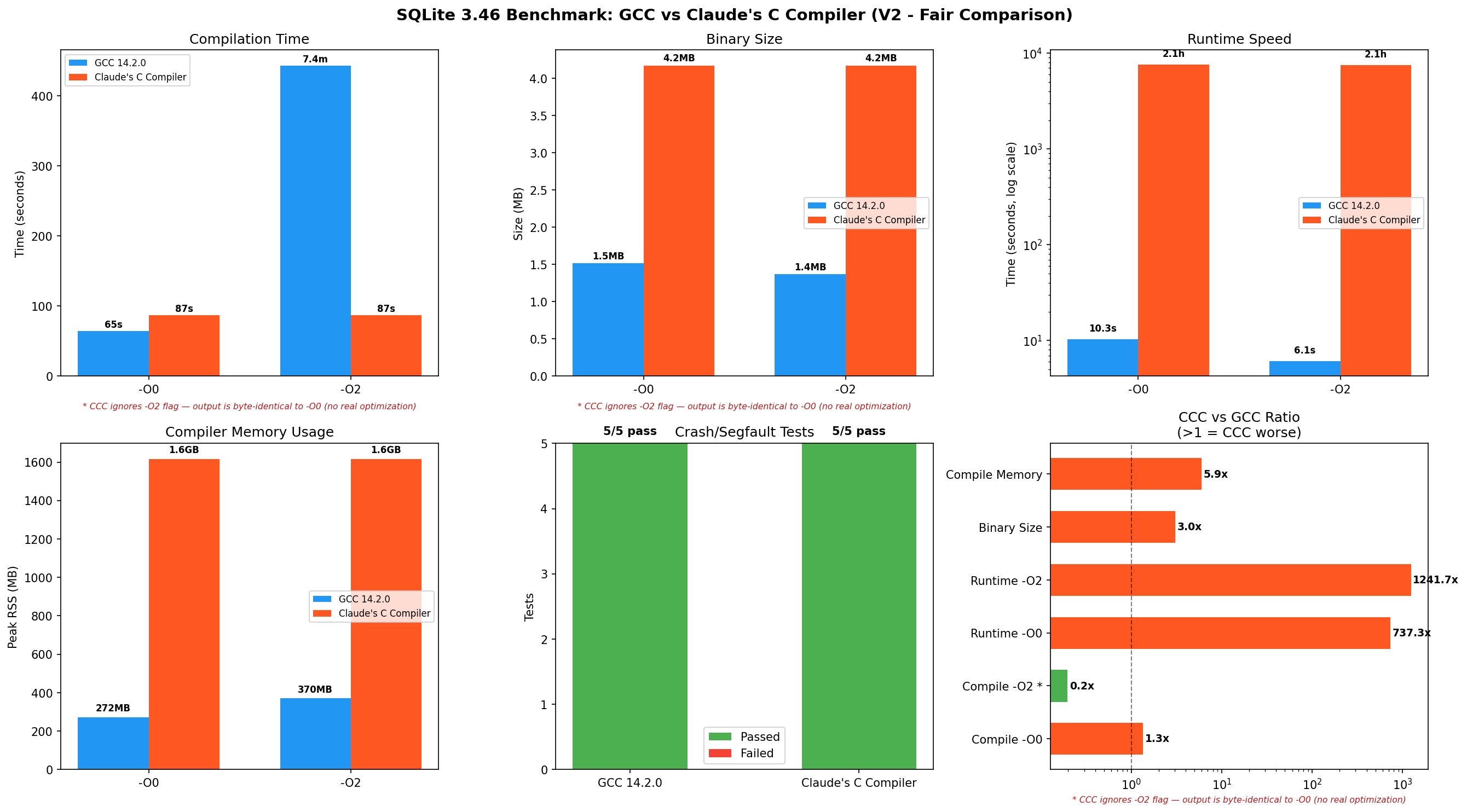 visualizes these disparities
Complex queries suffered most severely. A NOT IN subquery took 158,129x longer under CCC (7,432s vs 0.047s). 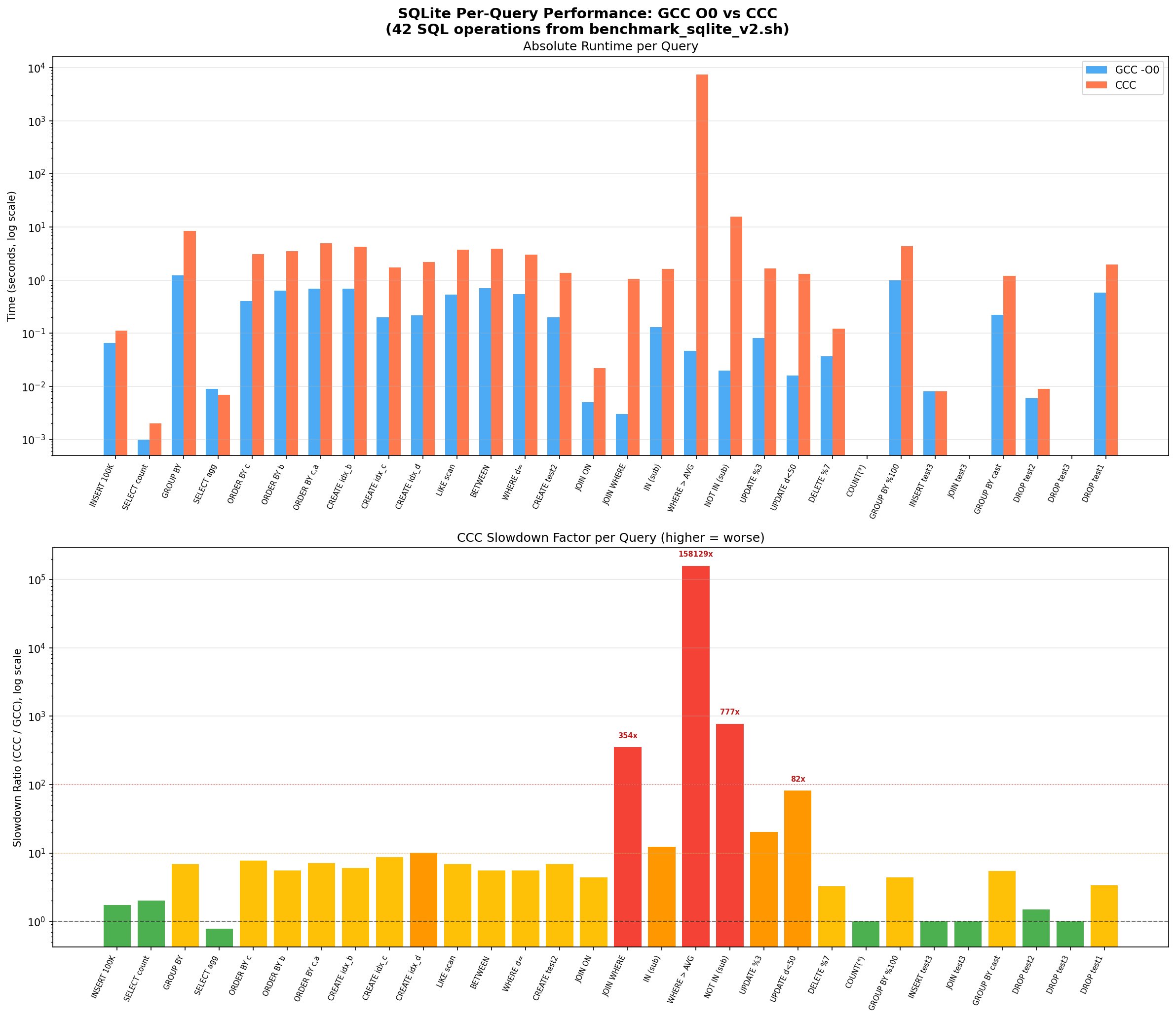 details per-query slowdowns, revealing nested operations suffer exponentially due to:
- Excessive register spilling: Variables overflowed to RAM, forcing redundant memory shuffling
- Ignored optimizations: -O2 flags produce identical output to -O0
- Code bloat: 2.78x larger binaries cause instruction cache misses
Fundamental Limitations
CCC's core shortcomings:
- Zero optimization tiers: All optimization levels produce identical output
- Broken debugging: Corrupted frame pointers and missing symbols
- Linker incompatibility: Kernel-specific relocations fail
- Memory inefficiency: 5.9x higher RAM usage during compilation
The Hello World Reality Check
CCC couldn't compile its own "Hello World" example on fresh Linux installs due to missing header paths—a basic compatibility failure fixed by users in GitHub Issue #1. This underscores the gap between research demonstration and production readiness.
Verdict: Promise vs Practicality
CCC proves AI can build non-trivial compilers with impressive correctness—a milestone for code-generation systems. But without optimization intelligence and architectural compatibility, it remains unusable for real workloads. As benchmarks show, GCC's decades of optimization research aren't easily replicated. For now, AI compilers are academic curiosities, not GCC replacements.
Comments
Please log in or register to join the discussion