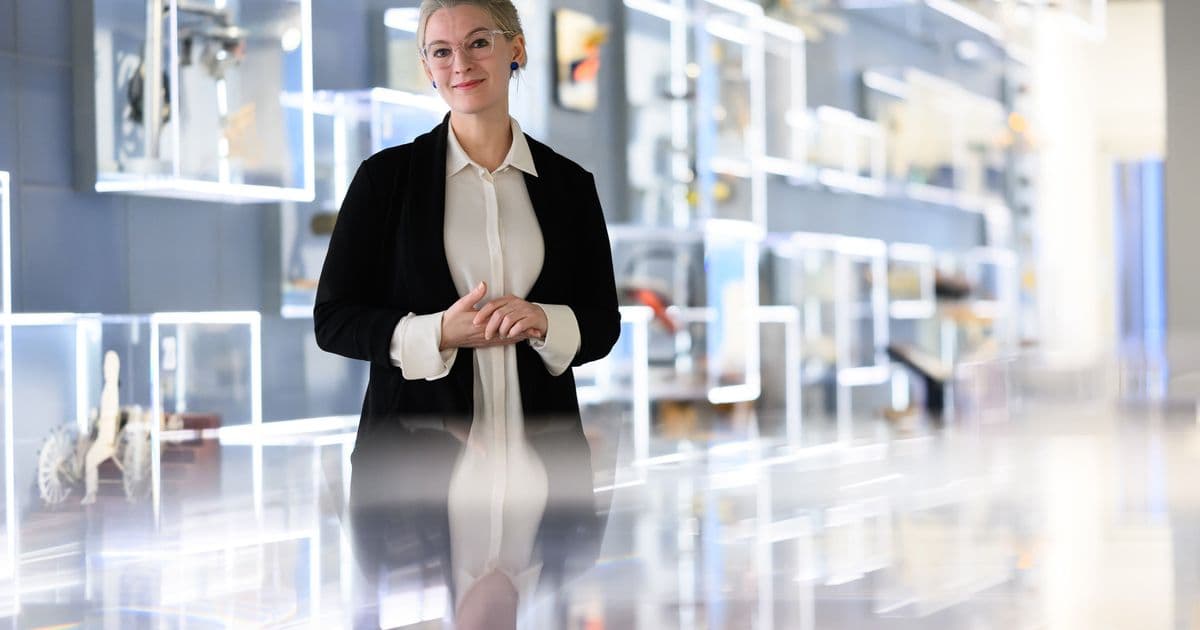
MIT anthropologist Amy Moran-Thomas transforms healthcare by studying overlooked insights from patients, leading to improved medical technologies and more equitable healthcare systems.
When MIT anthropologist Amy Moran-Thomas gathered with her students around a glucose meter in the MIT Museum seminar room, the conversation wasn't just about technical specifications—it was about designing medical technologies that actually work for the people who need them most. The class, "The Social Lives of Medical Objects," had just heard from Norma Flores, president of the Belize Diabetes Association, whose hospital had received a shipment of insulin that spoiled in a heat wave despite being theoretically durable. This moment captured Moran-Thomas's core approach: centering patient experiences to create better healthcare solutions.
"What anthropology has to offer the world," Moran-Thomas explains, "is the insights of people that might be missing from many accounts." Her work fundamentally challenges how we design and implement medical technologies by bringing to light the realities faced by patients, families, and nurses—perspectives often overlooked in traditional medical research.
From Belize to the World: Patient-Centered Medical Research
Moran-Thomas's approach took root during her doctoral research in Belize, which formed the basis of her 2019 book "Traveling with Sugar: Chronicles of a Global Epidemic." There, she documented how plantation-era economic changes undermined indigenous agriculture, leading to sugar-heavy diets while medical technologies proved unreliable in tropical conditions. Her research traced breakdowns in care technologies—from glucose meters to insulin supply chains—asking critical questions about why these devices consistently failed and who bore responsibility for these failures.
"There can be this focus on exclusively prevention without care, the implicit assumption that patients need to act differently," Moran-Thomas observes. "Blame falls on individuals and families instead of a focus on other questions. Why are these technologies always breaking down? How are they designed, and by whom, for whom? What role is history playing in the present?"
This perspective evolved into her ongoing "Sugar Atlas: Counter-Mapping Diabetes from the Caribbean" project, supported by a Digital Justice Seed Grant from the American Council of Learned Societies. While international organizations typically lump North America and the Caribbean together in diabetes tracking, Moran-Thomas and her collaborators zoom in on specific regional aspects of the disease—examining factors like the distance people must travel to buy vegetables, their proximity to insulin supplies, and how climate change affects fishing practices and nutrition.
The Pulse Oximeter Revolution: When Anthropology Changed Medical Practice
Moran-Thomas's most widely recognized work emerged during the COVID-19 pandemic when she uncovered neglected clinical studies showing that pulse oximeters functioned differently depending on patients' skin color. The devices, which measure blood oxygen levels, work by casting beams of light to measure hemoglobin color—a process that produces less accurate readings for patients with darker skin tones.
After Moran-Thomas published her findings in the Boston Review, physicians conducted further studies that confirmed her observations. Research revealed that patients with darker skin were about three times more likely to receive erroneous blood-oxygen readings than those with lighter skin. This discovery led to tangible changes: an FDA panel recommended device modifications, and hospitals began implementing new protocols for oximeter use.
"A lot of my work has been learning about health and medicine technologies from the perspectives of patients, families, and nurses, rather than beginning with engineers and doctors," Moran-Thomas explains. "Those two projects, about blood sugar and blood oxygen, were about the shortcomings of those devices and how they could be improved. Those are perspectives I can highlight in hopes others will pick up on them and make other kinds of designs and policies possible."
Bridging Scales: From Small Devices to Systemic Change
Moran-Thomas's current research demonstrates her ability to connect micro-level experiences with macro-level systems. Her book project examines how energy extraction affects chronic conditions and mental health in her native Pennsylvania, particularly as hospitals close in the region. Working with MIT seismologist William Frank, she has developed low-cost sensors that residents can use to measure seismic activity from industrial operations in their homes.
"I've met people who have been told by their doctors they must have vertigo, while they thought the walls of their house were really shaking," Moran-Thomas shares. "In a case like that, the device you need is not in the clinic, it's a monitor at home."
This "Seismic Collaboratory" project, officially titled "Rural Health, Missing Science, and Communicating the Chronic Impacts of Extraction," received a MITHIC Connectivity grant and incorporates guidance from community leaders at the Center for Coalfield Justice in western Pennsylvania. The work exemplifies Moran-Thomas's ability to identify gaps in medical knowledge and develop appropriate tools to fill them.
Redesigning Medical Education at MIT
Beyond her research, Moran-Thomas is transforming how future healthcare professionals think about medical technology. She co-teaches "The Social Lives of Medical Objects" with MIT innovator Jose Gomez-Marquez, challenging students to design more durable, fixable, and equitable medical devices. The course emerged directly from her Belize research, where glucose meters frequently broke in tropical conditions.
"Whenever people keep saying they are concerned about an issue, but the medical literature doesn't describe it yet, there is a key question about what's happening," Moran-Thomas notes. "Ethnography can help us learn about it."
She's also leading efforts to create a new "Health and Society" educational program at MIT, working with colleagues including Katharina Ribbeck, Erica James, Aleshia Carlsen-Bryan, and Dina Asfaha. Their initiative recently received an Education Innovation Seed Grant from MITHIC, aiming to prepare students to address healthcare's complex social dimensions.
The Power of Anthropological Perspective in Healthcare
Through her diverse projects, Moran-Thomas maintains a consistent focus on a fundamental question: how to put people at the center of health and medicine.
"Thinking across scales is something that's really useful about anthropology," she explains. "Even one medical device is a tiny piece of a bigger infrastructure. In order to study that technology or device or sensor, you have to understand the bigger infrastructure it's attached to, and that there are people involved in all parts of it."
Her approach has yielded concrete improvements in medical technology and healthcare delivery while challenging the medical establishment to reconsider its assumptions. By centering patient experiences and highlighting overlooked perspectives, Moran-Thomas demonstrates how anthropology can create more effective, equitable healthcare systems—from glucose meters in the Caribbean to industrial monitoring in Pennsylvania and pulse oximeters in hospitals worldwide.
As the recent commendation from the Belize Diabetes Association recognizes, Moran-Thomas's nearly twenty years of work exemplifies how deep patient engagement can transform medical practice. Her research proves that the most important medical insights often come not from laboratories or clinical trials, but from the people who navigate healthcare systems daily—the very people these systems are designed to serve.
Comments
Please log in or register to join the discussion