
Intel's Linux graphics drivers are gaining significant vRAM management improvements through Mesa 26.2 and Linux 7.1, introducing purgeable buffer objects to better handle memory pressure scenarios.
Intel graphics users running Linux are set to receive a substantial improvement in memory management with the upcoming Mesa 26.2 and Linux 7.1 releases. This enhancement addresses a critical pain point for users with Intel discrete graphics cards: video RAM pressure and out-of-memory (OOM) behavior.
The core improvement comes through the introduction of purgeable buffer objects via a new user-space API. This feature provides critical usage hints that allow the graphics driver to make more intelligent decisions about what data to purge when facing vRAM constraints. Rather than the previous OOM behavior which could lead to application crashes or severe performance degradation, the system can now selectively remove backing storage of Virtual Memory Areas (VMAs) that aren't actively needed.
The technical implementation is particularly interesting. Merged this week into Mesa 26.2-devel is support for the Intel Mesa drivers to leverage this new interface. Specifically, both the Iris Gallium3D driver and ANV Vulkan driver now support "madvise purgeable VMAs" in the Xe kernel driver. This represents the user-space component of the solution that makes the kernel-level functionality actually useful for applications.
For those unfamiliar with the technical details, Virtual Memory Areas (VMAs) represent regions of virtual memory with specific properties. By marking certain VMAs as "purgeable," the kernel can reclaim their backing storage (the actual physical memory) when the system faces memory pressure, while keeping the virtual mapping intact. When the application needs that memory again, it can be reallocated without the application being aware of the temporary unavailability.
This improvement is particularly valuable for Intel Arc graphics cards with dedicated video memory, which have been known to exhibit OOM behavior under certain workloads. The previous behavior would often result in application crashes or significant performance degradation when the graphics memory was exhausted. With this new implementation, the system can gracefully degrade by removing less critical data first, maintaining system responsiveness.
The performance impact should be most noticeable in scenarios with:
- High-resolution gaming or content creation
- Multiple GPU-accelerated applications running simultaneously
- Systems with limited vRAM capacity
- Workloads that frequently allocate and deallocate graphics memory
For users building systems with Intel Arc graphics, this improvement makes these cards more viable for serious workloads. Previously, the vRAM limitations could be a significant bottleneck, but with better memory management, the effective usable memory is increased through more intelligent allocation strategies.
The combination of Mesa 26.2 and Linux 7.1 is expected to be available this summer. Users with Intel discrete graphics should plan to upgrade both their kernel and Mesa graphics stack to take advantage of these improvements. Early adopters may want to track the development versions of both components to test the functionality before the stable releases.
For those interested in the technical implementation details, the relevant code changes can be found in the Intel Xe kernel driver and the Mesa Intel driver repository. The specific implementation of purgeable buffer objects represents an important step forward in memory management for integrated and discrete graphics solutions, potentially paving the way for similar approaches from other GPU vendors.
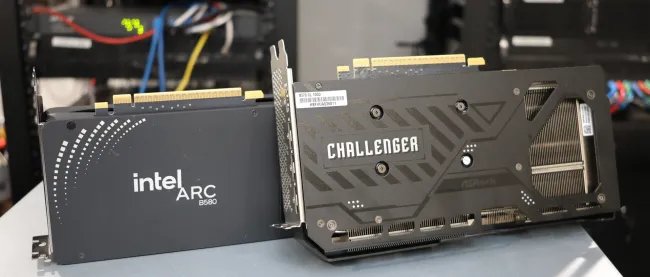
This improvement is particularly significant as Intel continues to expand its discrete graphics presence in the Linux ecosystem. Better memory management not only improves performance but also makes Intel GPUs more competitive with established vendors in scenarios where efficient memory usage is critical.
Comments
Please log in or register to join the discussion