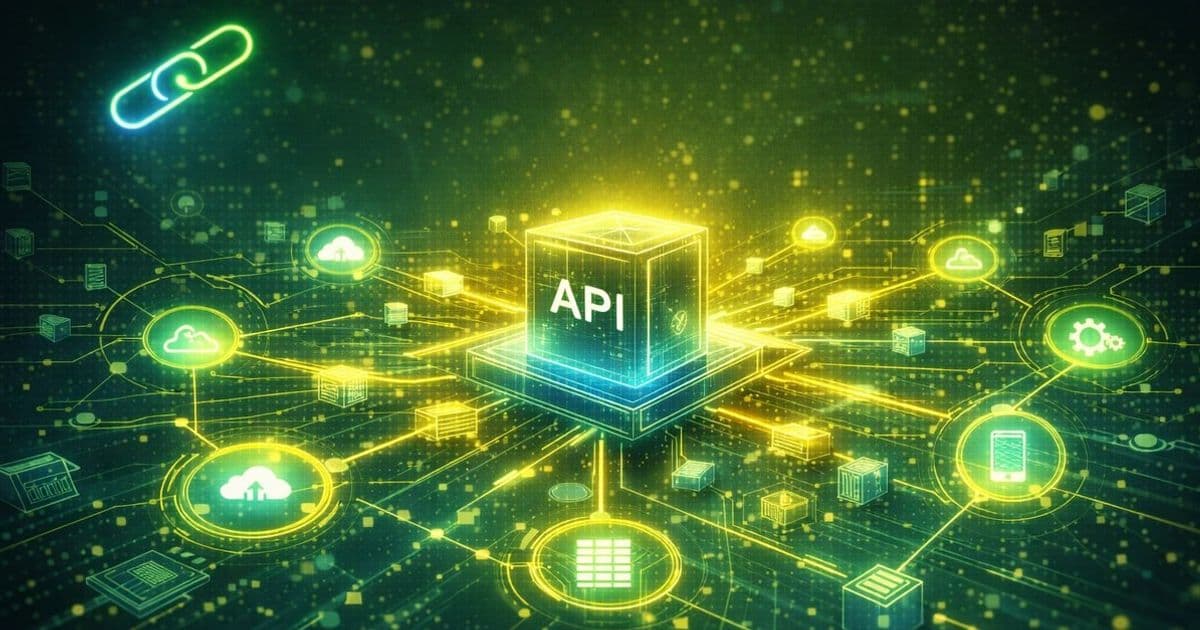
APIs have evolved from simple connectors to foundational infrastructure, enabling distributed systems, modular architecture, and scalable product ecosystems.
Software used to be built as complete applications. Today, it is built as connected systems. At the center of this shift is the API. APIs are no longer just a way to connect services. They have become the foundation on which modern products are designed, scaled, and evolved.
What does it mean to say APIs are infrastructure? Infrastructure traditionally meant servers, networks, and databases — the physical and cloud layers that keep systems running. Now, APIs play a similar role at the application level. They define how systems: communicate exchange data trigger actions Instead of thinking of infrastructure as only hardware or cloud services, modern systems treat APIs as the layer that holds everything together. They are not just connectors. They are the structure.
Why did APIs become so important? The shift happened as software stopped being monolithic. Earlier, applications were built as single, tightly coupled systems. Everything lived in one place. Scaling meant scaling the entire application. Modern systems are different. They are: distributed modular constantly evolving In such systems, each part needs a reliable way to communicate with others. APIs provide that contract. They allow independent components to function as a unified system.
How do APIs enable modular architecture? Modular systems are built by dividing functionality into smaller, independent parts. Each part does one thing and communicates through APIs. This approach changes how systems are built: teams can work independently services can be updated without affecting others systems can scale selectively APIs act as boundaries. They define what a service exposes and what it hides. This separation allows systems to grow without becoming unmanageable.
Why are APIs critical for scaling products? Scaling is not just about handling more users. It is about handling complexity. As products grow, they need to: support more features integrate with more tools process more data Without APIs, every new addition increases coupling and complexity. With APIs, systems expand through integration rather than modification. This allows products to grow without breaking existing functionality.
How do APIs shape product ecosystems? Modern products rarely operate alone. They exist within ecosystems that include: third-party integrations partner platforms internal tools user-facing applications APIs make these ecosystems possible. They allow different systems to connect without needing to understand each other’s internal logic. This creates a network of services that can evolve independently while still working together.
What changes when APIs are treated as infrastructure? When APIs are treated as infrastructure, the approach to building software changes. APIs are no longer an afterthought. They are designed first. This leads to: API-first development consistent interface design better version control improved reliability Systems become easier to maintain because communication is standardized. It also becomes easier to extend the system by adding new services without rewriting existing ones.
What are common mistakes in API-driven systems? Even though APIs are powerful, poor design can create problems. One common issue is treating APIs as simple endpoints instead of long-term contracts. This leads to breaking changes and unstable integrations. Another issue is tight coupling through APIs. If services depend too heavily on each other’s internal behavior, the benefits of modularity are lost. Lack of versioning and documentation also creates friction, especially as systems grow and more teams interact with the APIs.
How does API design impact developer experience? APIs are often the first interface developers interact with. Good API design makes systems easier to understand and use. Poor design creates confusion and slows down development. Clear naming, consistent structure, and predictable behavior improve usability. Over time, well-designed APIs reduce the effort required to build and integrate new features.
Where do APIs fit in the future of software? As systems continue to grow in complexity, APIs will become even more central. They will not just connect services but also enable: automation AI-driven workflows real-time data exchange In many cases, APIs will define the product itself. Products will be built as platforms, and APIs will be the primary way users and systems interact with them.
Final Thought APIs are no longer just a technical detail. They are the foundation of how modern systems are built and scaled. Understanding APIs as infrastructure changes how software is designed. It shifts the focus from building isolated features to creating connected, evolving systems. And in a world where everything integrates with everything else, the strength of your APIs often defines the strength of your product.
Comments
Please log in or register to join the discussion