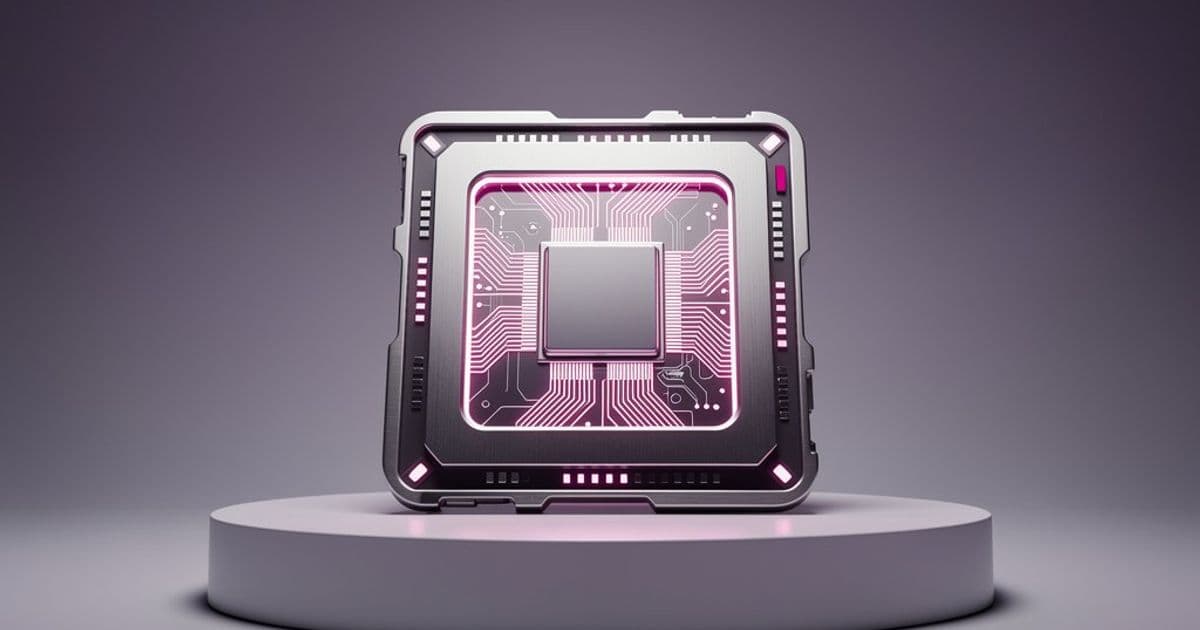
Apple's reported transition to in-house AI server silicon represents a fundamental shift in how the company handles machine learning workloads, with implications for developers, cloud services, and the broader Apple ecosystem.
Apple's reported development of custom AI server chips, slated for deployment this year, marks a significant evolution in the company's silicon strategy. While Apple has long controlled its mobile and desktop processor designs through the A-series and M-series chips, moving server-side AI processing to custom silicon represents a new frontier with substantial implications for developers and the ecosystem.
The Technical Foundation
Apple's server chips would likely follow the company's established architecture patterns, leveraging the Neural Engine and GPU cores that have proven effective in consumer devices. However, server workloads present different challenges than mobile or desktop applications. The company would need to optimize for sustained performance, thermal management in data center environments, and scalability across distributed systems.
The shift to custom server silicon would allow Apple to optimize specifically for its own AI workloads, including Siri processing, on-device model training, and cloud-based inference. This could provide better performance-per-watt compared to generic server hardware, potentially reducing operational costs while improving response times for Apple's services.
Developer Impact
For iOS and macOS developers, this transition could eventually trickle down to more accessible AI capabilities. If Apple's server chips enable more efficient model training and inference, the company might offer improved Core ML tools and frameworks that leverage this infrastructure. Developers working with machine learning models could see:
- Faster model training times in Xcode Cloud
- More sophisticated on-device model capabilities
- Better integration between local and cloud-based AI processing
- Potentially lower costs for AI-enabled features in apps
The move also signals Apple's commitment to controlling the full stack of its AI capabilities, from silicon to software. This vertical integration could lead to more seamless experiences but may also create tighter coupling between Apple's services and its hardware.
Cross-Platform Considerations
While this development is primarily Apple-focused, it has ripple effects across the mobile development landscape. As Apple invests heavily in AI infrastructure, competitors like Google and Microsoft are also expanding their custom silicon efforts. For developers maintaining cross-platform applications, this means:
- Potentially divergent AI capabilities between platforms
- Need to consider platform-specific AI optimizations
- Increased importance of understanding each platform's AI tooling
- Possible fragmentation in how AI features are implemented
The server chip development also highlights the growing importance of edge computing. Apple's strategy appears to balance on-device processing with cloud-based AI, requiring developers to design applications that can leverage both paradigms effectively.
Migration and Adaptation
Developers should monitor Apple's announcements regarding these server chips, particularly around:
- New Core ML capabilities that leverage the server infrastructure
- Changes to Xcode Cloud and developer services
- Updates to privacy-preserving AI techniques (like federated learning)
- Potential new APIs for hybrid local/cloud AI processing
The transition may also affect how developers think about data privacy. Apple's emphasis on on-device processing has been a key differentiator, and server-side AI that respects user privacy could become a new standard for the industry.
Broader Ecosystem Implications
This move aligns with Apple's broader strategy of controlling critical technology components. Just as the company transitioned from Intel to Apple Silicon for Macs, moving AI processing to custom server chips represents another step toward complete vertical integration. For the Apple ecosystem, this could mean:
- More consistent AI experiences across devices
- Tighter integration between hardware and services
- Potential for new features that weren't previously possible
- Greater control over the user experience
However, it also raises questions about developer flexibility. As Apple's infrastructure becomes more specialized, developers may find themselves more dependent on Apple's tooling and services, potentially limiting innovation outside Apple's prescribed paths.
Looking Ahead
The reported timeline suggests these chips could begin deployment in 2026, with broader rollout following. Developers should prepare by:
- Staying current with Core ML and machine learning frameworks
- Experimenting with on-device AI models in current applications
- Considering how hybrid AI architectures might benefit their apps
- Monitoring Apple's developer conferences for announcements
The shift to custom AI server silicon represents more than just a hardware upgrade—it's a fundamental rethinking of how Apple approaches artificial intelligence. For developers, this creates both opportunities and challenges as the ecosystem evolves toward more sophisticated, integrated AI capabilities.
The development also reflects broader industry trends where major tech companies are increasingly building their own silicon for specific workloads. Apple's move into server AI chips follows similar efforts by Google with its TPU chips and Amazon with its Graviton processors, suggesting that custom silicon for AI is becoming a competitive necessity rather than a luxury.
For developers working within Apple's ecosystem, the key takeaway is that AI capabilities will continue to expand, but they'll increasingly be tied to Apple's hardware and software stack. This reinforces the importance of understanding both the opportunities and constraints of platform-specific development while maintaining awareness of cross-platform considerations for broader app reach.
Comments
Please log in or register to join the discussion