This week's Apple news reveals a multi-pronged AI strategy, from a potential Siri replacement in iOS 27 to an AirTag-shaped wearable AI pin and internal tools boosting employee productivity. The updates signal a shift from experimental features to integrated, user-facing AI experiences, while raising questions about hardware form factors and developer implications.
This week's Apple news cycle paints a clear picture: the company is aggressively building its AI future on multiple fronts. While rumors have swirled for years, the latest reports suggest Apple is moving beyond Siri as we know it, exploring novel hardware for AI interaction, and even using AI internally to streamline its own operations. For developers and users alike, these developments point toward a significant shift in how we'll interact with our devices in the near future.

The iOS 27 Chatbot: Siri Gets a Brain Upgrade
The most consequential software rumor this week is the reported replacement of Siri's interface with a "actual chatbot experience" in iOS 27. This isn't merely a UI refresh; it represents a fundamental architectural change. Current Siri operates largely on a command-and-response model with limited conversational context. A true chatbot interface implies a shift toward large language models (LLMs) capable of multi-turn dialogue, context retention, and more natural language understanding.
For developers, this has profound implications. If Apple opens a chatbot API in iOS 27, we could see third-party apps integrating sophisticated conversational AI directly into their workflows. Imagine a project management app where you can say, "Summarize all tasks assigned to me this week and draft a status email to my team," and the app executes it seamlessly. The challenge will be balancing Apple's privacy-first approach with the data requirements of modern LLMs. We'll likely see on-device processing for simpler queries and a secure cloud handoff for more complex tasks, similar to how Apple Intelligence currently operates.
The timing is critical. With iOS 26 already rolling out and iOS 27 likely in early development, this chatbot feature would be a headline feature for Apple's 2026-2027 software cycle. It also puts Apple in direct competition with Google's Gemini integration on Android and Microsoft's Copilot on Windows, but with the key differentiator of deep hardware-software integration across iPhone, iPad, Mac, and Apple Watch.
The AI Pin: AirTag Form Factor, AI Functionality
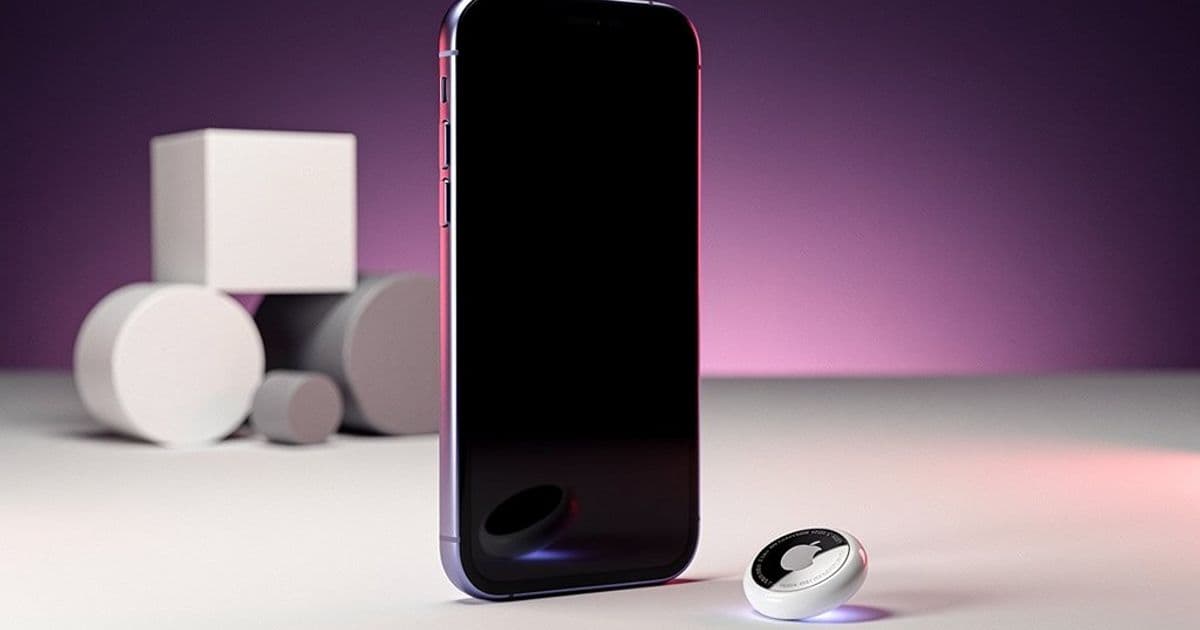
Perhaps the most intriguing hardware rumor is Apple's reported work on an "AI-powered wearable pin" shaped like an AirTag. This suggests a device that could be clipped to clothing or attached to bags, acting as a constant AI companion. Unlike the Humane AI Pin or Rabbit R1, which have struggled with market acceptance, Apple's approach would likely leverage its existing ecosystem strengths: seamless pairing, Find My network integration, and a potential bridge to iPhone processing.
The AirTag form factor is smart. It's familiar, discreet, and already designed for everyday carry. An AI pin in this shape could offer always-on voice interaction without needing to pull out your phone, while the Find My network could help locate it if lost. For developers, this opens questions about how apps would interact with such a device. Would it have its own App Store? Or would it be a peripheral that extends iPhone capabilities? Given Apple's history with accessories like AirPods and Apple Watch, we'd likely see it as a tightly integrated accessory rather than a standalone platform.
The bigger question is utility. What does an AI pin do that an iPhone with Siri Shortcuts can't? The answer might lie in context awareness—always listening for queries without the social friction of talking to your phone in public, or providing subtle haptic feedback for notifications and reminders. But the success of such a device will depend entirely on the quality of the AI models powering it and the specific problems it solves better than existing tools.
Internal AI Tools: Boosting Productivity from Within
While consumer-facing AI gets the headlines, Apple is also reportedly using AI chatbots internally to boost employee productivity. This mirrors a broader trend in tech where companies like Google and Meta use AI assistants for code generation, documentation, and internal knowledge management. For Apple, this could mean faster development cycles for iOS, macOS, and hardware components.
From a developer's perspective, this internal use case is a proving ground. If Apple's engineers are successfully using AI to write code, debug, or design interfaces, it's more likely those same capabilities will eventually trickle down to Xcode and developer tools. Imagine Xcode with an AI assistant that can suggest fixes for SwiftUI previews, generate unit tests, or explain compiler errors in plain language. The report doesn't specify which chatbots Apple uses internally, but given their privacy stance, it's likely a combination of licensed models and proprietary systems.
The Broader Ecosystem: What It Means for Developers
These three threads—iOS 27 chatbot, AI pin, and internal tools—converge on a single theme: Apple is moving AI from a feature to a platform. For developers, this means several things:
New APIs are coming: If Siri becomes a true chatbot, expect new frameworks for conversational AI. This could be an evolution of SiriKit or a completely new API, perhaps built on Core ML with on-device model support.
Hardware integration opportunities: An AI pin would likely have its own SDK, allowing apps to send notifications, data, or commands to the device. This could be particularly useful for fitness apps, productivity tools, or accessibility features.
Privacy-preserving AI: Apple will likely emphasize on-device processing for sensitive queries, with cloud offload only for complex tasks. Developers will need to design apps that work well in both modes.
Cross-platform considerations: Any AI feature will need to work across iPhone, iPad, Mac, and possibly Apple Watch. This means designing for different screen sizes, input methods, and processing capabilities.
The Competitive Landscape
Apple's AI push comes as competitors are already deep in the game. Google has Gemini integrated across Android and Pixel devices. Microsoft has Copilot in Windows, Office, and GitHub. Amazon is refining Alexa. Apple's advantage has always been vertical integration—the ability to control hardware, software, and services. An AI pin would be a unique hardware play that neither Google nor Microsoft currently offers in a mainstream consumer device.
However, the risks are real. The AI pin market has been rocky, with Humane and Rabbit facing criticism over limited functionality and high prices. Apple's brand loyalty could help, but the device needs a clear value proposition. Is it for professionals who need hands-free AI access? For accessibility? For kids? The use case must be compelling enough to justify carrying another device.
What to Watch Next
As we move through 2026, several milestones will indicate how serious Apple is about these AI initiatives:
- WWDC 2026: This is where iOS 27 features would likely be announced. A chatbot interface for Siri would be a keynote highlight.
- Hardware events: Any AI pin would need its own launch event, separate from iPhone or Apple Watch, to establish its identity.
- Developer betas: Early access to iOS 27 will reveal new APIs and frameworks for AI integration.
- Internal tooling leaks: More details about Apple's internal AI use could hint at future developer tools.
For now, these reports suggest Apple is taking a measured, ecosystem-first approach to AI. Rather than rushing a half-baked product to market, they're building the foundation: better models, new hardware form factors, and internal processes. The result could be a more cohesive AI experience than competitors offer, but it will require patience from developers and users alike.
The next year will be critical. If Apple can deliver a chatbot that feels genuinely useful, an AI pin that solves real problems, and internal tools that accelerate development, it could leapfrog competitors who are already in the market but struggling with integration. If not, Apple risks being seen as playing catch-up in the AI race. For mobile developers, the message is clear: start thinking about how conversational AI and context-aware hardware could enhance your apps, because the platform is preparing to evolve in significant ways.
Comments
Please log in or register to join the discussion