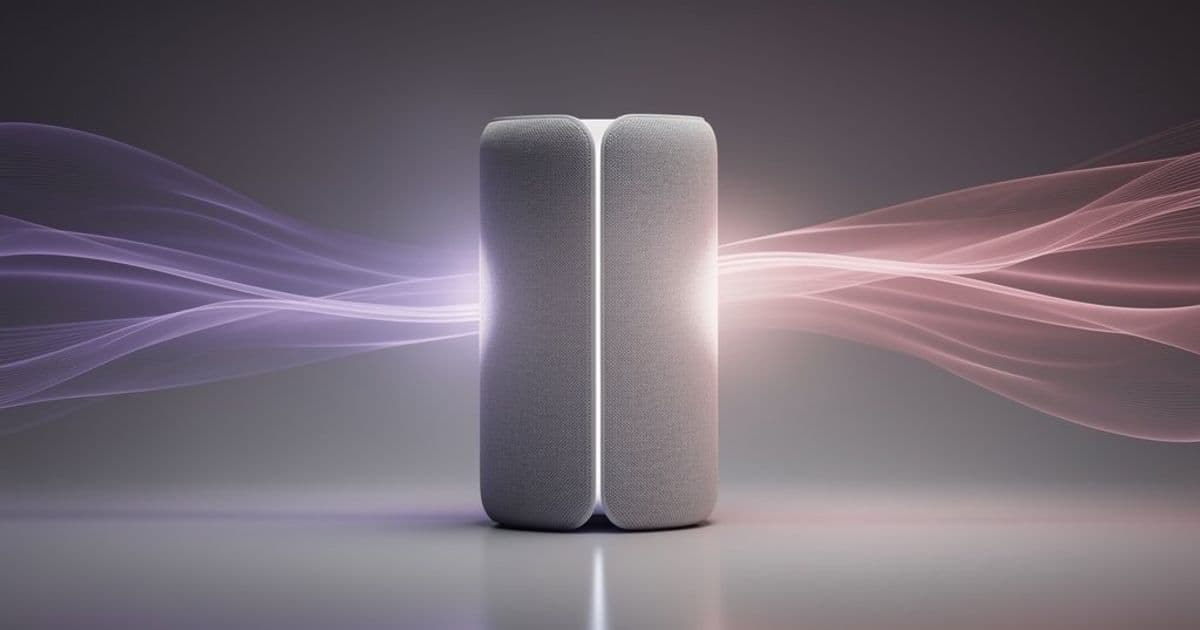
Apple has officially confirmed a partnership with Google to integrate Gemini AI into Siri, fundamentally altering the voice assistant's capabilities and Apple's AI strategy. This move follows Apple's rejection of OpenAI's ChatGPT and signals a new era of cross-platform AI collaboration, with significant implications for user privacy, ecosystem lock-in, and the future of Apple's services.
The long-rumored partnership between Apple and Google is now official. Apple has confirmed that Google's Gemini AI will power new, more intelligent features for Siri, marking one of the most significant shifts in the voice assistant's history. This decision comes after Apple reportedly declined a similar offer from OpenAI, choosing instead to partner with a company that has a proven, large-scale AI model in production.
The implications for Siri are immediate and profound. For years, Siri has been criticized for its limited contextual understanding and inability to handle complex, multi-step requests. By integrating Gemini's advanced language models, Apple can leapfrog its own development timeline. We can expect Siri to become significantly more conversational, capable of summarizing long texts, generating creative content, and answering nuanced questions with greater accuracy. This isn't just a feature update; it's a foundational upgrade to the assistant's core intelligence.
Crucially, Apple has structured this deal to maintain its privacy-first stance. According to reports, Apple will fine-tune Gemini independently, and there will be no Google branding on Siri. User requests will be processed on Apple's servers or on-device where possible, with Apple acting as the intermediary. This means Apple retains control over the user experience and data handling, even as it leverages Google's raw AI power. The financial terms are also staggering, with Apple reportedly paying billions for access to Gemini's capabilities, a testament to the value Apple places on closing its AI gap.
This partnership also highlights a critical shift in Apple's ecosystem strategy. For decades, Apple's strength has been in its tightly integrated, proprietary software and services. Leaning on a third-party AI model from a direct competitor like Google is a pragmatic admission that building a world-class AI from scratch is a monumental task, even for a company with Apple's resources. It represents a new form of ecosystem lock-in: users will stay for the seamless integration of powerful AI features, but the underlying intelligence is now powered by an external source. This could lead to interesting dynamics in future antitrust discussions and how Apple manages its platform.
Beyond Siri, the broader Apple ecosystem is seeing a significant expansion of its creative and service offerings. The newly announced "Apple Creator Studio" bundle is a compelling package for professionals and hobbyists alike. It consolidates several of Apple's most powerful creative apps—Pages, Numbers, Keynote, and Freeform—into a single, freemium subscription. This move democratizes access to high-quality productivity software, positioning it as a direct competitor to Microsoft 365 and Google Workspace. The inclusion of Freeform, Apple's collaborative whiteboard app, is particularly strategic, as it encourages real-time collaboration within the Apple ecosystem.
The bundle also signals a strategic shift for Apple's software. By making these core apps freemium, Apple can attract a wider user base, potentially converting them into paying subscribers for advanced features or other Apple services. It also creates a more unified experience across devices, from iPhone to iPad to Mac, reinforcing the value of staying within Apple's walled garden.

On the hardware front, the Apple Vision Pro continues to find its niche in immersive media consumption. The experience of watching an NBA game courtside through the Vision Pro is a perfect example of its potential. Unlike traditional screens, the Vision Pro can create a sense of presence and scale that makes the viewer feel like they are actually in the arena. This isn't just a larger screen; it's a spatial computing experience that can overlay real-time stats, replays, and other interactive elements directly into the viewer's environment. While the Vision Pro remains a premium device, these specific, high-value use cases are crucial for demonstrating its utility beyond a novelty.

However, as Apple expands its services and integrates more third-party AI, the question of data reliability becomes paramount. The discussion around iCloud's dependability as a backup solution is more relevant than ever. While iCloud is deeply integrated and convenient, it's not a true, comprehensive backup of a user's data. It primarily syncs data across devices, meaning if a file is deleted on one device, it can propagate that deletion everywhere. For critical data, a multi-layered backup strategy is essential. This includes regular local backups to an external drive via Time Machine, and potentially a secondary cloud backup service for off-site redundancy. The integration of more powerful AI features that process personal data only underscores the importance of having control over your own information.
In conclusion, Apple's official Gemini deal is a watershed moment. It acknowledges the power of external AI innovation while attempting to preserve Apple's core values of privacy and seamless integration. Coupled with the expansion of its creative software suite and the continued exploration of spatial computing, Apple is aggressively positioning itself for a future where AI is embedded in every interaction. The success of this strategy will depend on how well Apple can execute on its promise of a private, integrated experience, even as the intelligence behind it comes from a competitor's technology.
Comments
Please log in or register to join the discussion