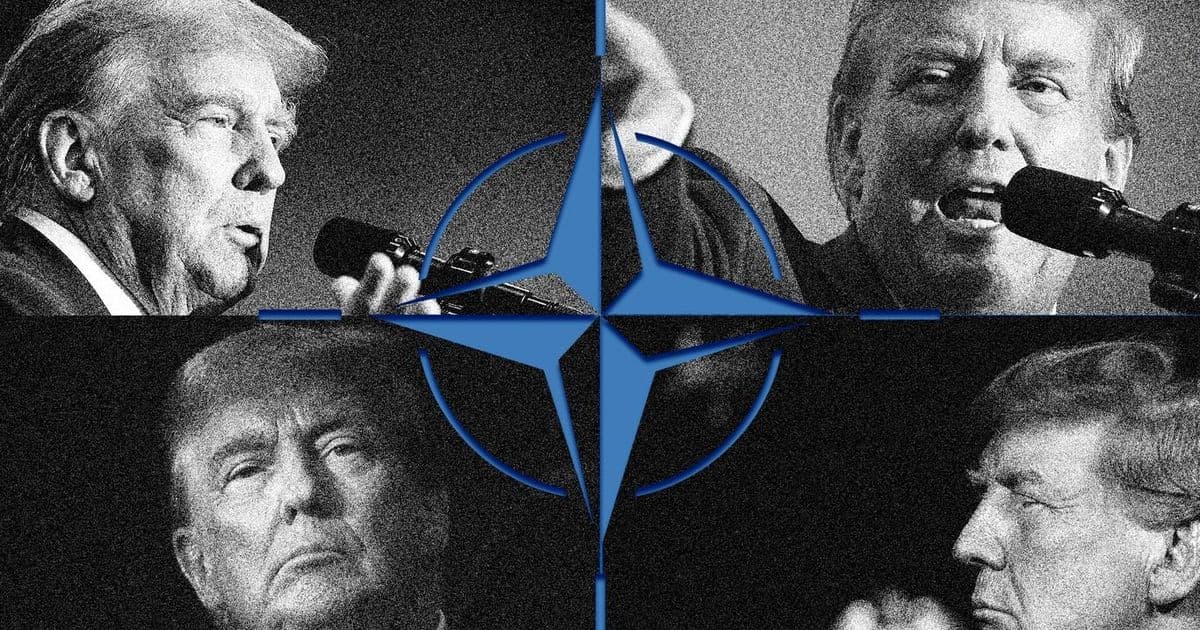
The North Atlantic Treaty Organization's mutual defense commitment, codified in Article 5, represents one of the most significant military alliances in modern history. This analysis breaks down its legal framework, operational history, and strategic implications for member states, examining how the clause functions as both a deterrent and a binding obligation in an era of renewed geopolitical tension.
The North Atlantic Treaty Organization's mutual defense commitment, codified in Article 5 of its founding treaty, represents one of the most significant military alliances in modern history. This analysis breaks down its legal framework, operational history, and strategic implications for member states, examining how the clause functions as both a deterrent and a binding obligation in an era of renewed geopolitical tension.
The Legal Architecture of Article 5
Article 5 of the North Atlantic Treaty, signed in Washington, D.C. on April 4, 1949, states: "The Parties agree that an armed attack against one or more of them in Europe or North America shall be considered an attack against them all." This single sentence established the principle of collective defense that has defined the alliance for over seven decades.
The treaty's legal framework includes several critical components:
Trigger Conditions: An armed attack must occur against a member state's territory, forces, vessels, or aircraft in Europe or North America. The geographic limitation is significant—attacks in other regions (such as the Asia-Pacific) do not automatically trigger Article 5.
Unanimity Requirement: All 32 member states must agree that Article 5 applies. This creates a high bar for activation, requiring diplomatic consensus rather than automatic response.
Proportionality Clause: The response must be "immediately" and "by such action as it deems necessary," including the use of armed force, to restore and maintain security. This gives individual members discretion in their response while maintaining collective commitment.
Operational History: From Theory to Practice
Article 5 has been invoked only once in NATO's history—following the September 11, 2001 terrorist attacks on the United States. The invocation occurred on September 12, 2001, when NATO ambassadors unanimously agreed that the attacks satisfied the treaty's conditions.
The practical implementation revealed both the strength and limitations of the clause:
Immediate Response: NATO's military committee began planning within hours. The alliance deployed AWACS surveillance aircraft to U.S. airspace and later contributed to the International Security Assistance Force (ISAF) in Afghanistan.
Political Complexity: The Afghanistan mission demonstrated that Article 5 activation doesn't guarantee unified action. While all members contributed to ISAF, the scale and nature of contributions varied significantly. Some members restricted their forces to specific roles or regions.
Duration and Evolution: The Afghanistan mission lasted nearly 20 years, with NATO's role evolving from initial stabilization to counterinsurgency. The experience highlighted how Article 5 responses can become long-term commitments with complex political dimensions.
Strategic Deterrence and Credibility
Article 5's primary strategic value lies in its deterrent effect. The clause creates a "tripwire" mechanism where an attack on any member risks confrontation with the entire alliance, including the United States' nuclear umbrella.
Deterrence Calculus: Potential adversaries must weigh the cost of attacking a smaller member against the risk of triggering a response from 32 nations, including three nuclear powers (U.S., UK, France). This multiplication effect makes aggression against even the smallest members strategically unattractive.
Credibility Challenges: The alliance faces ongoing questions about its credibility. Russia's 2014 annexation of Crimea and subsequent hybrid warfare tactics tested NATO's response mechanisms without triggering Article 5. The conflict in Ukraine, while not involving a NATO member, has prompted extensive debate about the threshold for invoking the clause.
Article 4 Consultations: Before Article 5 activation, members can invoke Article 4, which calls for consultation "whenever, in the opinion of any of them, the territorial integrity, political independence or security of any of the Parties is threatened." This has been invoked multiple times, including during the 2015 Turkish-Syrian border crisis and the 2022 Ukraine invasion.
Technical and Operational Considerations
The implementation of Article 5 involves complex military and logistical coordination:
Force Generation: NATO maintains a complex system for requesting and allocating forces. The NATO Response Force (NRF) provides a rapidly deployable brigade-sized force (approximately 40,000 personnel) on a rotational basis. However, the NRF requires member state contributions and cannot be deployed without consensus.
Command Structure: NATO's integrated military command structure, with Supreme Headquarters Allied Powers Europe (SHAPE) in Belgium, provides the operational backbone. Article 5 responses would activate this structure, but the specific command arrangements depend on the nature and location of the attack.
Logistics and Sustainment: Deploying forces across the Atlantic requires massive logistical support. NATO's Strategic Support Area (SSA) includes ports, airfields, and infrastructure across Europe. The alliance maintains pre-positioned equipment and stockpiles, but sustained operations would require significant additional resources.
Modern Challenges and Adaptations
The alliance faces new challenges that strain Article 5's traditional framework:
Hybrid Warfare: Russia's use of cyber attacks, disinformation, and proxy forces creates ambiguity about what constitutes an "armed attack." NATO has developed responses short of Article 5, including enhanced forward presence in the Baltics and Poland, but the threshold for full activation remains unclear.
Cyber Attacks: The 2007 cyber attacks against Estonia, while not triggering Article 5, prompted NATO to develop cyber defense capabilities. In 2014, NATO recognized that a cyber attack could trigger Article 5 if it caused significant damage equivalent to a conventional attack.
Energy Security: The 2022 sabotage of the Nord Stream pipelines highlighted vulnerabilities in critical infrastructure. While not a direct attack on member territory, the incident demonstrated how non-military threats can impact alliance security.
Climate Change: NATO's 2022 Strategic Concept identifies climate change as a "threat multiplier" that affects security. Melting Arctic ice opens new shipping routes and resource extraction opportunities, potentially creating new flashpoints.
Economic and Industrial Dimensions
Article 5 activation would have profound economic implications:
Defense Spending: NATO members have committed to spending 2% of GDP on defense, but compliance varies. In 2023, only 11 of 32 members met this target. Article 5 readiness depends on sustained investment in capabilities, not just spending targets.
Industrial Base: The alliance requires interoperable equipment and ammunition stockpiles. Current conflicts have exposed European defense industrial capacity limitations. The European Defence Industrial Strategy aims to address this, but implementation will take years.
Economic Resilience: Article 5 responses require economic mobilization. Sanctions regimes, export controls, and defense production scaling would be necessary. The 2022 sanctions against Russia demonstrated both the potential and limitations of economic warfare.
Case Study: The Greenland Context
Recent discussions about Greenland's strategic importance illustrate how Article 5 applies to territory with unique geopolitical significance. Greenland is an autonomous territory within the Kingdom of Denmark, making it part of a NATO member state.
Strategic Value: Greenland hosts the Thule Air Base, a critical early warning radar site. Its location controls access to the Arctic and North Atlantic. Climate change is making Arctic shipping more viable, increasing Greenland's strategic value.
Sovereignty Considerations: While Denmark is a NATO member, Greenland's autonomy creates complex governance. Any threat to Greenland would trigger Article 5, but the response would involve coordination between Danish and Greenlandic authorities.
Resource Competition: Greenland's mineral resources, including rare earth elements, have attracted international interest. This creates potential for economic coercion or disputes that could escalate to security threats.
Future Evolution
NATO continues to adapt Article 5's application:
New Domains: The alliance has recognized space as an operational domain. Attacks on satellites could trigger Article 5 if they affect member security. NATO's Space Centre in Germany coordinates these efforts.
Resilience Requirements: The 2022 Strategic Concept emphasizes "resilience"—the ability to withstand and recover from attacks. This includes critical infrastructure protection, civil preparedness, and supply chain security.
Partnership Networks: NATO's partnerships with non-member states (like Sweden and Finland before their accession) create complex security arrangements. The alliance's "partnership framework" allows for cooperation without Article 5 obligations.
Conclusion
Article 5 remains NATO's cornerstone, but its application has evolved from a simple mutual defense clause to a complex strategic instrument. Its effectiveness depends not just on the legal text but on political will, military readiness, and economic capacity. As geopolitical competition intensifies, the clause's deterrent value increases, but so do the challenges of maintaining consensus among 32 diverse democracies.
The alliance's ability to adapt Article 5 to new threats—cyber, hybrid, and non-traditional—will determine its relevance in the coming decades. The clause's strength lies in its simplicity, but its implementation requires sophisticated coordination across military, political, and economic domains.
For NATO members, Article 5 represents both a security guarantee and a strategic commitment. Its credibility depends on consistent investment in defense capabilities, political unity, and clear communication about red lines. As the alliance faces new challenges, the fundamental principle remains: an attack on one is an attack on all.
Related Resources:
Comments
Please log in or register to join the discussion