
Motorola's new Edge 70 Fusion combines a slim 7.2mm profile with a 5,200mAh battery, quad-curved 6.78" 144Hz display, Snapdragon 7s Gen 3, and IP68/IP69 ratings for a premium mid-range experience.
Motorola is expanding its Edge 70 lineup with the new Edge 70 Fusion, a mid-range smartphone that strikes an interesting balance between slim design and battery capacity. While the standard Edge 70 pushes the limits of thinness at just 6.0mm, the Fusion takes a more practical approach, maintaining a slim profile while keeping the battery capacity intact.
Slimmer Design Without Battery Compromise
The Edge 70 Fusion measures 7.2mm thick, down from the 8.0mm thickness of the Edge 60 Fusion. Despite the slim-down, Motorola managed to maintain the same 5,200mAh battery capacity that users appreciated in the previous generation. This is a significant improvement over the standard Edge 70, which sacrifices battery life for its ultra-slim 6.0mm profile and 4,800mAh capacity.
At 177g, the weight remains essentially unchanged from its predecessor, making it comfortable for one-handed use while still feeling substantial enough to convey quality.
Display: Quad-Curved 6.78" OLED with 144Hz Refresh
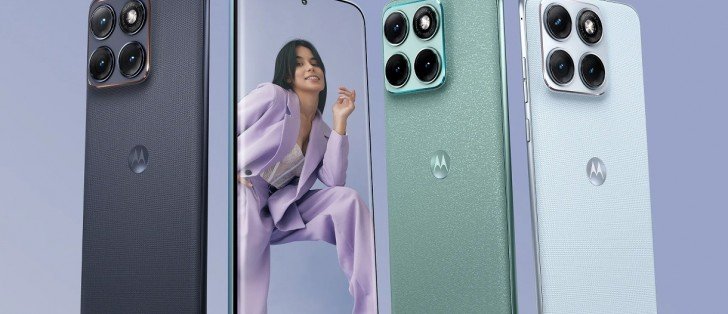
One of the most notable upgrades is the display. The Edge 70 Fusion features a quad-curved 6.78" OLED panel with 1272p+ resolution and a 144Hz refresh rate. The quad-curved design means the screen curves on all four sides, creating a more immersive viewing experience and reducing bezels.
Motorola claims an impressive peak brightness of 5,200 nits, which surpasses even the standard Edge 70's 4,500 nits. This exceptional brightness will be particularly useful for outdoor visibility in direct sunlight.
Performance: Snapdragon 7s Gen 3
The Fusion breaks from the previous model's MediaTek Dimensity 7300 chipset, opting instead for Qualcomm's Snapdragon 7s Gen 3. This TSMC N4 chip features Cortex-A720 and A520 CPU cores, delivering 15% better performance than its predecessor. The Adreno 810 GPU handles graphics duties, providing smooth performance for gaming and everyday tasks.
Camera System and Durability
On the photography front, the Edge 70 Fusion sports a Pantone Validated dual camera system. The main camera uses a 50MP Sony Lytia 710 sensor with 1.0µm pixels and optical image stabilization (OIS). It's paired with a 13MP ultra-wide camera offering a 120° field of view and macro capabilities. For selfies, there's a 32MP front-facing camera.
The phone is built to last, featuring Gorilla Glass 7i protection on the front. It also carries impressive IP68 and IP69 ratings, meaning it's protected against both submersion in water and high-pressure water jets. The device has passed MIL-STD-810H testing, further emphasizing its durability credentials.
Charging and Regional Variations
Like its siblings, the Edge 70 Fusion supports 68W fast wired charging, though wireless charging is absent. This should provide a full charge in about an hour, which is reasonable for the battery capacity.
Interestingly, there will be regional variations of the Edge 70 Fusion. The European version maintains the 7.2mm thickness with a 5,200mAh battery, while the Indian variant is slightly thicker at 7.99mm but packs a massive 7,000mAh battery. Motorola has confirmed that the 7,000mAh version will also be available in Europe, priced at €440 or £380 (including free Moto Buds Loop worth £130).
Pricing and Availability
The Motorola Edge 70 Fusion is available now in Europe through Motorola's online store. The 8GB/256GB configuration is priced at €420 on the mainland and £370 in the UK. The higher-capacity battery version costs slightly more at €440/£380.
The phone comes in several colors with fabric-inspired finishes on the back, including Pantone Blue Surf, Pantone Silhouette, and Pantone Country Air.
Market Position
The Edge 70 Fusion appears to target users who want a premium mid-range experience without the compromises of ultra-slim designs. By maintaining battery capacity while reducing thickness, Motorola has created a device that should appeal to users who value both form and function. The combination of a high-refresh-rate curved display, capable Snapdragon processor, and robust build quality makes it a compelling option in the competitive €400-€500 segment.
For those in regions where the 7,000mAh version is available, the choice becomes even more interesting – offering exceptional battery life in a still-reasonably-slim package. This flexibility in battery options shows Motorola's understanding of different market needs and user preferences across regions.

Comments
Please log in or register to join the discussion