
Apple's 2025 iPhone series disrupts its own hierarchy, with the base model now rivaling Pro features at a lower cost, the ultra-thin iPhone Air showcasing futuristic design, and the Pro Max solving persistent overheating and camera flaws. After extensive hands-on testing, our analysis reveals unexpected upgrade paths for developers and tech leaders navigating this complex choice landscape. The implications extend beyond consumer advice, hinting at Apple's broader shifts in thermal engineering an
The Tyranny of Choice: Apple's Unprecedented iPhone 17 Dilemma
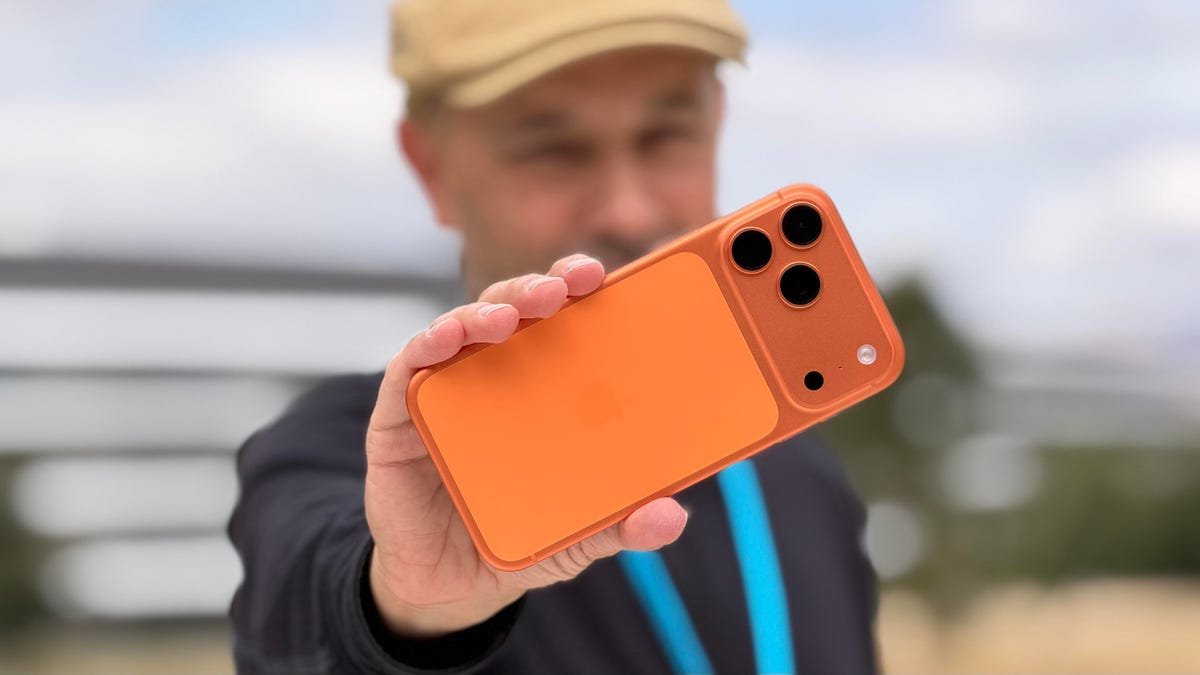 The iPhone 17 Pro Max in Cosmic Orange, captured with its own telephoto lens. (Jason Hiner/ZDNET)
In tech, more options often promise empowerment—but Apple's 2025 iPhone lineup risks overwhelming even seasoned upgraders. With four distinct models—iPhone 17, iPhone Air, iPhone 17 Pro, and iPhone 17 Pro Max—each packing significant innovations, the decision matrix has never been thornier. As developers and engineers, we crave cutting-edge capabilities, yet value and practicality can't be ignored. After rigorous testing, it's clear this isn't just an incremental update; it's a strategic realignment that challenges Apple's own status quo.
The Base Model iPhone 17: A Pro in Disguise
Gone are the days when the entry-level iPhone catered only to budget-conscious users. This year's $799 iPhone 17 inherits features previously reserved for Pro tiers, making it a sleeper hit for pragmatic technologists:
- Display Revolution: A 6.3-inch 120Hz ProMotion screen with 3000 nits peak brightness and anti-reflective coating—matching last year's Pro models but now at a $100 effective discount due to doubled base storage (256GB).
- Camera Leap: Dual 48MP main and ultrawide lenses, plus a 24MP selfie camera with AI-driven orientation switching. This machine-learning enhancement automatically adjusts between portrait and landscape based on detected faces, democratizing computational photography.
For developers, this signals Apple's push toward standardizing high-refresh-rate displays and AI integration, demanding app optimizations for smoother UIs and smarter camera APIs. Compared to Android rivals like the Pixel 10 or Galaxy S25—still at 128GB base storage—the iPhone 17 offers unparalleled value. If you rarely use telephoto zoom and own an iPhone 13 Pro or older, this model is a compelling, cost-efficient powerhouse.
iPhone Air: A Fragile Glimpse into Tomorrow
 The iPhone Air, showcased at Apple Park, redefines thinness but demands trade-offs. (Jason Hiner/ZDNET)
The iPhone Air isn't just a phone; it's Apple's audacious prototype for a foldable future. At nearly the width of a USB-C port, its engineering marvel evokes awe but comes with caveats:
- Design Sacrifices: Battery life struggles beyond four hours of heavy use, and cameras lag behind the base model. It's a deliberate tech demo, echoing Samsung's Galaxy S25 Edge, priming users for 2026's anticipated foldable iPhone.
- Niche Appeal: Ideal for early adopters who embraced Vision Pro or Google Glass—those willing to trade utility for the thrill of pioneering. For most? Stick with the iPhone 17 or Pros. Yet, its existence pressures competitors to accelerate ultra-thin innovations, potentially reshaping mobile development paradigms.
Pro Models: Solving the Overheating and Zoom Dilemmas
The iPhone 17 Pro and Pro Max directly address two years of user frustrations. As infrastructure experts know, thermal management is critical:
- Thermal Redesign: Abandoning titanium, Apple returned to aluminum casings (5-10x better heat conduction) and added a vapor chamber cooling system with deionized fluid. This engineering pivot could eliminate the overheating that plagued iPhone 15/16 Pro Max during intensive tasks like video processing or weak-signal areas.
- Camera Breakthrough: A 48MP tetraprism telephoto sensor enables "optical quality" 8x zoom, a leap from prior 12MP/5x limitations. Early tests show crisper, editable shots—crucial for creators relying on mobile photography.
For cybersecurity and AI professionals, the A19 Pro chip's sustained performance under load could enhance on-device ML tasks. If you endured overheating or zoom compromises on recent Pro models, this upgrade warrants serious consideration—a rare mid-cycle recommendation.
Navigating Your Upgrade: A Strategic Imperative
This year, Apple blurred its own lines: the base model challenges Pros, the Air teases disruption, and the Pro Max fixes fundamental flaws. For developers, it underscores a trend toward AI-ubiquity and thermal innovation in compact devices. Choose the iPhone 17 for unmatched value, the Air for bleeding-edge curiosity, or the Pro Max for uncompromised performance. Whatever your pick, it signals a future where choice isn't just about specs—it's about aligning technology with real-world resilience.
Source: Jason Hiner, ZDNET
Comments
Please log in or register to join the discussion