Apple's latest AirTag revision isn't just a hardware refresh; it's a calculated move to deepen its ecosystem lock-in while addressing practical findability issues. The expanded range and new airline partnerships reveal a focus on real-world utility over spec-sheet victories.
Apple has introduced a new AirTag, the company's second-generation item tracker. While the announcement follows the familiar pattern of iterative hardware updates—better chip, louder speaker, longer range—the specifics tell a more interesting story about Apple's strategy for its Find My network and the practical challenges of tracking everyday items.
The core upgrade is Apple's second-generation Ultra Wideband chip, the same component found in the iPhone 17 lineup and Apple Watch Ultra 3. This isn't a standalone innovation; it's a component synergy play. By using the same UWB chip across its device lineup, Apple creates a consistent performance baseline for its Precision Finding feature. The company claims this new chip enables Precision Finding from "up to 50 percent farther away" than the previous generation. While the exact measurement isn't provided, the implication is that the directional finding experience—using haptic, visual, and audio cues to guide a user to their lost item—has become more reliable in cluttered environments like homes or offices.
For the first time, Precision Finding is available on Apple Watch. Users with a Series 9 or later, or an Ultra 2 or later, can now use their wrist to locate an AirTag. This is a meaningful expansion of the feature's utility. Previously, finding a lost item required pulling out an iPhone. Now, if your keys are buried in a couch cushion and your phone is in another room, you can initiate the search directly from your watch. The haptic feedback on the wrist can provide directional cues, a more subtle and integrated experience than relying on a phone's screen and speaker.
The physical hardware also receives a practical update: the internal design has been revised to make the new AirTag 50 percent louder. Apple states this allows users to hear the device from up to twice the distance as before. This addresses a common complaint with the first generation, where the speaker was often too quiet to be useful in noisy environments or when the item was deeply buried. A louder speaker, paired with a new distinctive chime, makes the "Play Sound" function more effective for finding items in the same room.
Beyond the hardware, the most significant development is the deepening integration with the Share Item Location feature. This iOS capability, which allows users to temporarily share the location of a lost item with a third party, has been adopted by over 50 airlines. The practical application is straightforward: if luggage with an AirTag inside is delayed or lost, the owner can generate a secure link and share it with the airline's customer service team. The airline can then see the item's location on a map without needing to access the owner's Apple account or personal data.
The impact here is quantifiable. According to data from SITA, a major IT provider for airlines, the use of Share Item Location has reportedly reduced baggage delays by 26 percent and cut "truly lost" luggage incidents by 90 percent. These figures suggest the feature is moving from a consumer convenience to a logistical tool for the aviation industry. For Apple, this represents a strategic partnership that embeds the Find My network into a critical, high-friction service, increasing the perceived value of the ecosystem.
Security and privacy remain a central marketing point. Apple emphasizes that the AirTag does not store location data on the device itself, and all communication with the Find My network is end-to-end encrypted. The network itself is crowdsourced, relying on the vast number of Apple devices in the world to anonymously detect and report the location of a lost AirTag. Crucially, Apple states that no one—not even Apple—can see the identity or location of the devices that help locate a lost item. This architecture is designed to mitigate privacy concerns that have surrounded item trackers since their inception.
The new AirTag also continues Apple's suite of anti-stalking features, including cross-platform alerts (which notify users if an unknown AirTag is moving with them) and unique Bluetooth identifiers that change frequently to prevent tracking. These measures are industry-first, but they also highlight an ongoing challenge: balancing the utility of a tracking device with the potential for misuse. Apple's approach is to build protections into the device's core functionality, a design philosophy that sets it apart from many third-party trackers.
From an environmental perspective, the new AirTag aligns with Apple's 2030 carbon neutrality goal. The enclosure contains 85 percent recycled plastic, the magnets use 100 percent recycled rare earth elements, and the printed circuit boards feature 100 percent recycled gold plating. The packaging is entirely fiber-based and recyclable. While these details may seem minor, they are part of a broader narrative Apple is constructing around sustainable hardware design, a narrative that resonates with a growing segment of consumers.
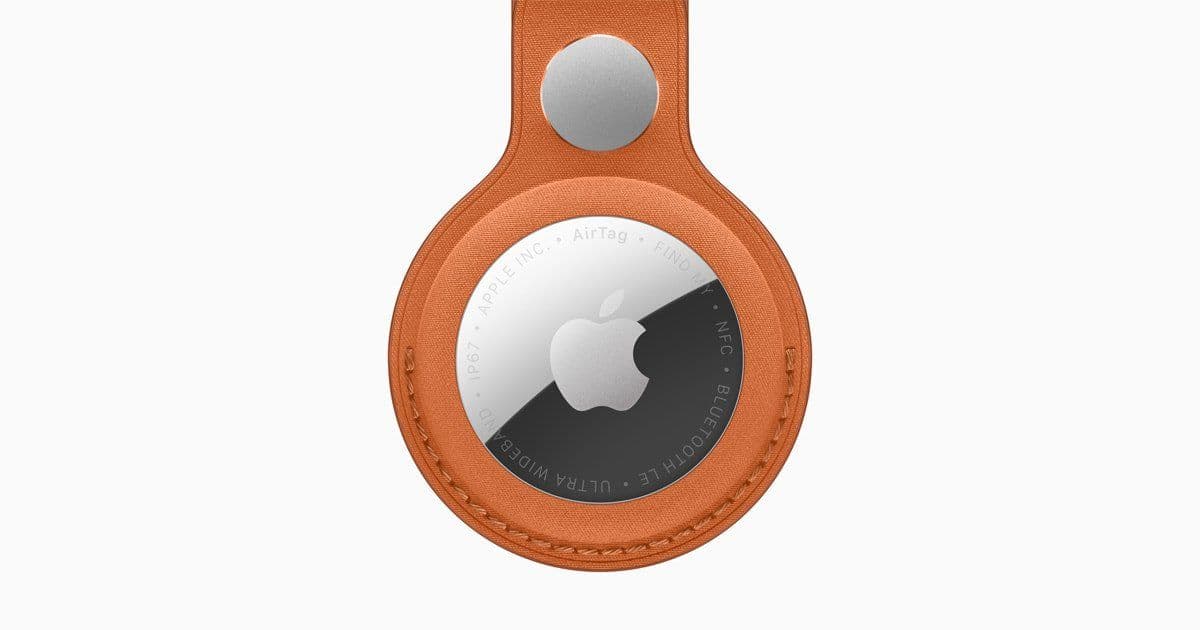
Compatibility is maintained; the new AirTag uses the same form factor, so all existing accessories, including the FineWoven Key Ring, remain usable. The FineWoven Key Ring, made from 68 percent recycled content, is available in five colors and costs $35 separately.
Pricing remains unchanged: $29 for a single AirTag and $99 for a four-pack. Free personalized engraving is available through Apple's online store and app. The new AirTag requires an iPhone or iPad running iOS 26 or later, and Precision Finding on Apple Watch requires watchOS 26.2.1 on compatible models.
The new AirTag is available for order now and will be in Apple Stores and authorized resellers later this week. Apple AirTag Product Page
Technical Context and Ecosystem Implications
The new AirTag's hardware is less about revolutionary technology and more about refinement and integration. The second-generation UWB chip is a key example. Ultra Wideband technology allows for precise spatial awareness, enabling devices to understand their position relative to each other with centimeter-level accuracy. In the context of Precision Finding, this means the iPhone or Apple Watch can provide directional guidance—"move left," "move right," "you're getting warmer"—rather than just a general proximity alert.
By using the same UWB chip across its product line, Apple ensures a consistent experience. If you have an iPhone 17 and an Apple Watch Ultra 3, both will provide the same level of precision when finding an AirTag. This consistency is a subtle but powerful form of ecosystem lock-in. The more Apple devices you own, the more seamless and capable the Find My network becomes.
The expanded Bluetooth range, while less glamorous than UWB, is equally important. Bluetooth is the technology that allows an AirTag to be detected by nearby Apple devices in the Find My network. A longer range means an AirTag has a higher chance of being picked up by a passing iPhone, even if it's in a bag or a car trunk. This directly improves the crowdsourced tracking capability, which is the AirTag's primary advantage over standalone GPS trackers that require a cellular connection.
The Find My network itself is a fascinating piece of infrastructure. It's a decentralized, privacy-focused system where millions of Apple devices act as anonymous sensors. When an AirTag is out of range of its owner, it emits a secure Bluetooth signal. Any nearby Apple device (with Find My enabled) can detect this signal, encrypt its location, and upload it to Apple's servers. The owner can then see this location on a map. The entire process is anonymous and encrypted; Apple cannot see which device reported the location, and the reporting device doesn't know what it's tracking.
This model scales with Apple's device sales. The more iPhones, iPads, and Macs in the world, the denser and more effective the Find My network becomes. It's a powerful moat. Competitors like Tile or Chipolo rely on their own, smaller networks of users, which are inherently less dense than Apple's billion-device ecosystem.
The Share Item Location feature with airlines is a clever expansion of this network. It doesn't just help consumers; it creates a B2B (business-to-business) data pipeline. Airlines get a tool to improve their baggage handling efficiency, and Apple gets its technology embedded in a critical service. The reported 90 percent reduction in "truly lost" luggage is a compelling statistic for other industries to consider. Could hotels, car rental companies, or shipping logistics firms adopt similar partnerships? It's a logical next step.
Security and Privacy Trade-offs
The anti-stalking features are a necessary response to real-world misuse. The initial launch of AirTag saw reports of the device being used to track people without their consent. Apple's response has been to add software-based alerts and to make the AirTag's Bluetooth identifiers change frequently, making it harder for a stalker to use a single device for long-term tracking.
However, these protections are not foolproof. The fundamental design of a Bluetooth tracker—small, battery-powered, and networked—creates inherent risks. Apple's approach is to make the device as privacy-centric as possible, but the onus is also on users to be aware of their surroundings and respond to alerts. The new AirTag doesn't solve this problem, but it continues Apple's effort to set a high bar for responsible design in the tracker category.
Conclusion
The new AirTag is a refinement, not a reinvention. Its value lies in the cumulative effect of small improvements: a slightly longer range, a louder speaker, and a new chip that enables more precise finding. The real story, however, is in the ecosystem. By making Precision Finding available on the Apple Watch, deepening partnerships with airlines, and maintaining a consistent hardware form factor, Apple is strengthening the utility of the Find My network. For users, this means a more reliable tool for finding lost items. For Apple, it's another thread in the web that connects its devices, services, and partners, making the ecosystem more valuable with each iteration. The AirTag remains a simple product, but its role within Apple's broader strategy is anything but.
Comments
Please log in or register to join the discussion