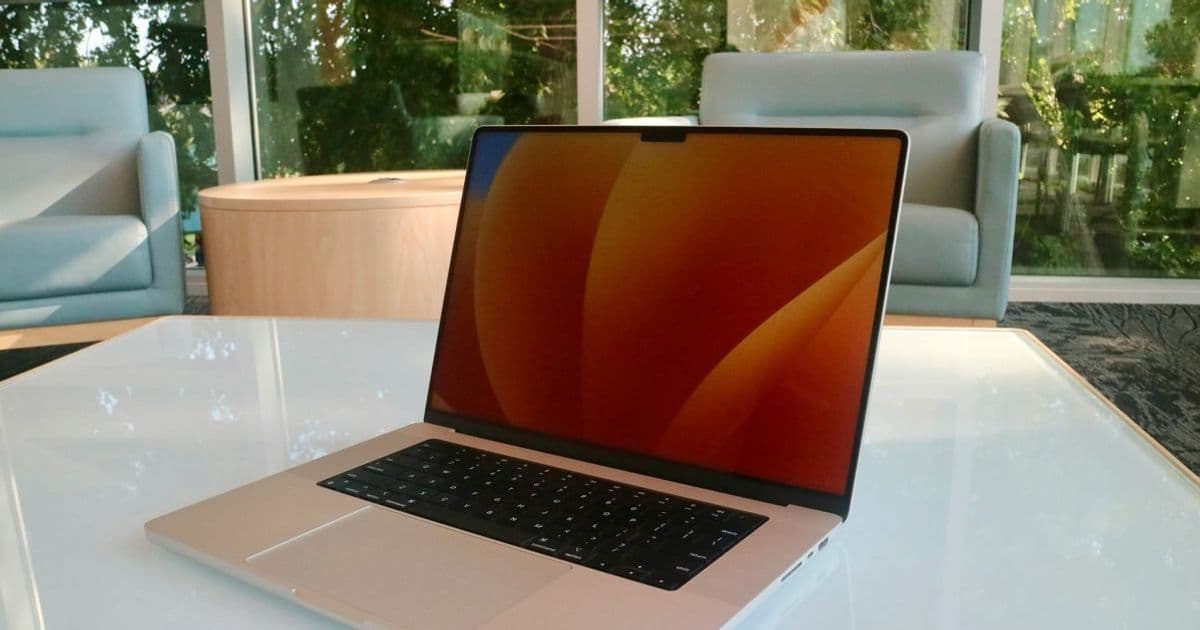
Apple's revamped Mac configurator removes pre-configured options, potentially paving the way for customizable CPU and GPU combinations in upcoming M5 Pro and Max chips.
Apple last week changed the way you buy a Mac online, removing the previous lineup of customizable pre-configured options and instead putting you straight into configuring your spec from scratch. While at first glance this seems a somewhat strange thing to do, arguably making it a little more complicated for a non-tech buyer to choose their Mac, the change could provide support for a theory that Apple will allow you to separate CPU and GPU options when buying an M5 Pro or Max Mac.
The New Mac Configurator
You've always been able to configure the spec of your Mac from a wide range of options. However, prior to last week, Apple would begin the purchase flow by offering you a number of standard configurations. Previously when you clicked the "Buy" button, Apple's Online Store would first take you to a landing page. On this landing page, you'd see a range of prebuilt options with various chip, RAM, and storage options. You'd choose the starting configuration by clicking "Select" and could then fine-tune your machine to your exact preference or proceed with the default configuration.
I strongly suspect that for the MacBook Air at least, the majority of people simply chose one of the pre-configured options and didn't make any adjustments to the spec. Now, however, you have to make every decision yourself, starting with the screen size and proceeding down to the pre-installed software. That would seem a retrograde step in Apple's approach to simplicity.
Why the Change Might Make Sense
While you can choose the processor for your machine, you are stuck with Apple's fixed combinations of CPU and GPU cores. That's because the two of them are tightly integrated in an approach known as a System-on-a-Chip (SoC). Essentially what would have been completely separate chips are integrated into a single, tightly-integrated unit containing circuitry for both.
For the upcoming M5 Pro and Max chips, however, Apple is reportedly switching to a new chip packaging process that allows greater flexibility. Apple analyst Ming-Chi Kuo says that for the M5 Pro chip, Apple will be taking advantage of TSMC's very latest chip packaging process known as SoIC-mH (System-on-Integrated-Chips-Molding-Horizontal) to improve production yields and thermal performance, featuring separate CPU and GPU designs.
The Potential for Customizable Configurations
One of the implications of separating the CPU and GPU within the packaging in this way is that it would allow Apple to give you the option of configuring the two individually. This might make sense, for example, if you were doing graphics-intensive work that doesn't make too many demands on the CPU but requires as many GPU cores as you can get your hands on. In that case, you might want to opt for the base CPU and a maxed out GPU.
It should be noted that there is no guarantee Apple will choose to offer this flexibility, but it strikes me that the change to the configurator perhaps points in this direction. We may not have long to wait before we find out, with the M5 Pro and Max variants of the MacBook Pro potentially launching this month.
The shift from pre-configured options to a fully customizable approach suggests Apple is preparing for a more granular level of hardware customization. This aligns with the company's ongoing efforts to provide more tailored solutions for different user needs, from creative professionals to developers.
What This Means for Mac Buyers
If Apple does implement separate CPU and GPU configurations, it would represent a significant shift in how Mac buyers approach their purchases. Currently, choosing between different M-series chips involves accepting a predetermined balance of CPU and GPU cores. The ability to customize these independently would allow for more precise matching of hardware to specific workloads.
For instance, video editors who rely heavily on GPU acceleration could prioritize graphics performance over CPU speed, while software developers might prefer more CPU cores for compilation tasks and be content with fewer GPU cores. This level of customization could make MacBooks even more appealing to professional users who have specific performance requirements.
Technical Implications
The move to separate CPU and GPU designs within the same package also has technical implications. The SoIC-mH packaging technology that Apple is reportedly adopting allows for better thermal management and potentially higher performance by reducing the distance between components. This could lead to more efficient heat dissipation and improved overall system performance.
Additionally, the ability to mix and match CPU and GPU configurations could help Apple optimize their chip designs for different market segments. Rather than creating entirely separate chip designs for different MacBook models, Apple could use a more modular approach, potentially reducing development costs and complexity.
Looking Ahead
As we await the official launch of the M5 Pro and Max chips, the new configurator provides an intriguing hint at what might be coming. Whether Apple will fully embrace the concept of separate CPU and GPU configurations remains to be seen, but the groundwork appears to be in place.

The change to the Mac configurator represents more than just a UI update—it could signal a fundamental shift in how Apple approaches Mac hardware customization. For users who have long wished for more granular control over their Mac's specifications, this development is certainly worth watching closely.
For now, we'll have to wait and see whether Apple's new configurator is indeed a precursor to more flexible hardware options, or simply a streamlined approach to the existing configuration process. Either way, it's clear that Apple is continuing to refine and evolve the Mac buying experience.
Comments
Please log in or register to join the discussion