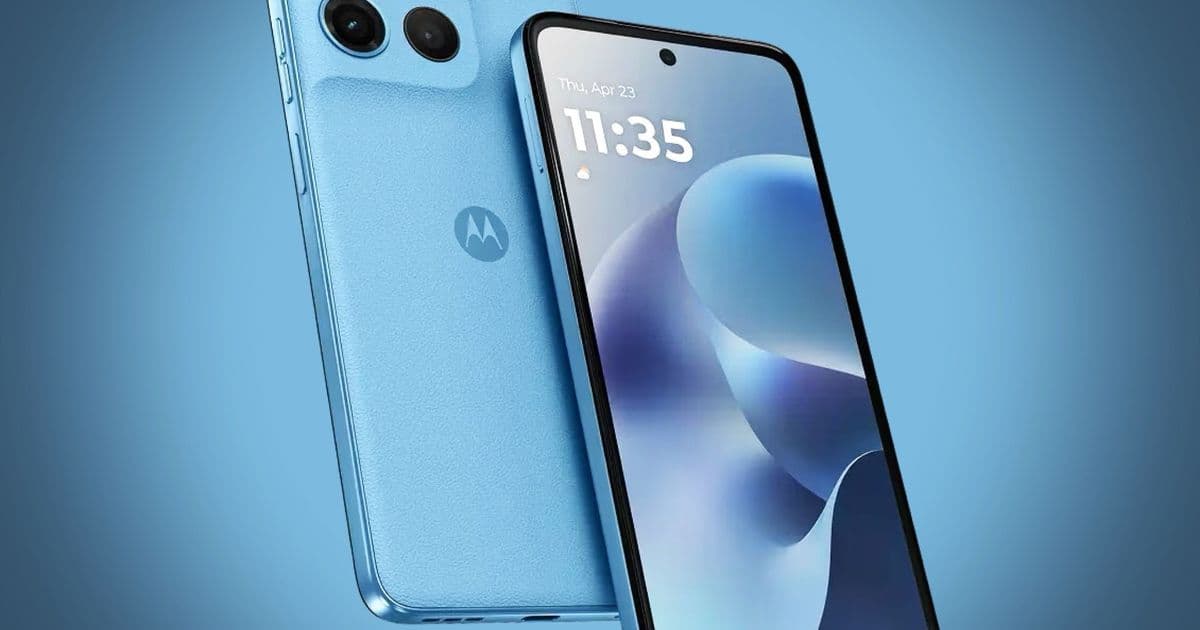

Motorola's new Moto G17 may skip Android 16 entirely, citing EU regulations that don't explicitly require major OS upgrades.
Motorola's recently launched Moto G17 has sparked controversy with its update policy, as the company confirms the device won't receive any major Android updates despite EU regulations requiring five years of software support. The mid-range smartphone, announced just last week, appears to be a modest refresh of the Moto G15 with its primary upgrade being a 32 MP front-facing camera.

The Moto G17 ships with Android 15, which was released in summer 2024, and Motorola UK promises only two years of security patches without any major Android version upgrades. This policy has raised eyebrows given the European Union's Digital Services Act, which mandates manufacturers provide at least five years of updates from a phone's launch date.
When questioned by media outlet After Dawn about this apparent discrepancy, Motorola offered an interesting interpretation of the EU regulations. According to the company, while the regulation requires security and feature updates, it doesn't explicitly mandate major operating system upgrades. This interpretation suggests that the Moto G17 won't receive Android 16 in Europe either, despite being launched with the previous version.
This update policy puts Motorola at a significant disadvantage compared to its competitors. The Samsung Galaxy A17, priced at approximately $180, guarantees six Android updates - a stark contrast to Motorola's approach. Even Chinese manufacturers like Xiaomi have more generous policies, with the Redmi Note 15 promised four years of OS updates.
The decision is particularly puzzling given that the Moto G17 uses the MediaTek Helio G81 Extreme processor, the same chipset found in its predecessor. This ageing hardware could have benefited from software optimizations and security improvements that come with newer Android versions.
Motorola's stance raises questions about how manufacturers will interpret and implement EU regulations moving forward. While the company may technically comply with the letter of the law by providing security patches, the lack of major OS updates could leave users with outdated software features and potentially reduced performance over time.
For consumers considering the Moto G17, this update policy should be a significant factor in the purchasing decision. The phone's modest upgrades over the G15, combined with limited software support, make it a less attractive option compared to competitors offering longer-term software support.
The situation highlights the ongoing tension between regulatory requirements and manufacturer interpretations, particularly in the Android ecosystem where update policies vary widely between brands. As smartphones become increasingly central to daily life, the importance of software support extends beyond security to include performance, features, and overall user experience.
Motorola's approach with the G17 may set a precedent for how other manufacturers interpret similar regulations, potentially leading to a landscape where security updates are prioritized over feature updates - a compromise that may not serve consumers well in the long run.
Comments
Please log in or register to join the discussion