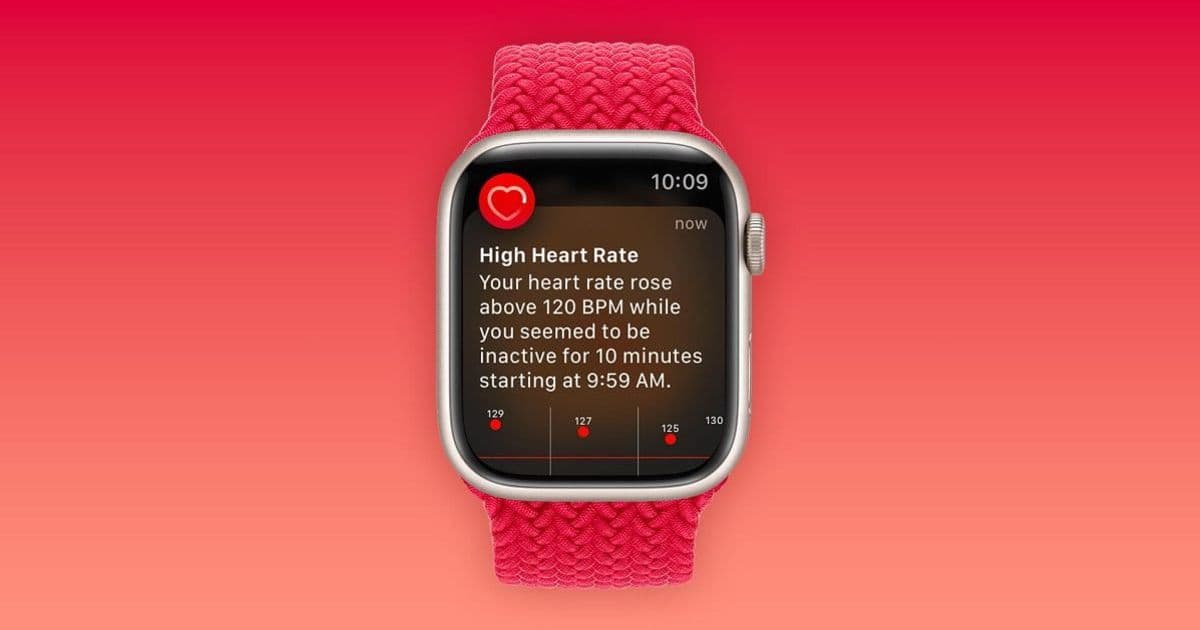
Political columnist Stephen Pollard credits his Apple Watch with potentially saving his life by alerting him to dangerous heart rate spikes caused by a medication interaction during chemotherapy treatment.
Political columnist Stephen Pollard has shared a remarkable story about how his Apple Watch may have saved his life by alerting him to dangerous heart rate spikes caused by a medication interaction during his leukemia treatment.
Pollard, who is undergoing chemotherapy for leukemia, takes what he calls his "miracle pill" every evening along with three other medications to manage side effects. When he developed what appeared to be a chest infection, his doctor prescribed antibiotics. However, this seemingly routine prescription nearly turned deadly.
That evening, Pollard began experiencing severe symptoms. "I started to get a bad headache, which I assumed was the result of the heaving and shaking from the cough," he wrote. "The headache went but instead I developed extreme nausea. It felt as if my brain was floating but being pushed around, like the worst seasickness imaginable, made worse by the heaving when I coughed."
The symptoms were so severe that when he needed to get up during the night, "it felt 20 times worse. I just couldn't do it."
During this ordeal, Pollard's Apple Watch detected a steep increase in his heart rate despite him being in bed. At the time, he attributed the alert to his restlessness and overall discomfort. However, when he spoke to another GP from the same medical center the following day, the doctor immediately suspended the antibiotic, stating it should never have been prescribed given Pollard's ongoing leukemia treatment.
The GP's concern intensified when Pollard mentioned the heart rate warnings from his Apple Watch. "More urgently, was I suffering heart palpitations?" Pollard recalled. "I remembered the watch's heart-rate warnings. Suddenly he seemed a lot more concerned."
The doctor explained that it was vital for Pollard's heart rate to start coming down now that he had taken his last dose of the antibiotic. If the rate didn't fall, damage had already been done. Pollard was instructed to be monitored at least every hour to check his condition.
Thankfully, the damage had not yet been done. Pollard was able to use his Apple Watch to monitor his heart rate and ensure it was coming down. Looking back, he says the heart monitor "may have saved my life. At the very least, it prevented big trouble — my euphemism for a heart attack." The GP who identified the drug interaction was even more blunt: "You need to say a very big thank you to your watch. You might not have been here without it."
Pollard lives alone, and he acknowledges the gravity of the situation: "I live on my own and a heart attack in bed could have killed me."
In his account, Pollard urges readers to "please think about wearing a smartwatch or a fitness device," a sentiment that resonates strongly given the potential life-saving capabilities these devices can offer.
This isn't the first time an Apple Watch has been credited with saving someone's life. The device's ability to monitor heart rate continuously and alert users to irregularities has made it a valuable health tool for many users, particularly those with underlying health conditions or those taking multiple medications.
The incident highlights the growing importance of wearable technology in healthcare monitoring. As these devices become more sophisticated, they're increasingly serving as early warning systems that can alert users and medical professionals to potential health issues before they become critical.
For cancer patients undergoing chemotherapy, who often take multiple medications and are at higher risk for complications, such monitoring tools can be particularly valuable. The ability to detect adverse drug interactions or side effects early could potentially prevent serious health emergencies.
Pollard's experience serves as a powerful reminder of how technology, when used thoughtfully, can have profound impacts on our health and wellbeing. While no device can replace professional medical care, tools like the Apple Watch are increasingly becoming valuable partners in health monitoring and early intervention.
As wearable technology continues to advance, stories like Pollard's may become more common, highlighting the potential for these devices to serve as early warning systems that can help prevent serious health complications and potentially save lives.
Comments
Please log in or register to join the discussion