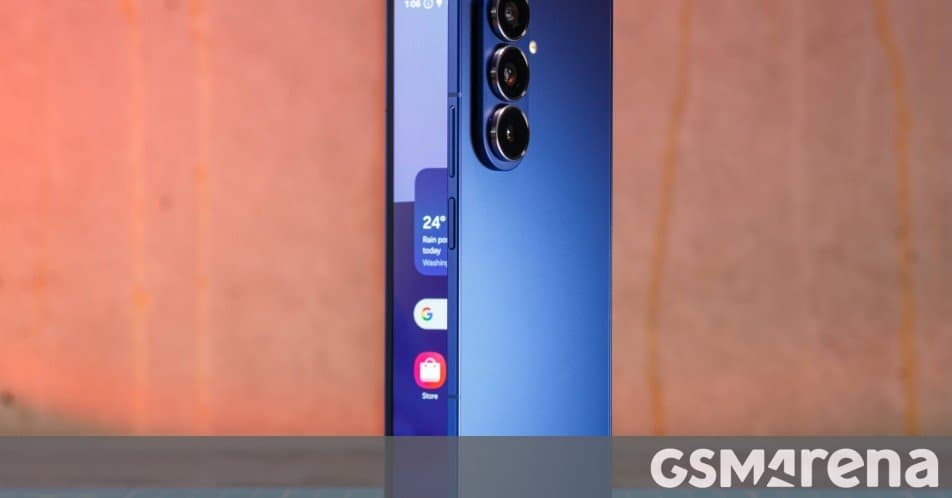
Samsung is finally increasing battery capacity in its Galaxy Z Fold8 and upcoming 'wide Fold' models, ending a four-year stagnation with modest but welcome improvements.
The Samsung Galaxy Z Fold line has had the exact same 4,400 mAh battery capacity since the Galaxy Z Fold3, which came out in 2021 - and, funnily enough, the Fold2 from 2020 actually had a bigger 4,500 mAh battery. This situation is ridiculous when you look at what Chinese foldables can offer in terms of battery capacity these days, and apparently Samsung is finally going to do something about it.
A new rumor claims the Galaxy Z Fold8 launching later this year will finally up this battery capacity - but not by much. It will, however, go all the way up to 5,000 mAh, matching the Galaxy S26 Ultra's capacity, which in itself is not impressive at all in 2026, but it's where Samsung has been stuck for a while. So while the Fold8 still won't be matching its Chinese competitors in battery size, it will at least have an almost 14% improvement in capacity compared to every previous fold since the Fold3.
Today's rumor claims the Fold8's two batteries (there's one on each side) will have a rated capacity of 2,369 mAh and 2,485 mAh, respectively, adding up to a total of 4,854 mAh. This rated capacity will be advertised as a 5,000 mAh typical capacity.
The 'wide Fold' which is also rumored to launch this year to placate Apple's iPhone Fold with a similar form factor will have a 4,900 mAh battery instead. Both it and the Fold8 are likely to become official around July.
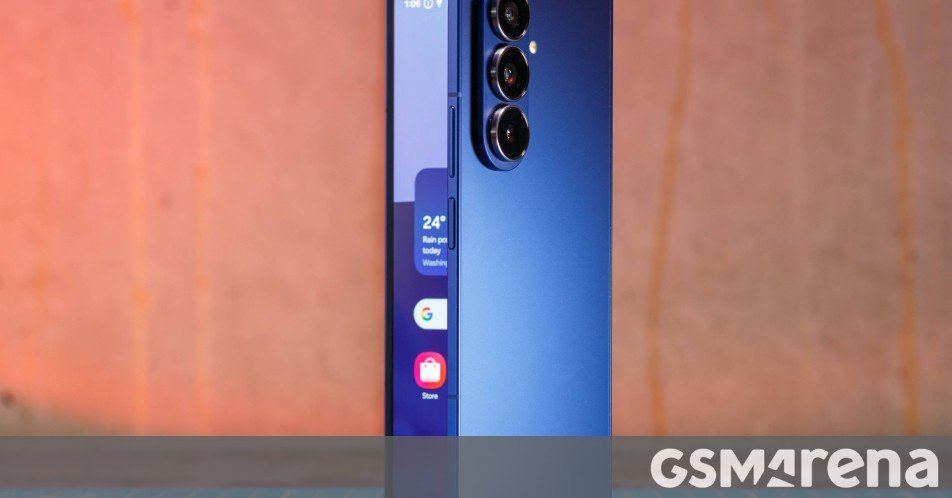
This battery upgrade represents Samsung's first meaningful improvement to Fold battery capacity in four years. The company has been using the same 4,400 mAh configuration across the Fold3, Fold4, Fold5, and Fold7 models, while competitors like Huawei, Xiaomi, and Honor have pushed their foldable batteries well beyond 5,000 mAh in some cases.
The rated vs. typical capacity distinction is important here. The 4,854 mAh rated capacity (the actual measured capacity of the battery cells) will be marketed as 5,000 mAh typical capacity, which represents the average capacity under normal usage conditions. This is standard practice in the industry, as batteries typically perform slightly better than their rated capacity in real-world use.
For the 'wide Fold' model, the 4,900 mAh capacity suggests Samsung is targeting a slightly different use case. The wider aspect ratio likely means a larger overall device footprint, allowing for a bigger battery pack. However, the 100 mAh difference from the Fold8 indicates that Samsung may be optimizing for weight distribution or thermal management rather than simply maximizing capacity.
These improvements come at a crucial time for Samsung's foldable strategy. With Apple reportedly working on its own foldable iPhone, Samsung needs to ensure its flagship foldable remains competitive not just in display technology and hinge design, but also in fundamental areas like battery life. The modest capacity increases suggest Samsung is being cautious about potential trade-offs in device thickness or weight that larger batteries might introduce.
The timing of these upgrades is also noteworthy. Samsung has been gradually improving other aspects of the Fold series - the displays have gotten brighter, the processors faster, and the cameras better - but battery capacity remained frozen for years. This suggests the company may have finally solved whatever engineering challenges were preventing larger batteries in the foldable form factor, whether that's related to the hinge mechanism, internal component layout, or thermal considerations.

For users of current Fold models, these capacity increases won't be revolutionary, but they should translate to noticeably better battery life. A 14% increase in capacity, combined with potential efficiency improvements in the processor and display technology, could mean the difference between needing a midday charge and comfortably getting through a full day of heavy use.
The July launch timeframe aligns with Samsung's typical foldable release schedule, which has been remarkably consistent in recent years. This gives the company several months to finalize these battery configurations and potentially make last-minute adjustments based on final component availability and testing results.
Whether these capacity improvements will be enough to keep Samsung competitive in the high-end foldable market remains to be seen, but they represent a long-overdue acknowledgment that battery life matters just as much as cutting-edge display technology in a premium smartphone experience.
Comments
Please log in or register to join the discussion