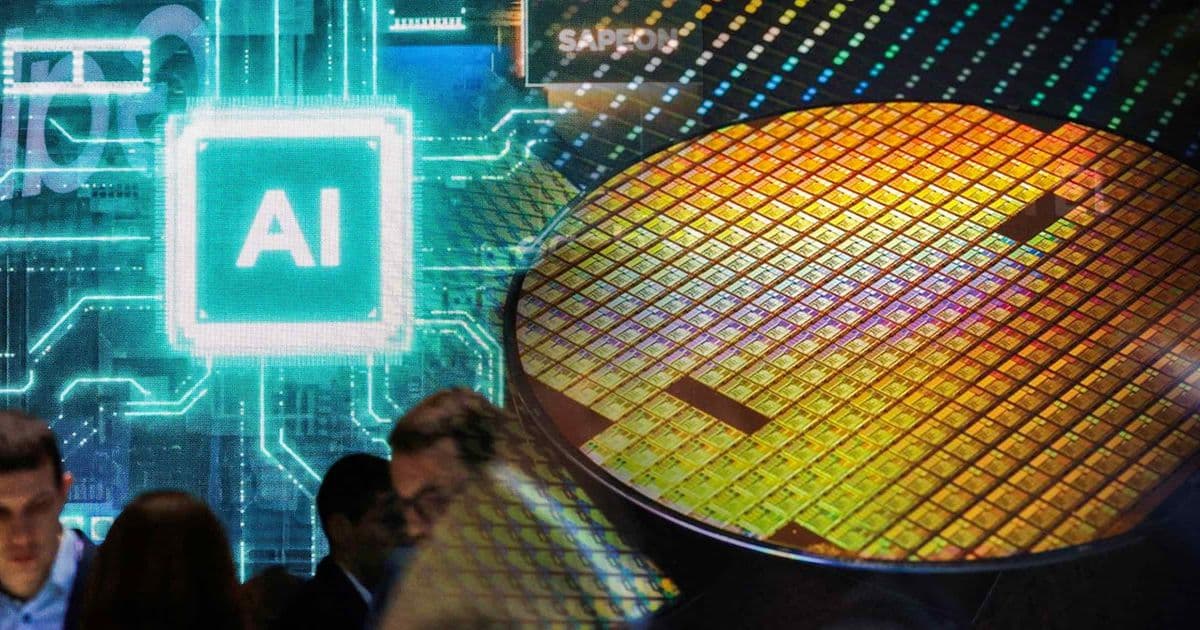
Smaller Asian semiconductor companies are raising prices alongside industry giants as AI-driven demand pushes capital expenditure to a projected $136B in 2026, up 25% year-over-year.
Asia's semiconductor industry is experiencing a synchronized price increase across companies of all sizes, driven by unprecedented demand for AI chips and infrastructure. According to Nikkei Asia, smaller chip companies are joining their larger counterparts in hiking prices as robust AI demand fuels capital expenditure that's projected to rise 25% year-over-year to over $136 billion in 2026.
The price increases reflect a fundamental shift in the semiconductor market dynamics. While major players like TSMC, Samsung, and Intel have already announced price hikes for their advanced process nodes, smaller foundries and specialty chip manufacturers are now following suit. This coordinated pricing strategy suggests that the AI boom is creating sustained demand that allows suppliers to pass increased costs to customers.
Capital expenditure in the semiconductor sector is reaching record levels as companies race to expand capacity for AI-specific chips. The projected $136 billion in 2026 spending represents a significant acceleration from previous years, with much of the investment focused on advanced packaging technologies, high-bandwidth memory production, and specialized AI accelerators. Companies are building new fabs and expanding existing facilities to meet the insatiable demand from cloud providers, AI startups, and enterprise customers.
The price increases are particularly notable because they're occurring across the entire supply chain, from raw materials to finished chips. This suggests that the AI-driven demand is creating bottlenecks at multiple points in the manufacturing process, giving suppliers pricing power they haven't had in years. Industry analysts note that this could lead to margin compression for AI companies that are already spending heavily on compute resources.
Smaller Asian chip companies are benefiting from the AI boom in several ways. Many are seeing increased orders for specialized chips used in AI applications, from edge computing devices to data center accelerators. The price increases allow these companies to invest in their own capacity expansion and research and development, potentially narrowing the technology gap with larger competitors.
However, the synchronized price increases also raise concerns about potential market overheating. Some industry observers worry that the current AI investment cycle could lead to overcapacity if demand growth doesn't meet expectations. The semiconductor industry has experienced boom-and-bust cycles before, and the current pricing power could be temporary if supply eventually catches up with demand.
The $136 billion capital expenditure projection for 2026 reflects not just AI demand but also the ongoing geopolitical tensions that are driving companies to diversify their manufacturing locations. Many Asian chip companies are expanding in multiple countries to reduce supply chain risks and comply with various national security regulations.
For consumers and businesses, the price increases could mean higher costs for everything from smartphones to data center services. AI companies that rely heavily on specialized chips may face pressure on their margins, potentially slowing the pace of AI development or forcing them to seek alternative architectures.
The semiconductor industry's current pricing power represents a significant shift from the deflationary pressures that have characterized the sector for decades. Whether this represents a new normal or a temporary boom remains to be seen, but for now, Asia's chip companies of all sizes are capitalizing on the AI-driven demand surge.
As the industry approaches the $136 billion capital expenditure mark in 2026, the question becomes whether this investment will create sustainable long-term value or contribute to another cycle of overcapacity. The synchronized price increases suggest that companies are betting on continued strong demand, but the semiconductor industry's history shows that such bets don't always pay off.
For now, the AI boom continues to reshape the semiconductor landscape, with smaller Asian companies finding themselves in an unexpectedly strong position as they join their larger peers in raising prices and expanding capacity.
Comments
Please log in or register to join the discussion