Leaked benchmarks reveal Intel's upcoming Arc G3 Extreme and Arc G3 chips, featuring 14 cores and Arc B380/B360 iGPUs, positioning them as potential rivals to AMD's Ryzen Z2 series for handheld gaming devices.
Intel's upcoming Arc G3 Extreme and Arc G3 chips have surfaced in leaked benchmarks, revealing details about the company's next-generation handheld gaming processors. The chips, which were initially planned to launch alongside Intel's Panther Lake lineup but were delayed, appear to be Intel's answer to AMD's successful Ryzen Z2 series.
Leaked Benchmark Details
The controversy began when X leaker @9550Pro posted a CPU-Z screenshot allegedly showing the Intel Core G3 Extreme. According to the leak, the chip features a unique 14-core configuration: 2 P-cores, 8 E-cores, and 4 LPE-cores. This architecture differs significantly from Intel's standard Panther Lake chips and appears to be a power-optimized variant of the Core Ultra X7 358H with fewer P-cores.
The leaked specifications show a boost clock of 4.7 GHz and 18 MB of L3 cache. However, the authenticity of this listing was quickly questioned by well-known Intel insider Jaykihn, who has a solid track record with Intel-related leaks.
Name Confusion and Specifications Clarified
Jaykihn clarified that the chip is actually called the Intel Arc G3 Extreme, not Core G3 Extreme as initially suggested. The insider also provided corrected specifications, stating that the Arc G3 Extreme features a boost clock of 4.7 GHz but with only 12 MB of L3 cache, not 18 MB as shown in the leaked CPU-Z screenshot.
According to Jaykihn, the CPU-Z listing in question is a spoofed Core Ultra X7 358H, not the actual Arc G3 Extreme chip. This discrepancy highlights the challenges in verifying leaked hardware information before official announcements.
GPU Differences Between Models
The primary distinction between the Intel Arc G3 Extreme and the standard Arc G3 appears to be their integrated graphics capabilities. The Arc G3 Extreme is tipped to feature an Arc B380 iGPU with 12 Xe cores, while the non-Extreme variant will reportedly come with an Arc B360 iGPU featuring 10 Xe cores.
These GPU configurations suggest Intel is targeting the handheld gaming market with dedicated graphics power, directly competing with AMD's Ryzen Z2 series that has gained traction in devices like the ROG Ally and Legion Go.
Market Positioning and Competition
Despite the minimal differences between the two chips, they could pose a serious threat to AMD's Ryzen Z2 lineup. The handheld gaming market has seen significant growth, with manufacturers seeking powerful yet efficient chips that can deliver console-quality gaming in portable form factors.
The Arc G3 series' unique core configuration - combining P-cores, E-cores, and LPE-cores - suggests Intel is optimizing for both performance and power efficiency, crucial factors for handheld devices where thermal constraints and battery life are paramount concerns.
Potential Device Partners
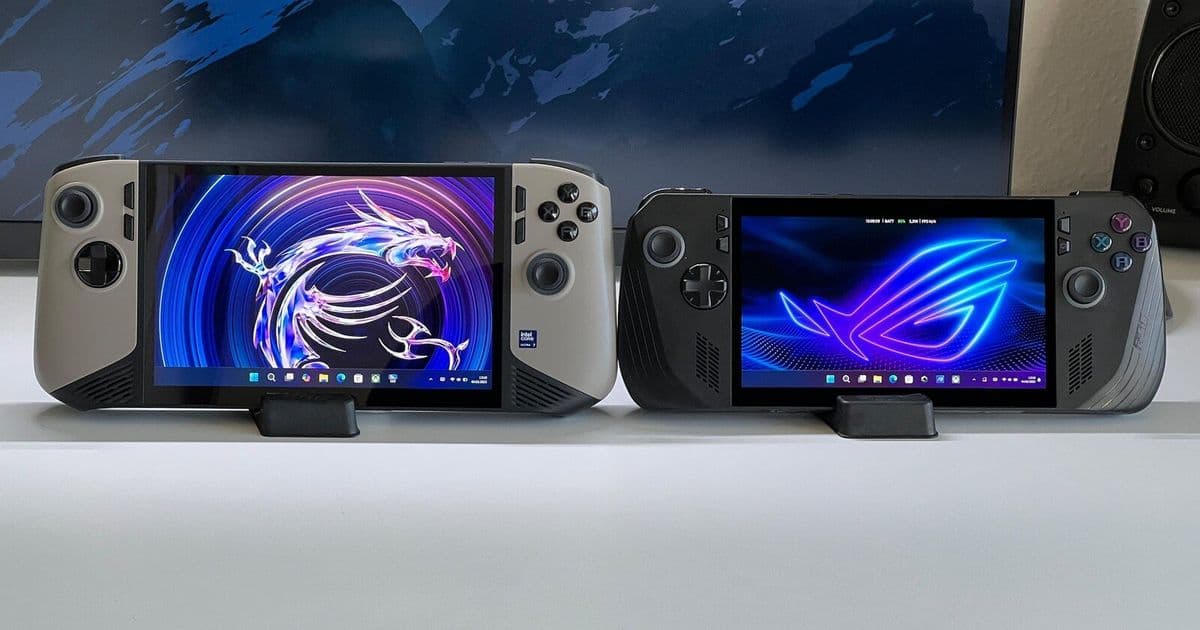
While Intel hasn't officially announced which handheld devices will feature these new chips, the MSI Claw seems like a plausible candidate. The current MSI Claw is powered by an Intel chip based on the Lunar Lake platform, making it a natural progression for MSI to adopt the newer Arc G3 series.
The timing would also be ideal for direct hardware comparisons, as MSI recently released a Ryzen Z2 Extreme-powered version of the Claw. This would allow consumers to directly compare Intel and AMD's latest handheld offerings from the same manufacturer.
Release Timeline and Expectations
Intel is expected to officially unveil the Arc G3 and Arc G3 Extreme sometime in Q2 2026. This timeline gives manufacturers adequate lead time to design and produce devices around these new chips, with potential product launches following in the latter half of 2026.
The delay from the original Panther Lake launch window suggests Intel may have encountered development challenges or strategic decisions to optimize the chips specifically for the handheld market rather than rushing them to market.
Technical Implications
The Arc G3 series represents an interesting approach to handheld processor design. By combining different core types (P-cores for high performance, E-cores for efficiency, and LPE-cores for background tasks), Intel appears to be creating a chip that can dynamically allocate resources based on gaming demands while maintaining reasonable power consumption.
This heterogeneous architecture could provide advantages in scenarios where handheld devices need to balance gaming performance with other tasks like streaming, recording, or running companion applications simultaneously.
Industry Impact
If the Arc G3 series delivers on its promised specifications, it could shake up the handheld gaming market currently dominated by AMD. Intel's entry with dedicated gaming-focused chips could lead to increased competition, potentially driving innovation and better pricing for consumers.
The success of these chips will ultimately depend on real-world performance, power efficiency, and how well device manufacturers integrate them into compelling handheld designs that can compete with established players in the market.
As we approach the Q2 2026 unveiling, the tech community will be watching closely to see if Intel's Arc G3 series can deliver the performance and efficiency needed to challenge AMD's stronghold in the handheld gaming segment.
Comments
Please log in or register to join the discussion