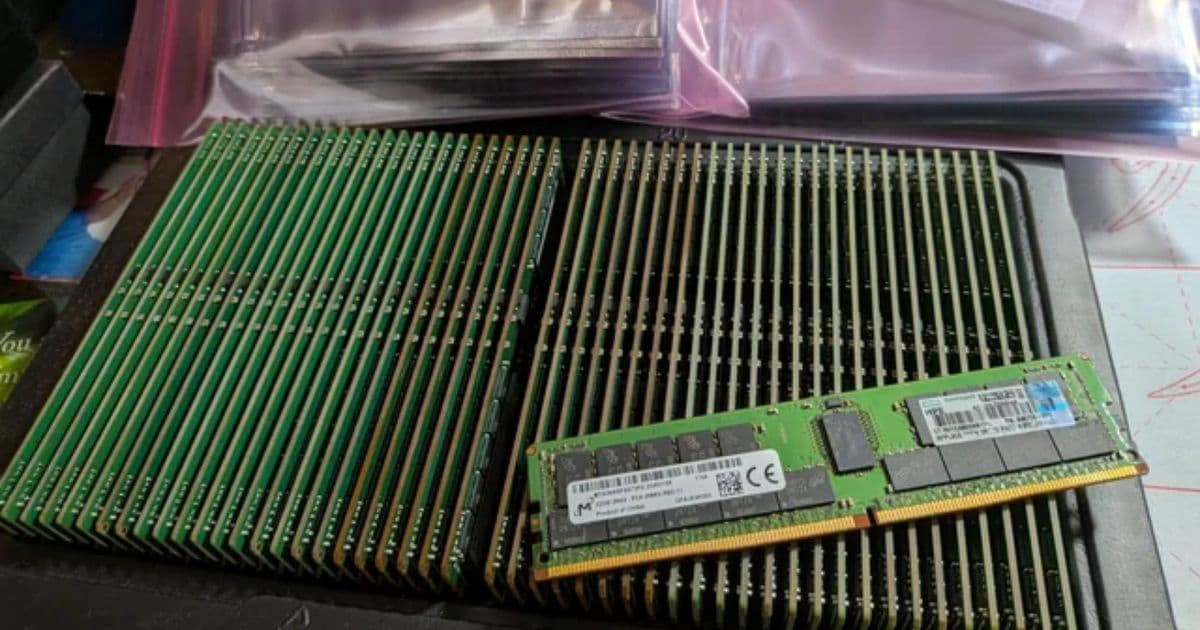
A Reddit user's father saved 72 DDR4-2666 ECC RDIMMs from becoming e-waste, with the modules now worth over $20,000 due to AI-driven memory shortages.
An unexpected treasure trove of high-value computer memory was rescued from the landfill by a quick-thinking employee who recognized the potential value of what his company considered obsolete equipment. The story, shared on Reddit, details how 72 HPE DDR4-2666 ECC RDIMMs were saved from becoming e-waste after their company's new servers received memory upgrades in 2024.
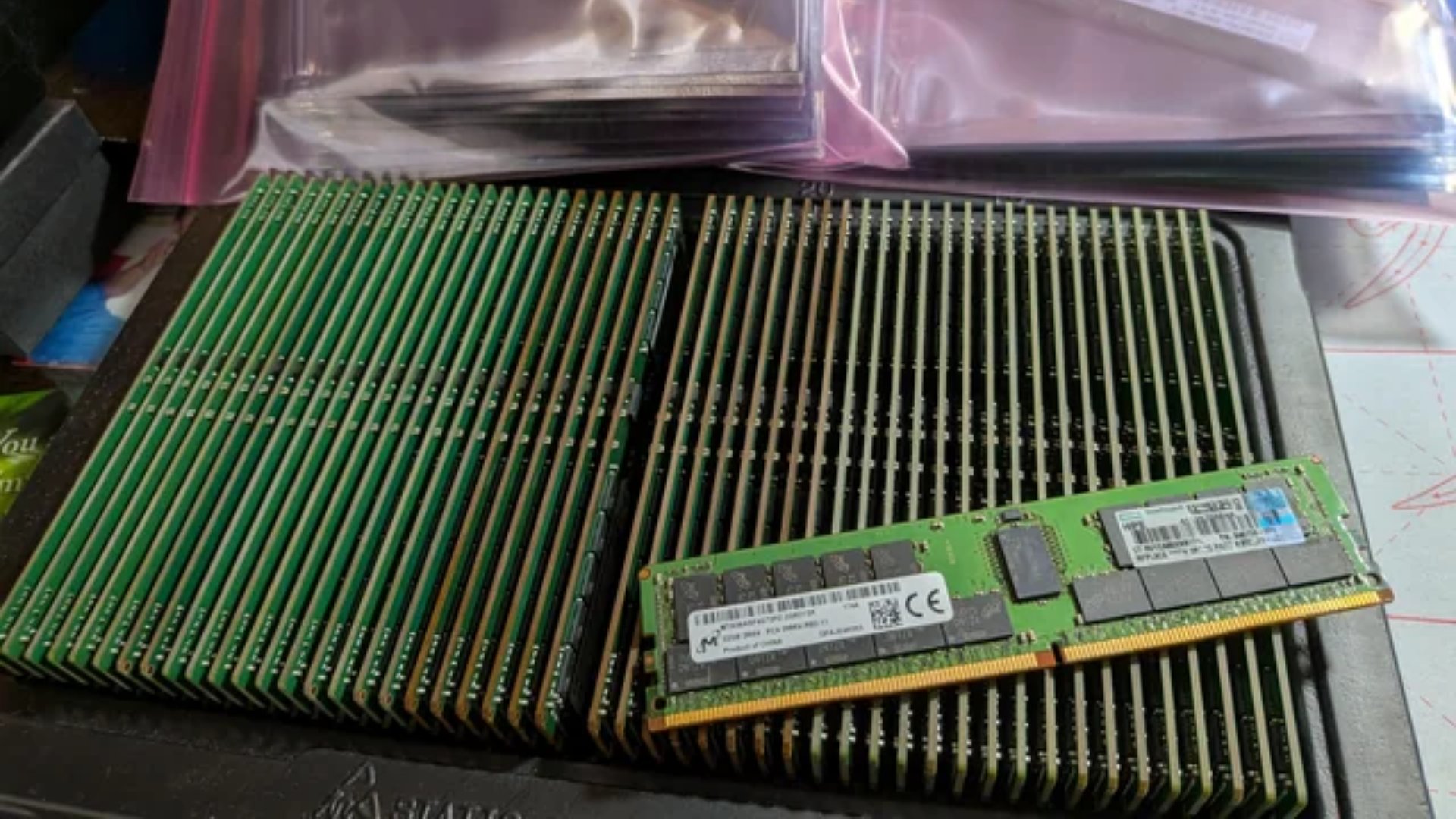
These registered memory modules, designed for enterprise server environments, were about to be discarded as corporate IT departments often do with outdated hardware. However, the employee's father recognized their potential value and took possession of the components, passing them along to his tech-savvy child.
The timing couldn't have been more fortuitous. While these memory sticks might have been considered surplus just months ago, the explosive growth in AI infrastructure has created unprecedented demand for memory chips across the industry. A similar SK hynix module currently retails for $287.95 on Amazon, putting the total value of the rescued inventory at over $20,000.
This dramatic price increase reflects the broader memory market dynamics. Historical pricing data from CamelCamelCamel shows these modules were trading around $35 in 2024, with prices dipping to $29.02 in mid-2025. The current pricing represents a nearly tenfold increase in value within a relatively short timeframe.
The memory shortage stems from the massive AI infrastructure buildout that has consumed vast quantities of DRAM and other memory components. Data centers worldwide are expanding their capabilities to handle increasingly complex AI workloads, driving demand far beyond traditional computing needs. This has created a perfect storm where enterprise-grade memory modules have become valuable commodities.
However, the Reddit poster faces a significant limitation: these registered ECC memory modules cannot be used in consumer-grade hardware. Registered DIMMs require specialized server and HEDT motherboards, along with corresponding enterprise-class processors like Intel Xeon and AMD EPYC chips. Without access to compatible hardware, the only viable option is to sell the modules on the secondary market.
This situation highlights a common practice in corporate IT departments where perfectly functional equipment is discarded rather than repurposed. As one commenter, ArcticCelt, explained: "In many places where I worked, the sysadmins in charge of the servers were not hardware enthusiasts, had never built their own machines, and did not care what things cost as long as the infrastructure kept running. They constantly did things like that, throwing away perfectly good equipment instead of keeping it for test labs or anything useful."
The depreciation accounting practices in many corporations also contribute to this waste. Once equipment has been fully depreciated on the books, it often has zero value from an accounting perspective, making disposal the simplest option regardless of the actual market value of the components.
For the Reddit poster, this fortunate rescue operation represents a significant windfall. While the modules may not fetch the full $20,000 retail value on the used market, they could still command substantial prices given the current supply constraints. The incident serves as a reminder of the hidden value that often exists in what companies consider obsolete technology, and the importance of proper asset disposition in an era of supply chain constraints and environmental concerns about e-waste.
The story also underscores the rapid evolution of the technology market, where yesterday's enterprise surplus can become today's valuable commodity due to shifts in demand patterns and supply constraints. As AI continues to drive infrastructure expansion, similar opportunities for value recovery may emerge across various technology sectors.
Comments
Please log in or register to join the discussion