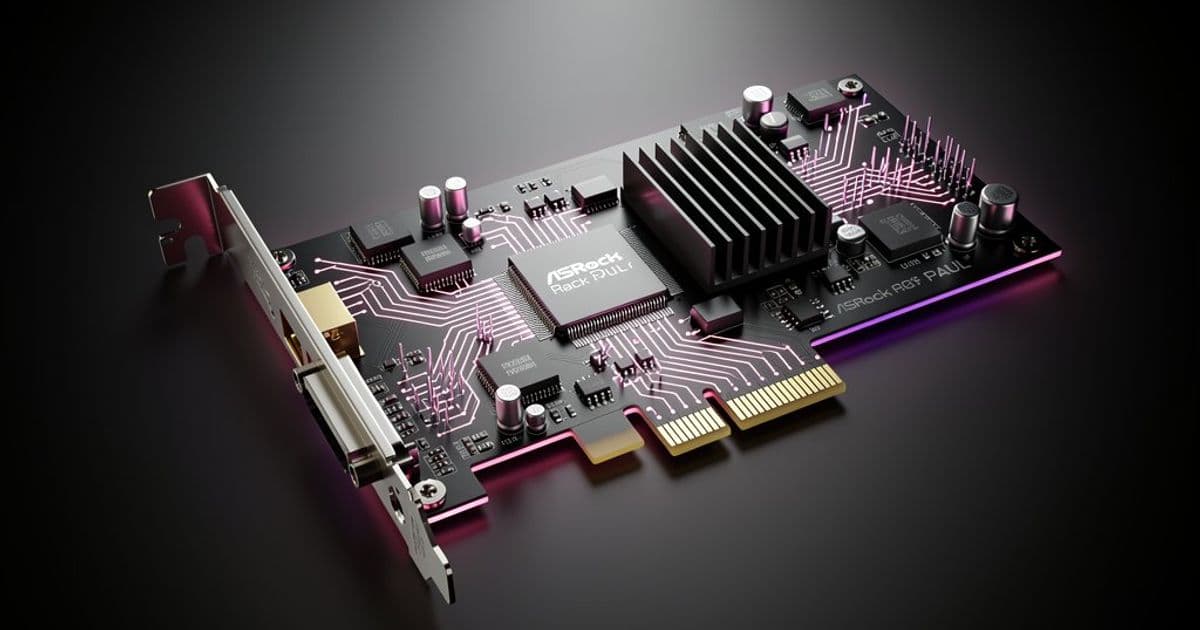
New patches submitted to the Linux kernel mailing list add Device Tree support for the ASRock Rack PAUL PCIe IPMI card, enabling full mainline Linux kernel compatibility for this AST2500-based management card. The development follows similar work on the ASUS Kommando IPMI card and signals growing vendor commitment to open-source BMC firmware.
The ASRock Rack PAUL PCIe IPMI card has taken a significant step toward full mainline Linux kernel compatibility with the submission of Device Tree (DT) patches to the Linux kernel mailing list. These patches enable the kernel to properly identify and configure the hardware, paving the way for users to run standard Linux distributions or custom OpenBMC builds directly on the card's AST2500 controller.
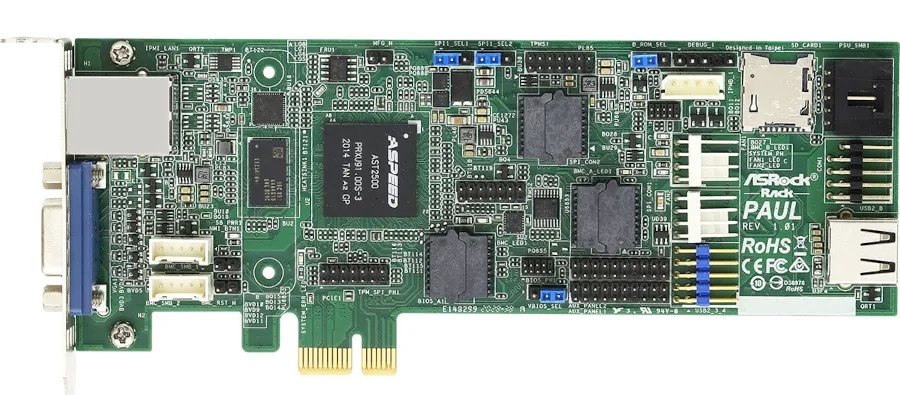
The PAUL card is a low-profile PCIe expansion board built around the ASPEED AST2500 Baseboard Management Controller (BMC), a workhorse chip in the server management space. This particular implementation includes 4GB of DDR5 memory, dual 32MB SPI flash modules for firmware storage, a Gigabit Ethernet interface, VGA output for local console access, and various headers for connecting to motherboard sensors and controls. The entire card operates at a rated power consumption of 7.54W, making it suitable for deployment in power-constrained environments.
The Significance of Device Tree Support
Device Tree is a critical component for ARM-based systems, providing a hardware description that the kernel can use at runtime. Without proper DT support, the kernel cannot correctly initialize hardware components, leading to missing functionality or complete failure to boot. The new patch series adds the necessary DT bindings for the PAUL card's AST2500 controller, its integrated peripherals, and the PCIe interface itself.
This development mirrors recent progress on the ASUS "Kommando" IPMI Expansion Card, which received similar DT patches in late 2025. Both cards share the same underlying ASPEED AST2500 controller, and the work represents a broader trend of server hardware vendors embracing open-source firmware development. The patches have been tested with OpenBMC running on the actual hardware, though the developers note that the AST2500's video engine can exhibit instability in certain configurations.
Technical Implementation Details
The DT patches address several key hardware components:
- AST2500 SoC Integration: Proper identification of the AST2500's ARM1176JZF-S core, cache configuration, and interrupt controllers
- PCIe Interface: Configuration of the PCIe 2.0 root complex and endpoint logic
- Memory Subsystem: DDR5 controller initialization and timing parameters
- Peripheral Interfaces: GPIO, I2C, and SPI controllers for sensor and device communication
- Network Interface: Gigabit Ethernet MAC configuration
- Video Output: VGA controller setup (with noted stability caveats)
The patches follow standard Linux kernel DT binding conventions, making them maintainable and compatible with future kernel versions. This approach differs from vendor-specific kernel modules that often require manual compilation and break with kernel updates.
Practical Implications for Homelab Builders
For homelab enthusiasts and small-scale server deployments, this development offers several advantages:
Firmware Freedom: Instead of relying on proprietary vendor firmware with limited update cycles and potential security vulnerabilities, users can build and maintain their own OpenBMC images. This is particularly valuable for security-conscious environments where auditability of firmware code is essential.
Customization: OpenBMC provides a full Linux environment that can be customized for specific monitoring needs. Users can add custom sensor scripts, integrate with existing monitoring systems like Prometheus or Zabbix, and implement automation workflows.
Hardware Compatibility: The mainline kernel support means the PAUL card can function as a standard Linux system component. This enables use cases beyond traditional IPMI, such as running lightweight services directly on the management controller.
Performance Considerations
The AST2500's ARM1176JZF-S core runs at 400MHz, which is sufficient for BMC duties but limits compute-intensive tasks. The 4GB of DDR5 provides ample memory for OpenBMC and additional services, though the video engine's stability issues suggest caution when using the VGA output for extended periods.
Power consumption at 7.54W is reasonable for a management card, though it represents a non-trivial addition to system power draw. For comparison, a typical server BMC integrated into the motherboard consumes 2-3W, but lacks the flexibility of a dedicated card.
Build Recommendations
For users considering the PAUL card with these new patches:
- Kernel Version: Use Linux 6.8 or later for best compatibility, as DT binding support continues to mature
- OpenBMC Version: Build from the latest master branch to include recent AST2500 fixes
- Configuration: Disable the video engine if stability is critical; use serial console or network-based management instead
- Integration: Plan for PCIe slot allocation and power budget, especially in dense server configurations
- Testing: Validate sensor readings and fan control before deploying in production
Future Outlook
The submission of DT patches for both ASRock Rack and ASUS IPMI cards suggests a growing recognition among hardware vendors that open-source firmware support is essential for server market adoption. This trend benefits the entire ecosystem by reducing vendor lock-in and improving security through code transparency.
As more server hardware receives mainline Linux kernel support, the barrier to entry for custom BMC development decreases. This could lead to innovation in management features, such as AI-driven predictive maintenance or integration with cloud management platforms.
The PAUL card's journey from proprietary firmware to mainline kernel support exemplifies the open-source hardware movement's progress. While the video engine stability issues remain to be fully resolved, the core functionality is now accessible to any user willing to compile a custom kernel.
For those interested in the technical details, the patches are available on the Linux kernel mailing list and can be reviewed through the official kernel source repositories. The OpenBMC project also maintains documentation for AST2500-based systems, providing a foundation for custom builds.
Comments
Please log in or register to join the discussion