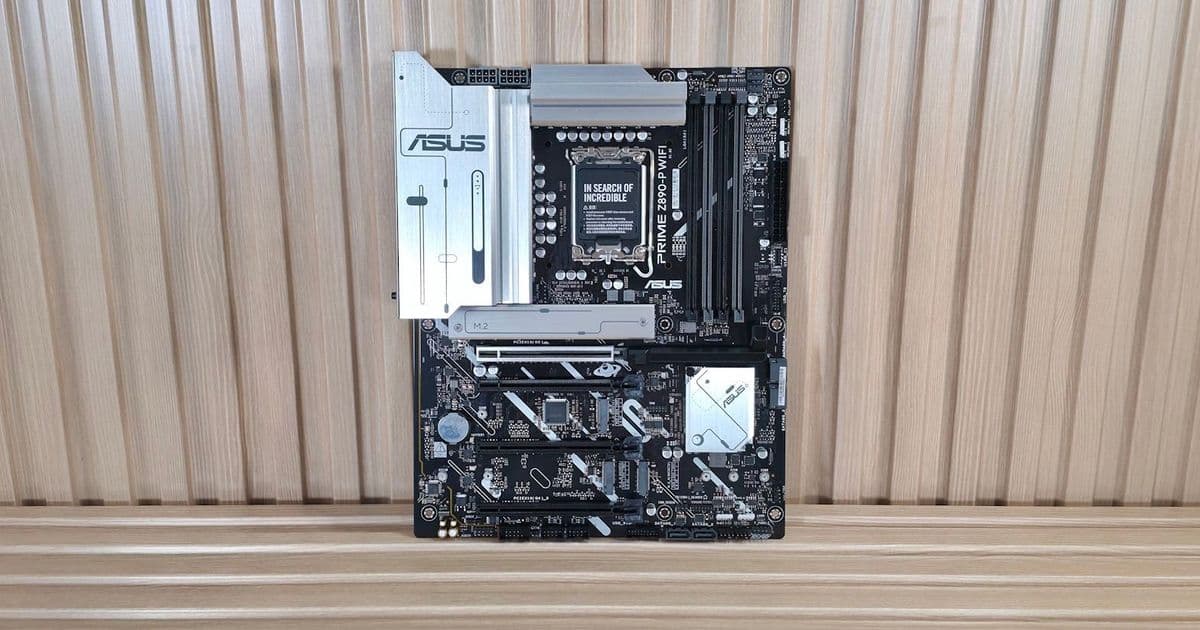
The Asus Prime Z890‑P Wi‑Fi delivers solid power delivery, four M.2 slots (including one PCIe 5.0 x4), and AI‑assisted overclocking at a $230 price point, but its limited rear USB count and modest Wi‑Fi 7 speed keep it from topping the Z890 class.
Announcement Asus has launched the Prime Z890‑P Wi‑Fi motherboard at a street price of $229.99. Targeted at builders who want to pair Intel’s 13th‑gen Core Ultra 7 270K Plus, 250K Plus, or even the flagship Core Ultra 9 285K with a Z890 chipset without breaking the bank, the board promises a full ATX feature set—four M.2 slots, eight rear USB ports, and AI‑driven tuning—while staying in the budget tier.
Technical specifications
- Socket / Chipset: LGA 1851, Intel Z890 (ATX form factor)
- Power delivery: 18‑phase VRM (14 × 80 A MOSFETs for Vcore), 1,120 A total current capacity
- Memory: 4 × DDR5 slots, supports up to 256 GB, OC up to DDR5‑8666 MT/s (official QVL)
- PCIe: 1 × PCIe 5.0 x16 (CPU lane), 2 × PCIe 4.0 x4, 1 × PCIe 4.0 x1 (chipset)
- Storage: 4 × M.2 (1 × PCIe 5.0 x4, 3 × PCIe 4.0 x4), 4 × SATA III (6 Gbps)
- Networking: Intel Wi‑Fi 7 (BE200NGW) – 2.9 Gbps max, Realtek RTL8125 2.5 GbE
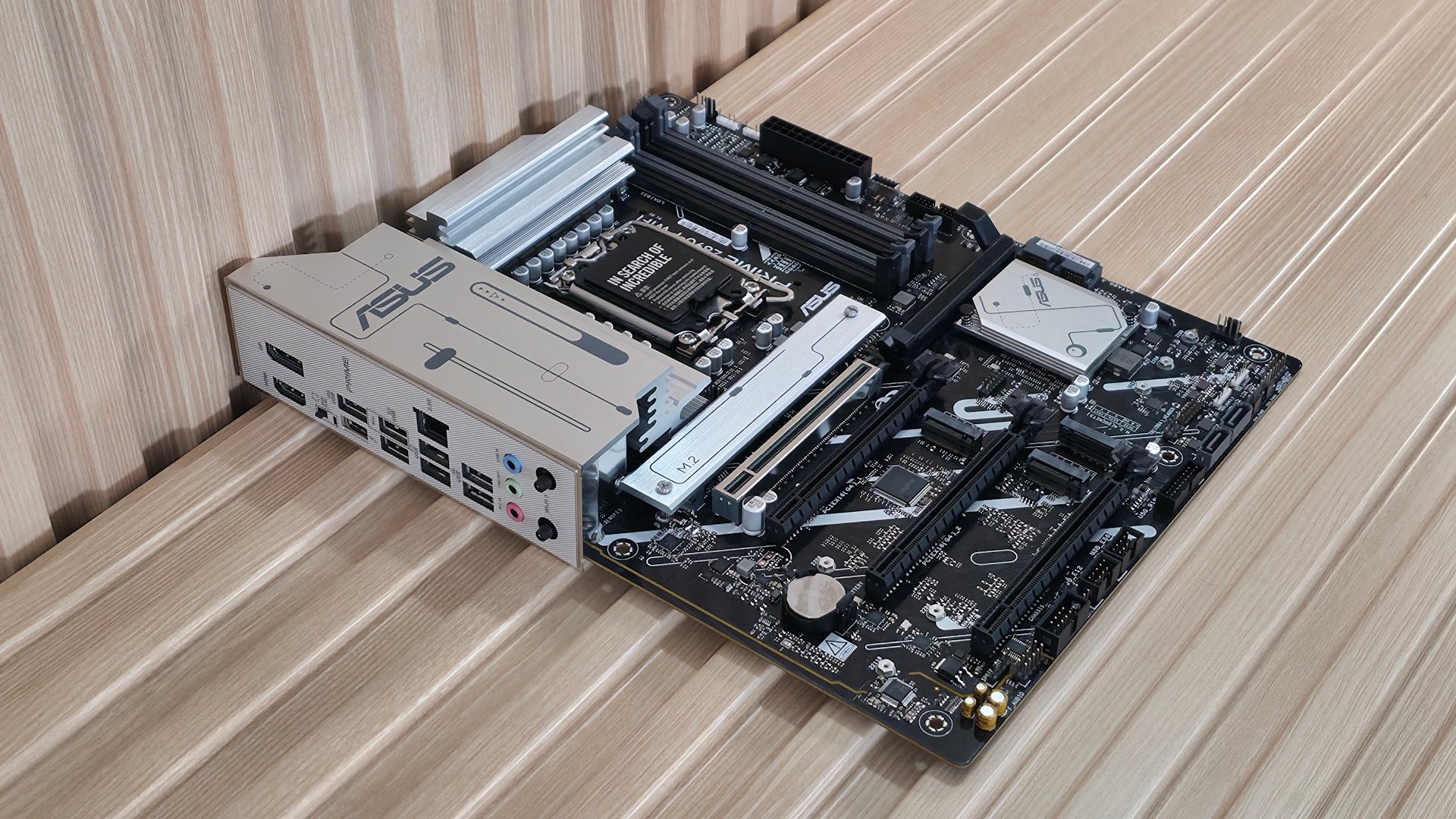
- USB rear I/O: 1 × Thunderbolt 4 (40 Gbps, Type‑C), 1 × USB 3.2 Gen 2 (10 Gbps), 2 × USB 3.2 Gen 1 (5 Gbps), 4 × USB 2.0 (480 Mbps)
- Audio: Realtek ALC897 codec, 2 × audio jacks + SPDIF out
- Headers: 7 × fan (4‑pin), 3 × ARGB (3‑pin), 1 × RGB (4‑pin), multiple USB headers, front‑panel connectors
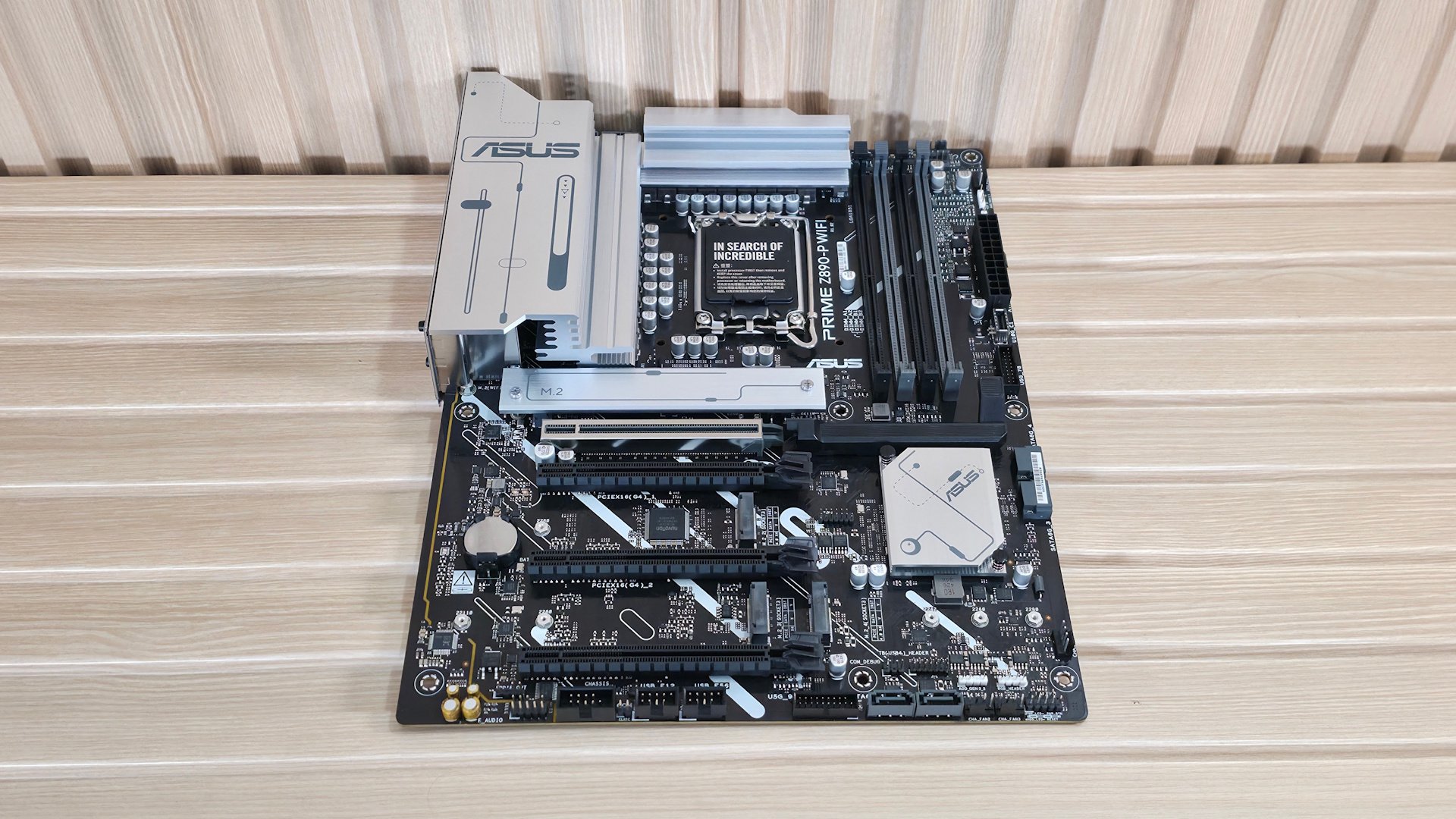
- Cooling: Dual 8‑pin EPS, 18‑phase VRM heatsink with shared aluminum fin, single M.2 5.0 x4 heatsink, chipset heatsink
- Software: Armoury Crate with AI Overclocking, Fan Xpert 4, and EZ DIY utilities
Performance snapshot Testing with a DDR5‑7200 kit (the DDR5‑7600 kit failed to POST) showed the Prime Z890‑P delivering scores within 2‑4 % of the higher‑priced Z890‑Aorus Elite Duo X across gaming (1080p/1440p), Blender rendering, and HandBrake video encoding. CPU boost clocks reached 5.8 GHz on the Core Ultra 7 270K Plus under the AI‑guided profile, while power draw peaked at 250 W during sustained multi‑core workloads—well within the VRM’s 1,120 A rating.
Power delivery analysis The 18‑phase design splits into 14 dedicated Vcore phases, each driven by an 80 A Vishay SiC639 DrMOS. In practice, VRM temperatures stabilized around 68 °C under an 8‑core stress test, thanks to the shared aluminum fin and a modest thermal pad linking the two heatsinks. While not as aggressive as premium boards that use heat‑pipe coupling, the thermal solution is sufficient for mild overclocks (up to +200 MHz on core) provided the case airflow exceeds 40 CFM.
Memory considerations Official support up to DDR5‑8666 MT/s is impressive, but real‑world compatibility hinges on the QVL. The board’s Enhanced Memory Profile III (AEMP III) can auto‑tune timings, yet users seeking tight latency will need to manually adjust tCL/tRCD/tRP values in the BIOS. The lack of a second M.2 heatsink (the PCIe 5.0 slot is the only one with active cooling) may force a trade‑off between a large GPU and a high‑performance NVMe drive, as the latter could be obstructed under a full‑height graphics card.
I/O and connectivity The rear panel’s eight USB ports are the most noticeable bottleneck. With only a single Thunderbolt 4 Type‑C and one USB 3.2 Gen 2 port, power users who rely on multiple external drives or docking stations may need a USB hub. Wi‑Fi 7’s 2.9 Gbps ceiling (160 MHz channel, 6 GHz band) is respectable but lags behind competing 5 Gbps solutions on higher‑end Z890 boards.
Design and aesthetics The PCB is a six‑layer black board with minimal silver striping. No onboard RGB means the board blends into dark‑themed builds, but the three ARGB headers allow users to add custom lighting. The VRM heatsinks feature a brushed‑aluminum finish, and the single M.2 5.0 x4 heatsink sits directly above the primary PCIe slot, which could limit clearance for large coolers.
Supply‑chain context As of Q2 2026, Z890‑compatible motherboards have faced intermittent shortages due to a constrained supply of 80 A MOSFETs and the ongoing semiconductor fab capacity squeeze. Asus’s decision to price the Prime Z890‑P at $229.99 positions it competitively against rivals like the MSI MAG Z890‑M and Gigabyte Z890 AORUS Elite, which sit in the $210‑$250 range. However, inventory levels are reported to be ~30 % lower than forecast, meaning retailers may experience back‑order delays of 2‑3 weeks.
Market implications
- Value proposition: For builders targeting a Core Ultra 7 270K Plus or a mid‑range Core Ultra 5 250K Plus, the Prime Z890‑P offers a complete feature set at a price that undercuts most mid‑tier Z890 boards.
- Competitive pressure: The board’s limited USB count and modest Wi‑Fi 7 speed give an opening for competitors to capture enthusiasts who prioritize connectivity over cost.
- Future outlook: As Intel’s roadmap moves toward the upcoming Z990 chipset and DDR5‑9600 memory kits, the Prime Z890‑P will likely be succeeded by a refreshed Prime line that adds an additional USB 4 port and a second PCIe 5.0 M.2 heatsink. Until then, it remains a solid entry point for budget‑conscious Z890 adopters.
Verdict The Asus Prime Z890‑P Wi‑Fi delivers the core Z890 experience—robust VRM, full PCIe lane allocation, and AI‑assisted tuning—at a price that makes it attractive for mainstream Core Ultra builds. Its primary drawbacks are the rear USB scarcity and a Wi‑Fi 7 implementation that caps at 2.9 Gbps. Builders who can accommodate these compromises will find a well‑rounded motherboard that punches above its price class.
Key specs at a glance
- Price: $229.99
- CPU support: Intel Core Ultra 7 270K Plus, 250K Plus, 9 285K
- PCIe slots: 1 × PCIe 5.0 x16, 2 × PCIe 4.0 x4, 1 × PCIe 4.0 x1
- M.2: 1 × PCIe 5.0 x4, 3 × PCIe 4.0 x4
- USB rear: 1 × TB4, 1 × USB 3.2 Gen 2, 2 × USB 3.2 Gen 1, 4 × USB 2.0
- Wi‑Fi: Intel Wi‑Fi 7 (2.9 Gbps)
- Audio: Realtek ALC897
- VRM: 18‑phase, 14 × 80 A MOSFETs
For a deeper dive into the testing methodology, see Tom’s Hardware’s review page.
Comments
Please log in or register to join the discussion