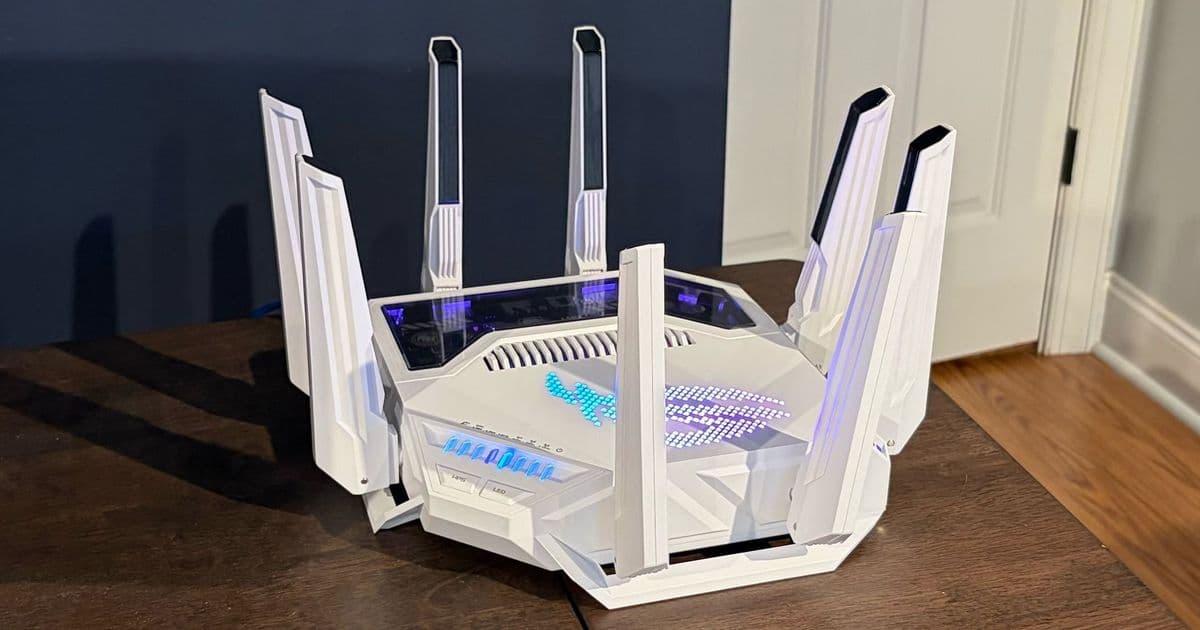
Asus introduces its flagship Wi-Fi 7 gaming router with dedicated Neural Processing Unit, pushing the boundaries of consumer networking with AI capabilities and high-speed connectivity options.
The networking landscape continues to evolve with Asus's latest flagship router, the ROG Rapture GT-BE19000Ai, which brings dedicated Edge AI processing to the consumer market. Priced at $899, this tri-band Wi-Fi 7 router represents a significant leap forward in consumer networking technology, combining high-speed connectivity with onboard artificial intelligence capabilities.
Technical Specifications and Design
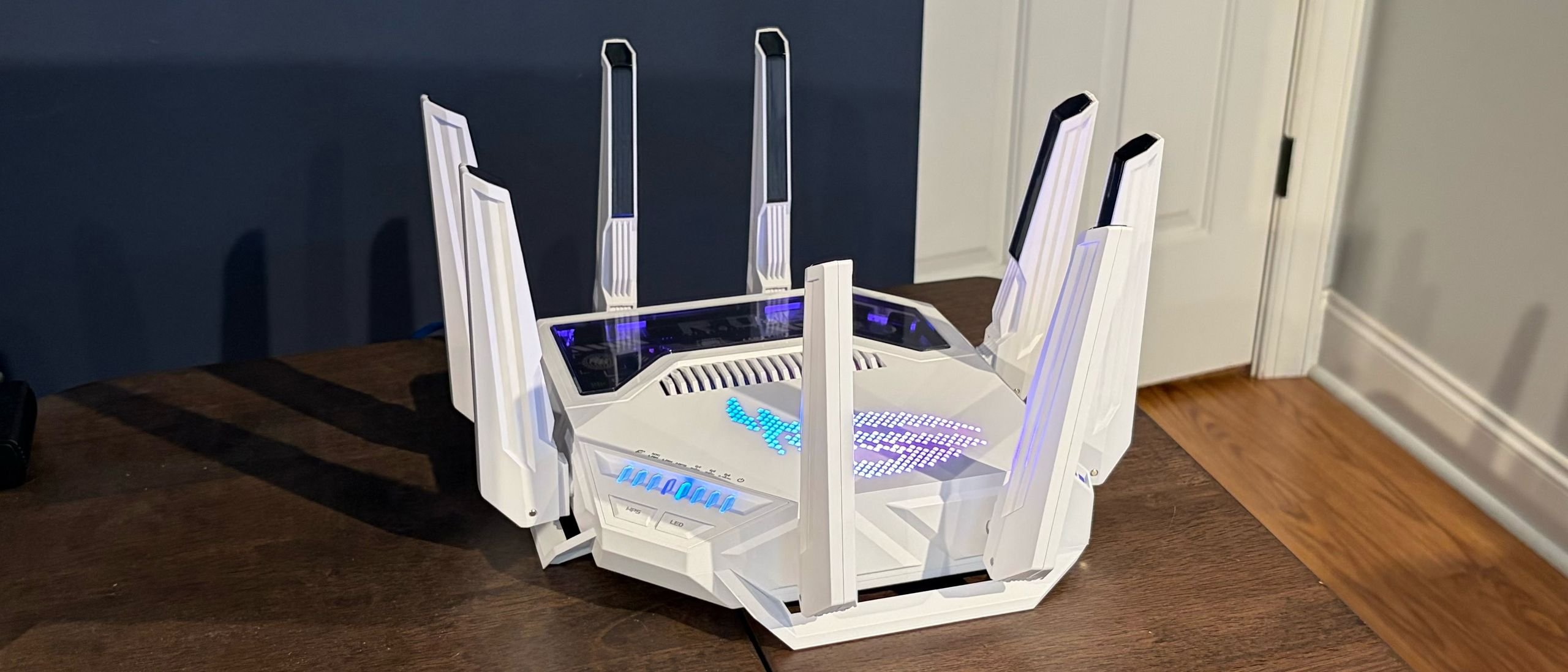
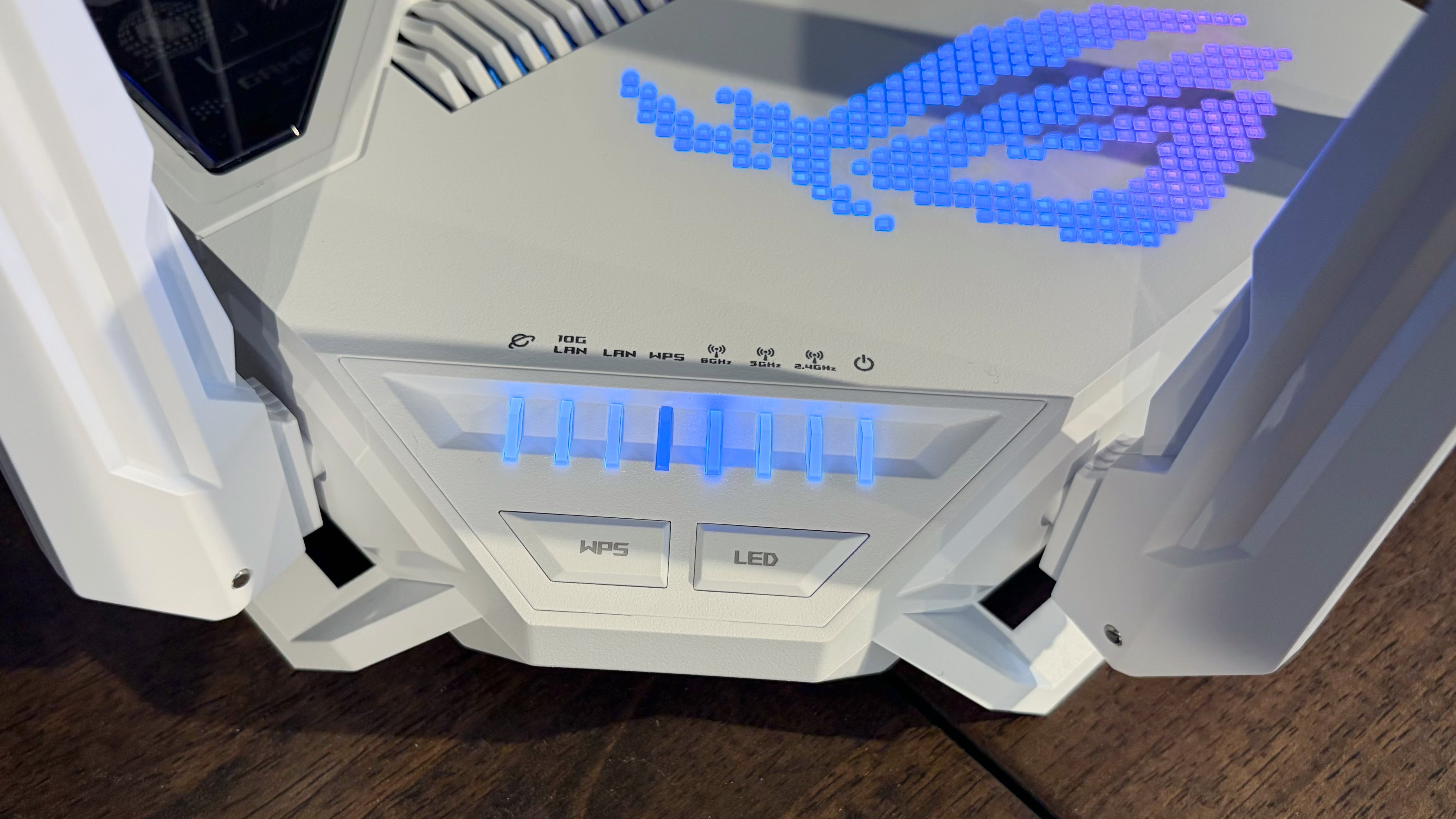
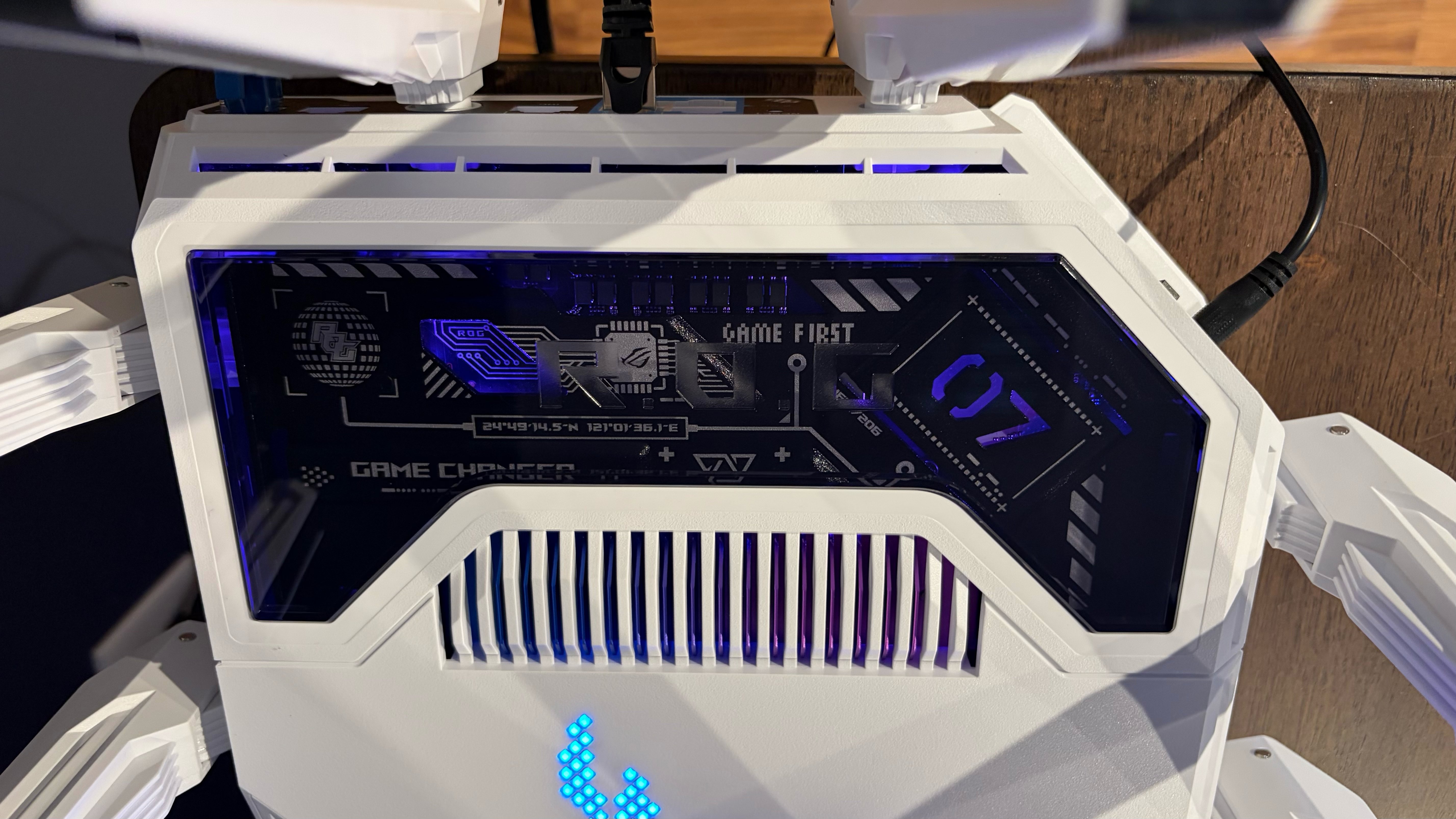
The ROG Rapture GT-BE19000Ai is an imposing presence in any setup, measuring 13.8 x 13.8 x 8.69 inches with antennas fully extended. The router features a predominantly white body with contrasting black accents, a large RGB ROG logo, and extensive ventilation for cooling. Eight adjustable antennas promise maximum signal coverage across its advertised 3,500 square feet.
What truly sets this router apart is its processing architecture. Unlike typical consumer routers that rely solely on a CPU, the GT-BE19000Ai includes:
- A main CPU for general router functions
- A dedicated Neural Processing Unit (NPU) with separate firmware for AI tasks
- A Microcontroller Unit (MCU) for specialized operations
This multi-chip design allows Asus to offload specific tasks to the most appropriate processor, theoretically improving performance, reducing power consumption, and enabling advanced AI features.
The router's connectivity options are particularly impressive, exceeding what's typically found in consumer devices:
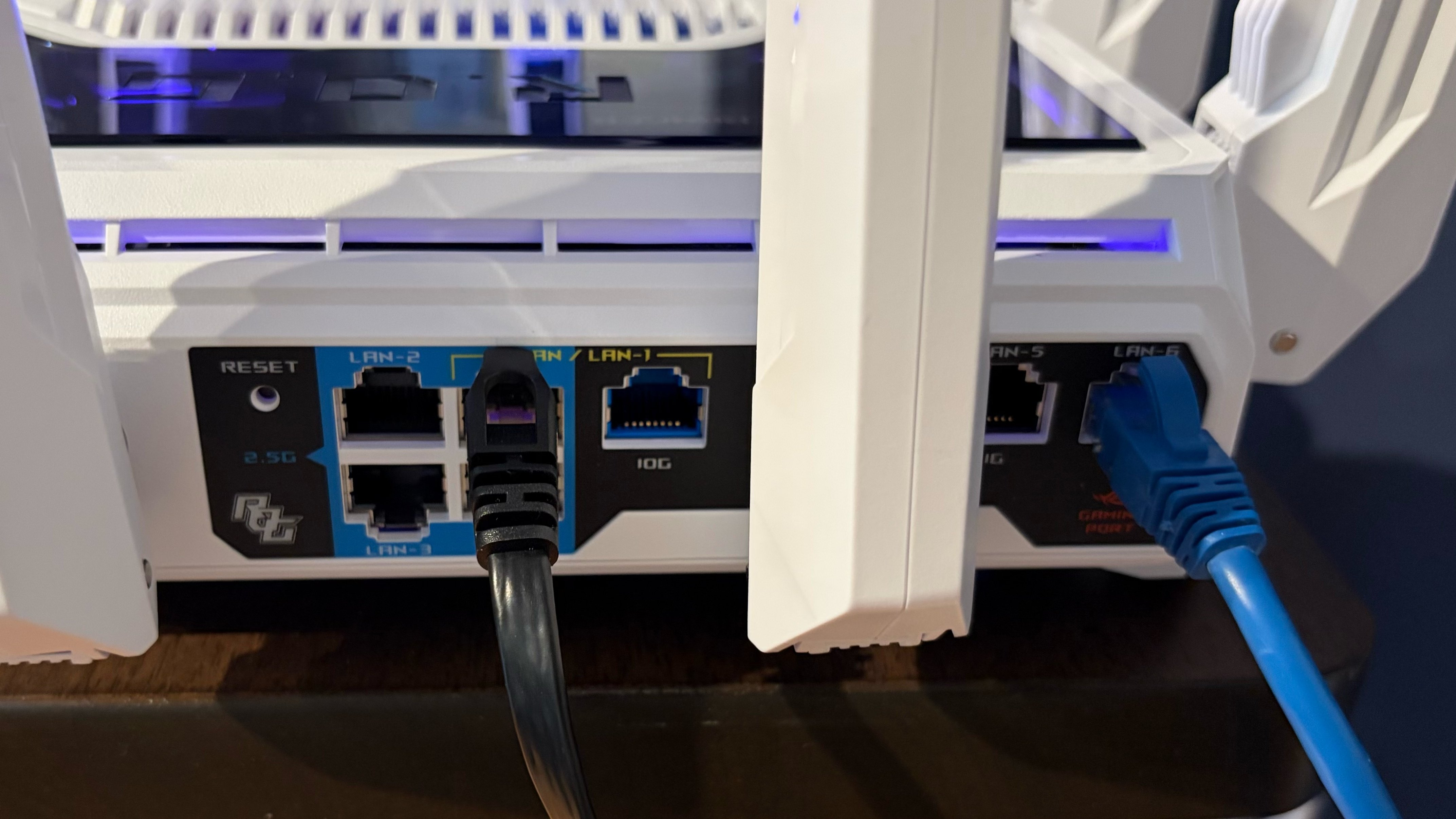
- 1 x 10GbE port (dual-purpose WAN/LAN)
- 1 x 2.5GbE port (dual-purpose WAN/LAN)
- 1 x 10GbE LAN port
- 3 x 2.5GbE LAN ports
- 1 x 1GbE LAN port
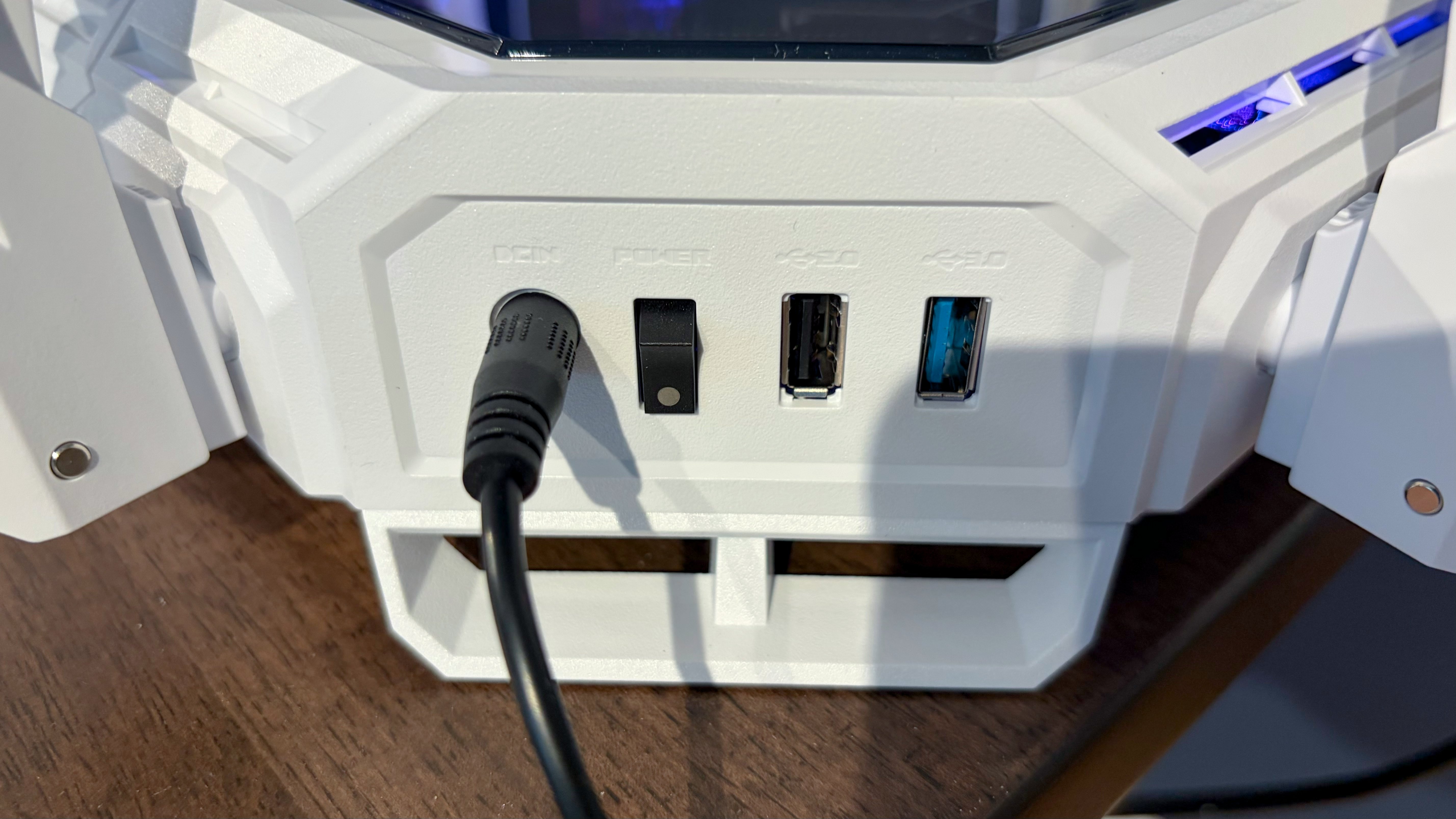
- 2 x USB ports (one USB 2.0, one USB 3.2 Gen 1)
This generous port configuration provides exceptional flexibility for high-speed wired connections, supporting multiple 10GbE devices and numerous 2.5GbE connections simultaneously.
Wi-Fi 7 Performance Benchmarks
As a Wi-Fi 7 router, the GT-BE19000Ai delivers impressive theoretical speeds across its three bands:
- 2.4 GHz: 1,376 Mbps
- 5 GHz: 5,764 Mbps
- 6 GHz: 11,529 Mbps
In real-world testing, the router demonstrated strong performance, particularly on the 6 GHz band:
- At 6 feet: 3 Gbps (matching Asus's previous flagship, the RT-BE96U)
- At 25 feet: 2.1 Gbps (outperforming other Asus routers)
The 5 GHz performance was solid but not class-leading:
- At 6 feet: Competitive with other high-end routers
- At 25 feet: 714 Mbps (significantly better than the ROG Strix GS-BE18000's 497 Mbps)
Notably, the router's Automated Frequency Coordination (AFC) feature helped maintain performance at distance on the 6 GHz band, which is typically more susceptible to signal degradation than the 5 GHz band.
Wired performance was excellent, with the 2.5GbE port delivering 2.37 Gbps and the 10GbE port reaching 9.49 Gbps in iPerf3 testing.
AI Capabilities and Software Features
The NPU is the centerpiece of the GT-BE19000Ai's value proposition, enabling several AI-powered features:
Router Assistant: A local AI assistant that can answer questions about the router and network status. Queries are processed locally rather than in the cloud, potentially improving response times and privacy.
Docker Support: Through Portainer.io, users can deploy container applications directly on the router, with the NPU handling the processing load. This opens up possibilities for custom network services without requiring separate server hardware.
Smart Home Integration: The router supports Home Assistant, allowing for local control of smart home devices without relying on cloud services.
Video Recording: Frigate can be installed on the NPU, providing real-time AI object detection for network cameras.
Enhanced Security: AiProtection, powered by the NPU, offers malicious site blocking, infected device isolation, ad blocking, tracker blocking, and intrusion prevention.
Ad Blocking: AdGuard Home provides customizable ad blocking capabilities.
The router runs ASUSWRT 6.0, featuring a redesigned white theme dashboard that provides comprehensive network information at a glance. The web interface offers extensive configuration options, including AiMesh networking, adaptive QoS with AI Balance optimization, VPN support, and detailed parental controls.
Market Position and Competition
At $899, the GT-BE19000Ai sits at the premium end of the consumer router market. It competes with several high-end Wi-Fi 7 routers:
- Asus ROG Strix GS-BE18000 ($449.99): Offers similar Wi-Fi 7 speeds but lacks the dedicated NPU and has fewer high-speed ports
- Asus RT-BE96U ($549.99): Previous Asus flagship with similar Wi-Fi 7 performance but without AI processing capabilities
- TP-Link Archer GE800 ($599.99): Strong 5 GHz performance but requires subscription fees for advanced security features
The GT-BE19000Ai's key differentiator is its onboard NPU, which enables local AI processing and Docker container support. While Asus's other routers offer similar software features, they rely on the main CPU, potentially impacting overall performance.
Conclusion
The Asus ROG Rapture GT-BE19000Ai represents an ambitious entry into the consumer router market, bringing enterprise-level AI capabilities to home networking. Its multi-chip architecture, generous port selection, and strong Wi-Fi 7 performance make it technically impressive, though the $899 price tag will limit its appeal to enthusiasts and power users.
The onboard NPU enables features unavailable in other consumer routers, particularly the ability to run Docker containers and local AI processing. For users who require advanced networking capabilities without cloud dependencies, the GT-BE19000Ai offers unique functionality.
However, most consumers may find the premium difficult to justify, especially when Asus's other Wi-Fi 7 routers offer similar wireless performance at a fraction of the cost. The GT-BE19000Ai is a technological showcase that pushes the boundaries of what's possible in consumer networking, but its price will likely relegate it to a niche market segment.
As the industry moves toward Wi-Fi 8 and increasingly AI-infused networking solutions, the GT-BE19000Ai serves as a glimpse into the future of home networking—where routers are not just connection points but intelligent network hubs capable of local processing and advanced functionality.
Comments
Please log in or register to join the discussion