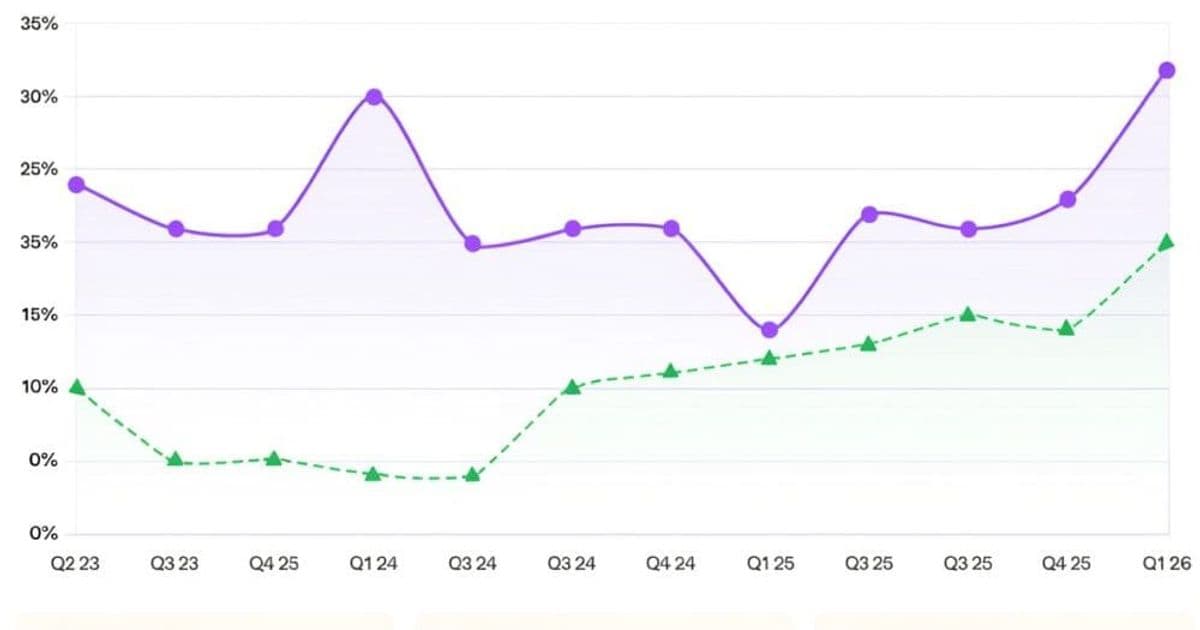
Recent earnings reports from Atlassian and Twilio reveal contrasting approaches to AI integration, with Atlassian demonstrating early success in AI adoption while Twilio positions itself as foundational infrastructure for AI agents, reflecting broader market trends in enterprise AI adoption.
This week, two significant bellwether names in B2B software—Atlassian and Twilio—reported earnings that exceeded expectations, providing valuable insights into how enterprise software companies are navigating the AI revolution. While both companies surpassed analyst estimates, their approaches to AI reveal divergent strategies that may shape their futures in fundamentally different ways.
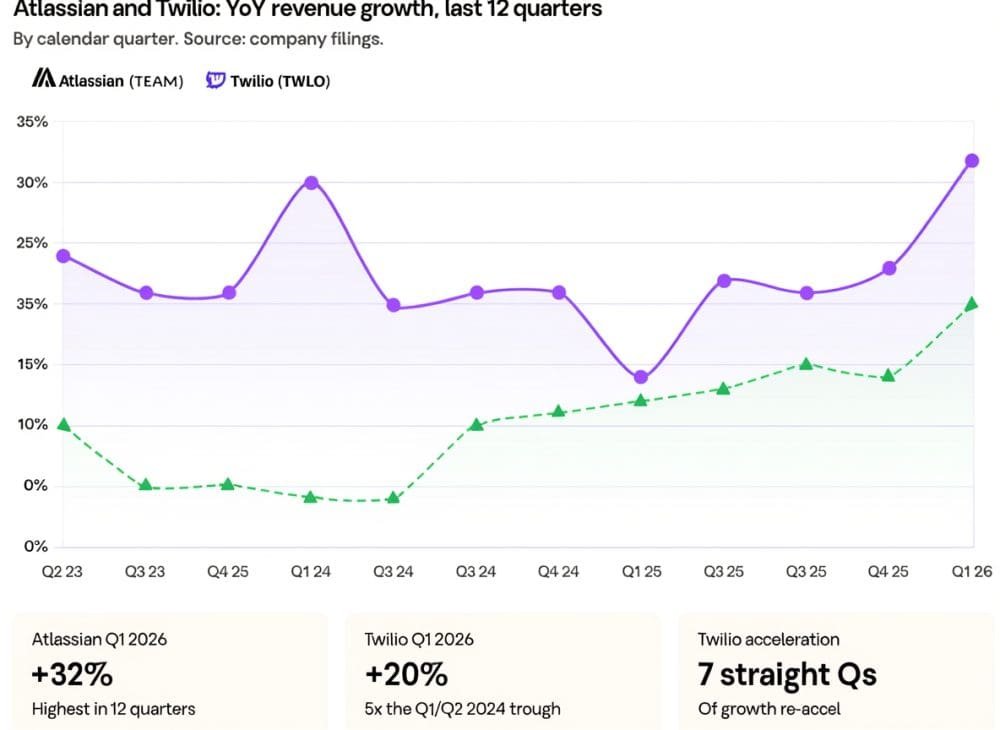
Atlassian's earnings beat was accompanied by encouraging signs that their AI initiatives are gaining traction. The company, known for project management tools like Jira and Confluence, has been integrating AI capabilities across its product suite. Early indicators suggest these AI features are resonating with customers, potentially driving renewed growth in a mature product portfolio.
"Neither of them just 'beat'—they significantly exceeded expectations," noted Jason Lemkin in his analysis of the earnings reports. This performance suggests that Atlassian's AI strategy may be working, with customers adopting new AI-powered features that enhance productivity and create new value propositions.
The company's approach to AI appears focused on enhancing existing workflows rather than completely reinventing them. By embedding AI directly into tools developers and project managers already use, Atlassian is following a pragmatic path to AI adoption that minimizes disruption while delivering tangible benefits.
Community sentiment around Atlassian's AI initiatives has been cautiously optimistic. Early adopters report positive experiences with AI-assisted code completion, automated documentation generation, and intelligent project management features. However, some users express concerns about potential over-reliance on AI and the need for maintaining human oversight in critical processes.
In contrast, Twilio is positioning itself as a "picks-and-shovels layer for AI agents," a metaphor that references the companies that supplied essential tools during gold rushes rather than participating directly in the speculative frenzy. This approach suggests Twilio aims to become foundational infrastructure for the emerging AI agent ecosystem.
Twilio's platform, with its communication APIs and customer engagement tools, provides essential capabilities that AI agents require to interact with the real world. By positioning itself as the underlying infrastructure for AI agents, Twilio is betting on becoming an indispensable component of the AI value chain, regardless of which specific AI applications gain traction.
This strategy carries both significant opportunities and risks. On one hand, becoming the plumbing for AI agents could position Twilio for substantial growth as the AI ecosystem expands. On the other hand, it means Twilio's success becomes increasingly tied to the overall development of AI agents, a still-emerging technology with uncertain adoption timelines.
Adoption signals for Twilio's AI strategy appear promising, with increasing integration between their platform and various AI frameworks. Companies building AI agents are increasingly incorporating Twilio's communication capabilities to enable voice, text, and other real-time interactions.
However, counter-perspectives suggest that Twilio's positioning may be overly optimistic. The market for AI infrastructure is becoming increasingly crowded, with cloud providers, specialized AI platforms, and communication companies all competing for a share. Additionally, the development of AI agents has been slower than some anticipated, potentially delaying the payoff for Twilio's infrastructure play.
Some analysts argue that Atlassian's approach may be more sustainable in the near term, as it delivers immediate value to existing customers through productivity enhancements. Twilio's strategy, while potentially more transformative in the long run, carries greater execution risk and depends on broader market trends that may be outside their control.
The divergent strategies of these two companies reflect a broader pattern in the enterprise software market: companies are choosing between becoming AI-enablers (like Twilio) or AI-enhancers (like Atlassian). Each approach has its merits, and the market may ultimately reward both strategies as the AI landscape continues to evolve.
For investors and customers alike, these earnings reports suggest that AI is no longer a peripheral consideration but a central driver of value creation in enterprise software. The companies that successfully integrate AI into their core offerings—whether through direct product enhancement or enabling AI capabilities for others—appear well-positioned for the next phase of growth in the B2B software market.
As the AI revolution continues to unfold, the contrasting approaches of Atlassian and Twilio will provide valuable case studies for how established software companies can navigate this technological transition. Their early results suggest that there may be multiple viable paths to AI-driven growth, each with its own set of opportunities and challenges.
Comments
Please log in or register to join the discussion