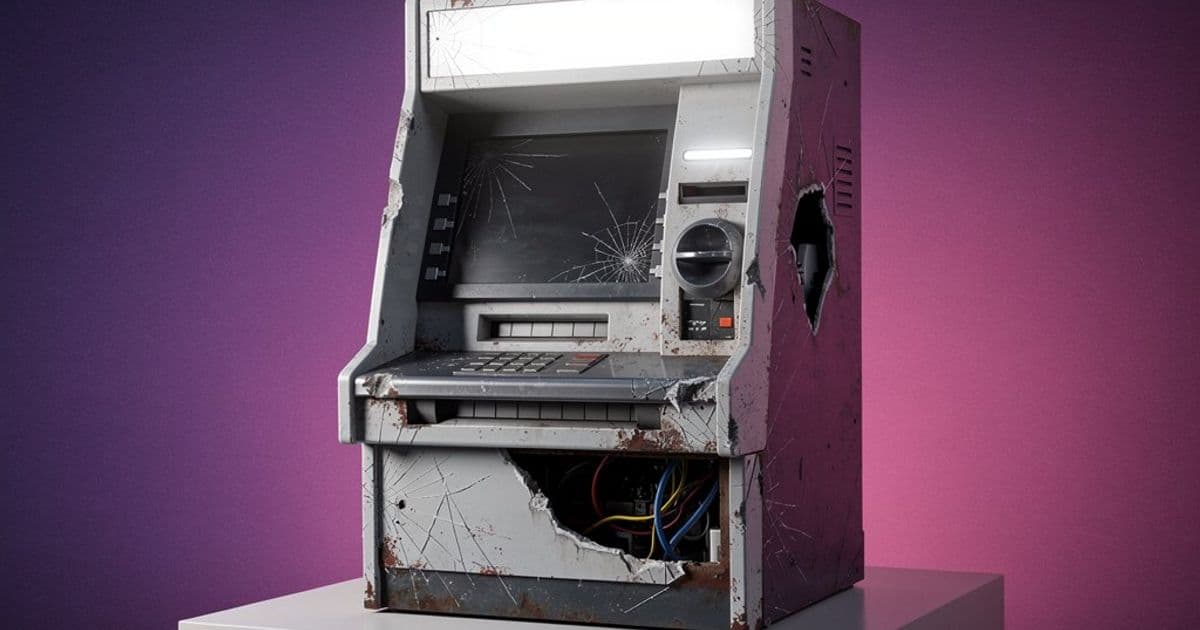
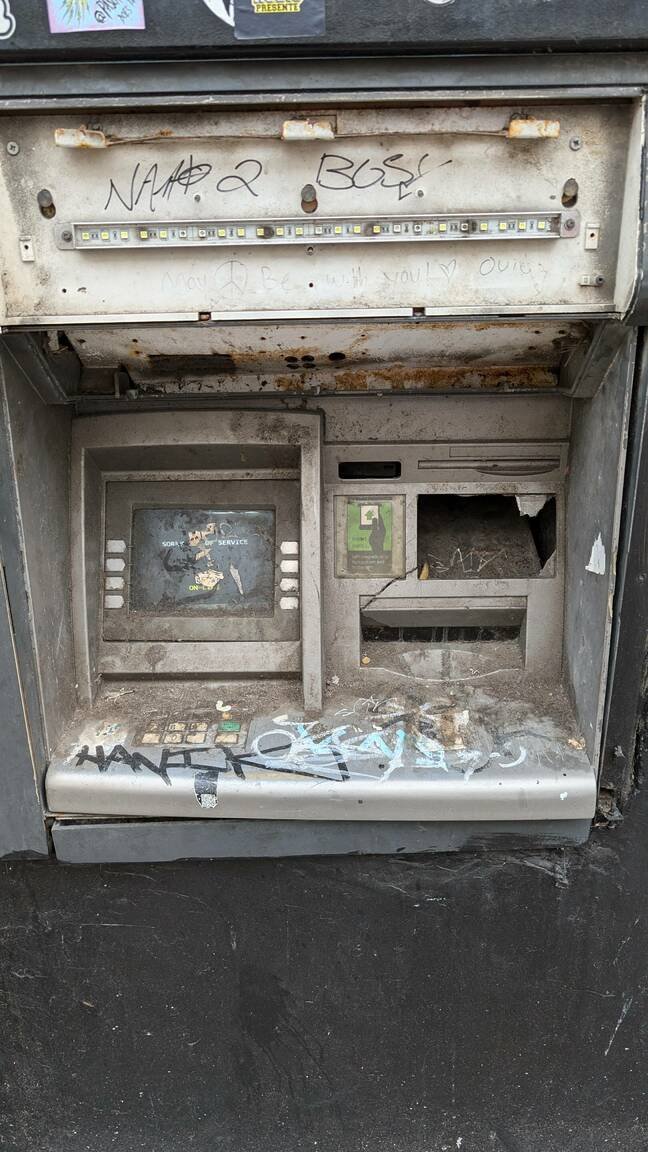
A severely vandalized ATM in Liverpool continues to display an 'ON-LINE' status despite being out of service for years, raising questions about ongoing network connectivity costs and the surprising durability of legacy banking hardware.
A battered ATM in Liverpool, England, has become an unlikely testament to the durability of legacy banking infrastructure. Spotted by a Register reader in 2025, the machine shows clear signs of extreme vandalism—its bezel is misaligned, the screen is damaged, and it has been physically attacked. Yet, despite being clearly out of service and abandoned in the wall of a vacant retail unit, its CRT screen continues to glow, displaying the message "SORRY OUT OF SERVICE" with the words "ON-LINE" visible below.

The persistence of this "ON-LINE" status is what makes this case particularly intriguing. The ATM's network connection appears to remain active, even though the machine cannot perform its primary function of dispensing cash. A check of street view imagery shows the device had been out of service since at least March 2023, yet it continues to report its status to some management console somewhere in the banking network.
This raises a fundamental question about the ongoing costs of maintaining legacy systems. Who is paying the electricity bill to keep this machine powered? More significantly, which entity is covering the network connectivity costs that allow this ATM to maintain its "ON-LINE" status? In an era where banks are aggressively closing branches and reducing ATM networks, this single, damaged machine continues to consume resources despite being completely non-functional.
The durability of the hardware itself is noteworthy. While modern computing devices often fail with minimal provocation, this ATM has survived vandalism, exposure to the elements, and years of disuse. The CRT display, a technology largely obsolete in consumer electronics, continues to function. This speaks to the robust construction of banking hardware designed for high-traffic, public environments—a stark contrast to the planned obsolescence common in consumer technology.
From a regulatory perspective, this situation highlights potential gaps in financial institution oversight. Under regulations like the Payment Card Industry Data Security Standard (PCI DSS), ATMs must maintain specific security protocols. A machine that remains network-connected but physically compromised could represent a security vulnerability. Financial institutions are required to monitor and secure all endpoints, yet this ATM appears to be in a state of limbo—neither fully operational nor properly decommissioned.
The banking sector's approach to ATM lifecycle management has evolved significantly. Modern ATMs run on Windows 10 IoT or specialized Linux distributions, with regular security updates and remote management capabilities. However, this Liverpool ATM appears to be from an earlier generation, potentially running legacy operating systems that no longer receive security patches. Its continued network presence, despite being physically compromised, suggests either an oversight in decommissioning procedures or a gap in network monitoring protocols.
The phenomenon of "zombie" ATMs—machines that remain technically connected to networks but are no longer serving their intended purpose—is not unique to this case. Financial institutions often struggle with the logistics of physically removing ATMs, especially when they are integrated into building infrastructure. The costs of removal, including potential structural repairs to the building, can sometimes exceed the cost of simply leaving the machine in place, even if it's no longer operational.
This particular ATM's story reflects broader trends in technology sustainability. While the industry pushes toward newer, more efficient systems, legacy hardware often persists due to economic and practical constraints. The machine's ability to continue functioning despite severe physical damage demonstrates the engineering priorities of its era—durability over flexibility, reliability over upgradability.
For consumers, this serves as a reminder of the complex infrastructure that supports daily financial transactions. Every functional ATM represents a chain of network connections, power supplies, software systems, and maintenance protocols. When one link breaks—as this one clearly has—the entire system can enter an ambiguous state, neither fully alive nor completely dead.
The question of who pays for this ongoing connectivity remains unanswered. It could be the building owner, the bank that originally installed the machine, or a third-party ATM operator. Regardless, this single, damaged device continues to consume resources, serving as a physical monument to the challenges of managing technology infrastructure in the real world.
As banking continues its digital transformation, cases like this highlight the physical remnants of older systems. While mobile banking and digital payments grow, physical ATMs remain important for cash access, particularly in underserved areas. The Liverpool ATM's stubborn persistence, despite its obvious obsolescence, suggests that the transition to fully digital finance will be slower and more complex than anticipated, with legacy hardware continuing to tick along long after its useful life has ended.
The machine's continued "ON-LINE" status serves as a digital heartbeat, a reminder that in the interconnected world of financial technology, nothing is ever truly disconnected until every cable is cut and every power cord unplugged. Even then, as this ATM demonstrates, some systems have a way of clinging to life, powered by the same infrastructure that supports the global financial network.
Comments
Please log in or register to join the discussion