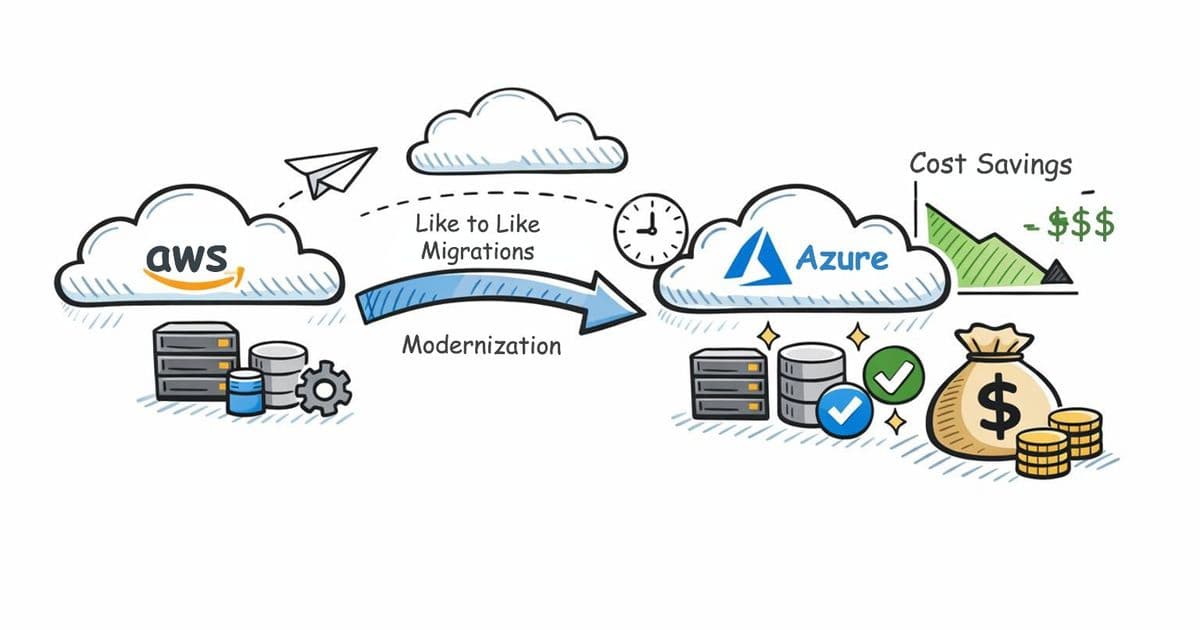
Cloud migrations often fail to deliver promised savings because FinOps teams join too late. This article examines how AWS-to-Azure migrations can achieve defensible cost savings through early FinOps involvement, leveraging Azure's unique pricing advantages including Copilot Migration Agent, Dev/Test discounts, Hybrid Benefit, and storage Reservations.
When CFOs ask "Where are the savings we modeled?" after cloud migrations, the answer often reveals a critical timing failure: FinOps joined after architecture decisions were locked and costs were already baked in.
This pattern explains why many cloud migrations deliver technical success but financial disappointment. Workloads move. SLAs hold. Teams celebrate go-live. Then the CFO asks: Where are the savings we modeled? In most cases, FinOps was engaged after architecture decisions were locked, licenses were double-paid, and governance debt had already accumulated.
The Economic Reality of Cloud Migration
From a FinOps perspective, the traditional AWS-to-Azure migration sequence—discover, migrate like-for-like, stabilize, then optimize—isn't conservative; it's economically rational:
- Like-for-like preserves performance baselines and business KPIs
- Cost comparisons remain apples-to-apples
- Optimization levers can be applied surgically, not blindly
The real value emerges in the first 90 days after migration, when cost signals stabilize and commitment-based savings become safe to apply.
Four FinOps Levers That Drive Azure Migration ROI
1. Azure Copilot Migration Agent + Azure Migrate
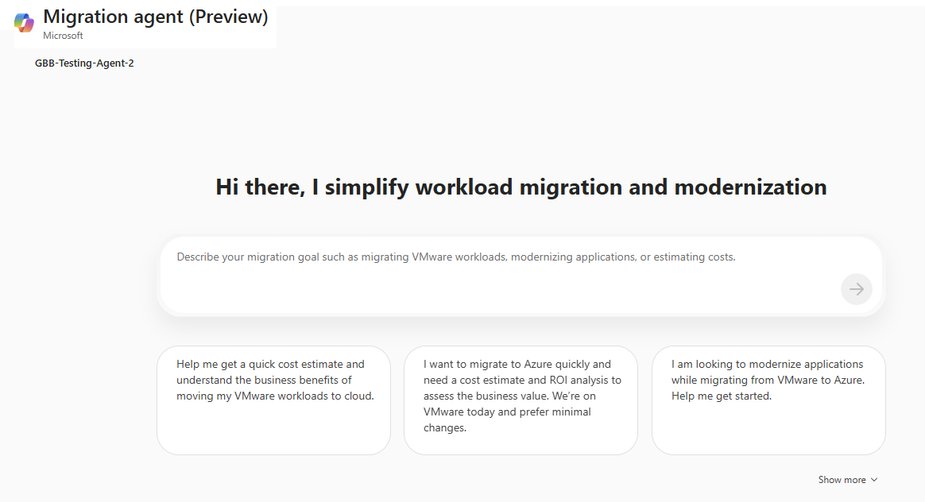
Azure Copilot Migration Agent (currently in public preview) is a planning-focused, AI-assisted experience built on Azure Migrate. It analyzes inventory, readiness, landing zone requirements, and ROI before execution.
You can interact with the Agent using natural language prompts to explore inventory, migration readiness, strategies, ROI considerations, and landing zone requirements.
From a FinOps perspective, this directly translates into faster decision cycles and lower planning overhead. By simplifying and compressing activities that traditionally required weeks of manual analysis or external managed services support, organizations can reduce the cost of migration planning, accelerate business case creation, and bring cost and ROI discussions forward—before environments are deployed and financial commitments are made.
2. Azure Dev/Test Pricing
Azure Dev/Test pricing provides discounted rates for non-production workloads for eligible subscriptions, significantly reducing dev and test environment costs. You can save up to 57 percent for a typical web app dev/test environment running SQL Database and App Service.
Unlike other Cloud Providers, this directly reduces environment sprawl costs, which often exceed production waste post-migration. It also enables wave-based migration by lowering the cost of parallel environments, allowing teams to migrate deliberately rather than under financial pressure.
3. Azure Hybrid Benefit
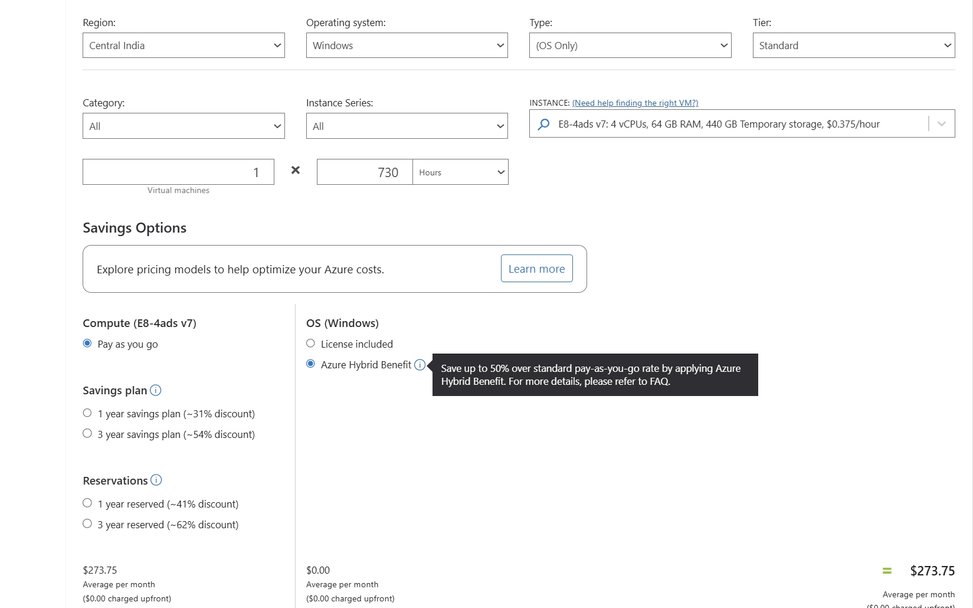
Azure Hybrid Benefit allows organizations to reuse existing Windows Server, SQL Server, and supported Linux subscriptions (RHEL and SLES) on Azure, reducing both migration and steady-state run costs.
During migration, Azure Hybrid Benefit is especially impactful because it addresses migration overlap costs. The 180-day migration allowance for Windows Server and SQL Server allows workloads to run on-premises and in Azure simultaneously, supporting parallel validation, phased cutovers, and rollback readiness without double-paying for licenses.
For Linux, Azure Hybrid Benefit enables RHEL and SLES workloads to move to Azure without redeployment, ensuring continuity and avoiding downtime.
From a FinOps perspective, this reduces one of the most underestimated migration cost drivers, delivering up to 76% savings versus pay-as-you-go pricing for Linux and up to 29% versus leading cloud providers for SQL Server, while keeping migration timelines driven by readiness—not cost pressure.
4. Azure Reservations
Azure Reservations enable organizations to reduce costs by committing to one-year or three-year plans for eligible Azure services, receiving a billing discount that is automatically applied to matching resources.
Reservations provide discounts of up to 72% compared to pay-as-you-go pricing, do not affect the runtime state of workloads, and can be paid upfront or monthly with no difference in total cost.
Importantly, Azure Reservations apply not only to compute and database, but also to storage services like Azure Blob storage, Azure Data Lake Gen2 Storage and Azure Files (for storage capacity) which often represent a significant portion of enterprise cloud spend.
In the context of migration, Azure Reservations matter because they allow FinOps teams to optimize baseline costs across both compute and data layers once workloads stabilize. Unlike AWS, where commitment-based discounts are largely compute-centric and storage services such as Amazon S3 do not offer reservation-style pricing, Azure enables long-term cost optimization for persistent storage footprints that continue to grow post-migration.
Additionally, Azure Reservations offer greater flexibility—customers can modify, exchange, or cancel reservations through a self-service program, subject to defined limits. This is particularly valuable during wave-based migrations, where workload shapes evolve over time.
From a FinOps perspective, Azure Reservations allow organizations to commit to predictable savings with broader scope and lower risk, covering both infrastructure and data-heavy workloads common in migration scenarios.
The Bottom Line: Migration Success Redefined
Successful migrations are no longer measured by workloads moved, but by cost control maintained and value unlocked. Azure's FinOps-aligned migration capabilities allow organizations to reduce risk first, optimize deliberately, and ensure that savings are sustained long after the last workload migrates.
The key insight remains: ROI fails when FinOps joins late. AWS-to-Azure migrations deliver real savings when FinOps leads early, migrations stay like-for-like, and optimization is applied after costs stabilize.
Updated Mar 31, 2026
VERSION 1.0
Comments
Please log in or register to join the discussion