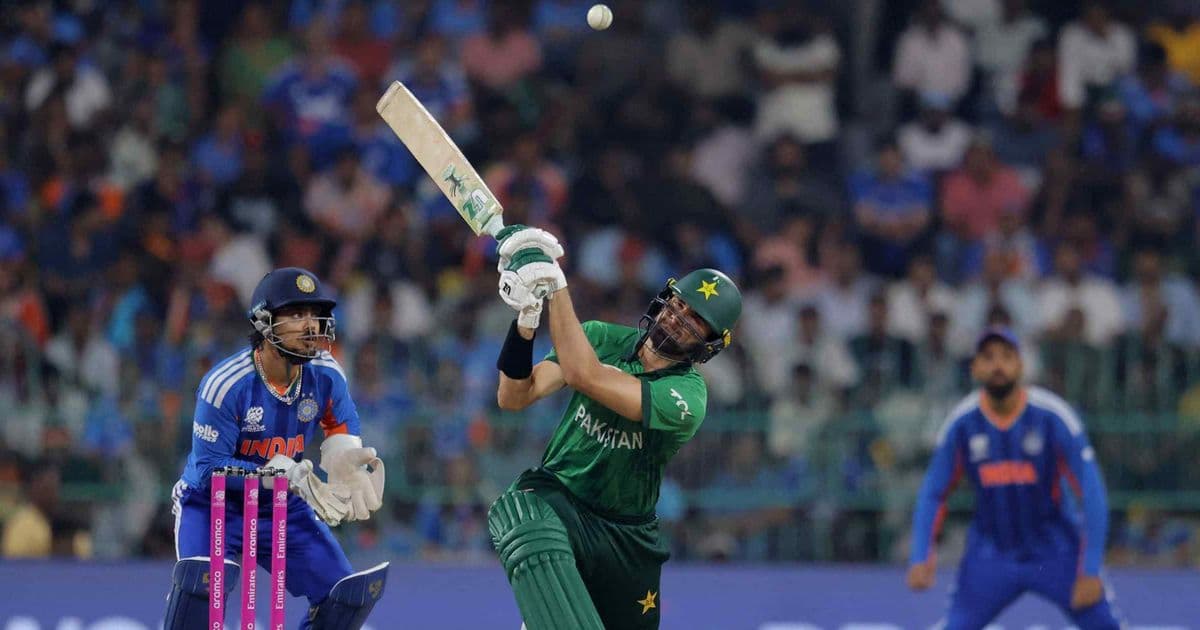
The scheduled T20 World Cup clash in Colombo offers a rare diplomatic opening for India and Pakistan, yet investors see limited immediate impact on bilateral trade, defence spending, and regional tech supply chains.
Cricket diplomacy eases India‑Pakistan tensions, but market fallout remains mixed
India and Pakistan will meet on the cricket field in Colombo on 15 February as part of the T20 World Cup. The match, broadcast to more than 400 million viewers across South Asia, is being framed by analysts as a form of soft diplomacy that could create a window for political de‑escalation. While the symbolic value is clear, the financial implications for the two economies and the broader Asian market are more nuanced.
Market context
| Metric | India (FY 2025) | Pakistan (FY 2025) | Regional impact |
|---|---|---|---|
| GDP growth | 6.8 % | 4.1 % | South‑Asian average 5.4 % |
| Trade surplus (bilateral) | $2.3 bn | -$2.3 bn | Trade balance still heavily skewed toward India |
| Defence budget share of GDP | 2.5 % | 3.2 % | Both nations increasing spend on air‑defence platforms |
| IT services export growth | 12 % YoY | 7 % YoY | Regional tech sector buoyed by U.S. cloud demand |
India’s economy continues to expand at a pace that outstrips Pakistan’s, driven by strong domestic consumption and a surge in services exports. Pakistan’s growth is constrained by a current‑account deficit that has widened to 4.5 % of GDP, partly because of reduced remittances and higher import bills for fuel and food.
In the past twelve months, bilateral trade has risen modestly—up 3.2 % in volume—yet the value of Indian exports to Pakistan (primarily pharmaceuticals, engineering goods and consumer electronics) remains modest compared with the overall South‑Asian trade flow, which is dominated by China‑India and China‑ASEAN corridors.
On the defence front, both countries have announced incremental budget increases aimed at modernising air‑force capabilities. India’s latest procurement plan includes an additional 30 Rafale jets, while Pakistan is finalising a deal for 12 JF‑17 Block III aircraft. These purchases are financed largely through external borrowing, pushing both nations’ sovereign debt ratios higher (India at 70 % of GDP, Pakistan at 87 %).
What it means for investors and policymakers
Short‑term market sentiment – The cricket match generated a brief rally in Indian equities, with the Nifty 50 gaining 0.6 % on the day of the announcement. The effect was confined to consumer‑discretionary and media stocks, reflecting heightened advertising spend and viewership. Pakistani stocks saw a modest 0.3 % rise, driven by a temporary uplift in telecom and broadcasting firms.
Trade negotiations – Historically, sporting encounters have preceded low‑key diplomatic talks. If the Colombo game proceeds without incident, it could pave the way for a confidence‑building measure (CBM) agenda focused on customs facilitation and a limited reduction of non‑tariff barriers. A 5 % cut in paperwork processing time, for example, would lower logistics costs for Indian exporters by an estimated $150 million annually, according to a recent KPMG study.
Tech‑sector spillovers – Both countries host growing IT service ecosystems. India’s $250 billion software export market already outsizes Pakistan’s $12 billion sector. A thaw in relations could enable joint ventures in fintech and health‑tech, where regulatory alignment would be a prerequisite. Analysts at PwC estimate that a modest 2 % increase in cross‑border tech contracts could add $500 million to regional GDP over the next three years.
Geopolitical risk premium – Despite the soft‑power gesture, the underlying security dilemma persists. The United States and China continue to vie for influence in the sub‑continent, with the U.S. providing $2 billion in military aid to Pakistan and China deepening its Belt‑and‑Road investments in both nations. Credit rating agencies therefore maintain a “stable‑plus” outlook for India and a “negative‑watch” stance for Pakistan, reflecting the higher probability of sudden policy shifts.
Currency dynamics – The Indian rupee appreciated 0.4 % against the U.S. dollar in the week following the match announcement, while the Pakistani rupee depreciated 0.6 %. The divergence reflects divergent capital‑flow expectations: foreign investors view India’s growth trajectory as more resilient, whereas Pakistan’s external debt servicing concerns remain a drag.
Strategic outlook
Cricket diplomacy does not rewrite the economic fundamentals of the India‑Pakistan relationship, but it does create a low‑stakes environment for dialogue. For investors, the key takeaway is to monitor any concrete policy steps that follow the match—particularly in customs reform, joint tech initiatives, and defence procurement transparency. Companies with exposure to cross‑border supply chains should be prepared for incremental cost improvements if paperwork reductions materialise, while maintaining vigilance for sudden geopolitical shocks that could re‑introduce volatility.
In the broader Asian context, the episode underscores how cultural soft power can act as a catalyst for modest economic adjustments, even when structural imbalances remain large. As the T20 World Cup progresses, market participants will be watching not just the scores, but the subsequent diplomatic language that emerges from the cricket pavilion.
For further reading on South‑Asian trade trends, see the latest report from the Asian Development Bank: https://www.adb.org/publications/south-asia-trade-2025
Comments
Please log in or register to join the discussion