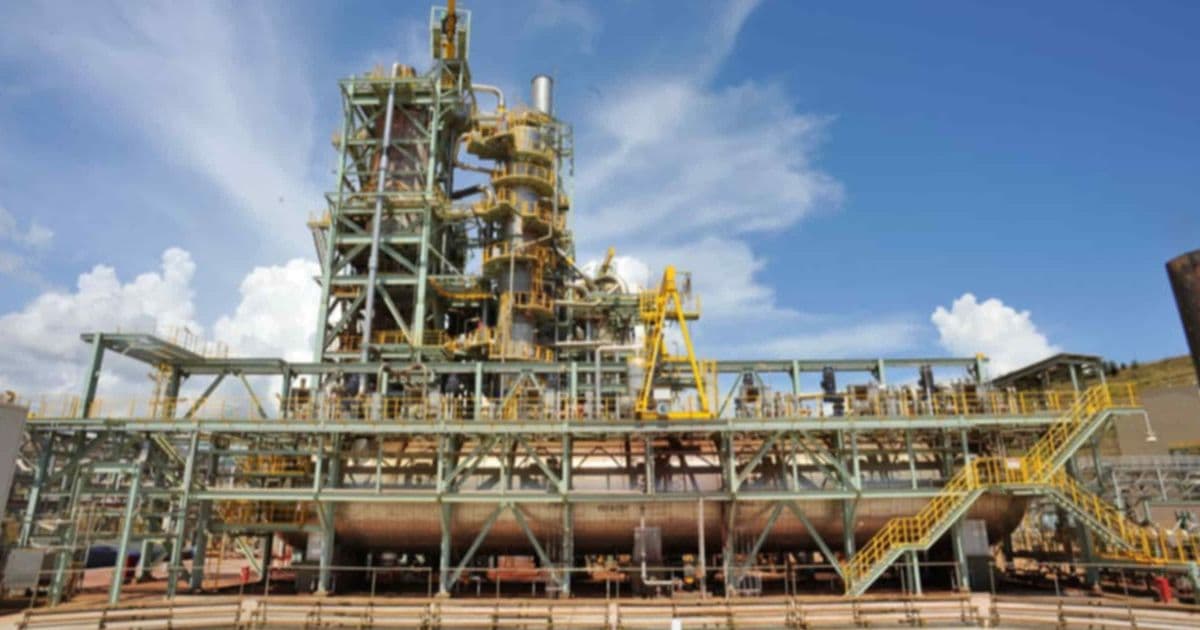
Japanese firms Sumitomo Metal Mining and trading house Sojitz are investing in rare‑earth projects across the Philippines, Vietnam and Malaysia, aiming to secure a multi‑billion‑dollar supply chain outside China. The moves reflect rising geopolitical pressure, projected demand for electric‑vehicle magnets and renewable‑energy components, and a potential shift of $4‑6 billion in annual rare‑earth spend away from Chinese exporters.
Business news
Japanese mining giant Sumitomo Metal Mining (SMM) announced a joint venture with the Philippines' state‑owned Philippine Nickel‑Metal Corp to develop a rare‑earth deposit in the Ilocos region. The partnership targets an initial production capacity of 150 tonnes of rare‑earth oxides per year, enough to supply roughly 5 % of global demand for neodymium‑iron‑boron (NdFeB) magnets used in electric‑vehicle (EV) drivetrains.
At the same time, Sojitz Corp disclosed plans to acquire controlling stakes in two exploration licences in Vietnam’s Quang Ninh province and Malaysia’s Perak state. The combined resource estimate exceeds 1.2 million tonnes of ore with an average light‑rare‑earth (LREE) grade of 8 % and heavy‑rare‑earth (HREE) grade of 1.2 %. Sojitz expects to bring the first mine into commercial production by 2029, with an estimated capex of $1.4 billion.
Market context
China currently controls ≈ 80 % of global rare‑earth output and ≈ 95 % of downstream processing capacity. In 2025, the International Energy Agency projected that demand for rare‑earth magnets would rise 23 % annually through 2035, driven by EVs, wind‑turbine generators and high‑efficiency motors. The resulting market size is forecast to exceed $30 billion per year by 2030.
Recent geopolitical friction—most notably the 2024 U.S.–China rare‑earth export restrictions—has prompted governments and corporations to diversify supply. The European Union’s Critical Raw Materials Act earmarks €30 billion for non‑Chinese sourcing, while Japan’s Ministry of Economy, Trade and Industry set a target of 30 % of its rare‑earth imports from “trusted partners” by 2030.
Financially, Sumitomo Metal Mining reported ¥1.2 trillion in revenue for FY2025, with a 3.5 % contribution from its rare‑earth segment. Sojitz’s trading division posted ¥780 billion in FY2025, and its strategic minerals unit is projected to grow at a CAGR of 12 % through 2032.
What it means
- Supply‑chain resilience for Japanese manufacturers – Automakers such as Toyota and Nissan, which source over ¥200 billion worth of rare‑earth magnets annually, will gain a more secure input base, reducing exposure to potential Chinese export curbs.
- Capital allocation shift – Both firms are committing over $2.5 billion in upstream mining and processing within five years, signaling a reallocation of capital from traditional base‑metal projects to strategic minerals.
- Potential for downstream processing hubs – Sumitomo’s partnership includes a clause to build a hydrometallurgical plant in the Philippines, capable of separating Nd, Pr and Dy at a cost of $350 tonne‑of‑oxide—competitive with Chinese facilities that charge $400‑$450.
- Geopolitical leverage – By establishing a supply chain that spans three Southeast Asian nations, Japan can negotiate more favorable trade terms with the United States and the EU, positioning itself as a conduit for “China‑free” rare‑earths.
- Market impact – Analysts at Nomura cut their price target for Chinese rare‑earth exporters by 5 %, forecasting a $4‑6 billion shift in annual revenue toward alternative sources by 2030.
Overall, the initiatives by Sumitomo Metal Mining and Sojitz illustrate a coordinated corporate response to supply‑risk pressures. If the projects meet their timelines, Japan could secure a 10‑15 % share of the global rare‑earth market outside China, reshaping the economics of EV and renewable‑energy hardware production worldwide.
Further reading
Comments
Please log in or register to join the discussion