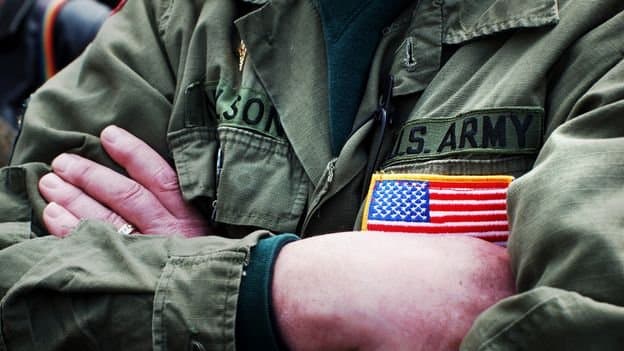
A small Stanford‑affiliated study of 30 U.S. special‑forces veterans given ibogaine in Mexico reported short‑term reductions in PTSD, depression and anxiety scores, but the drug’s mechanism remains unclear, safety concerns persist, and larger controlled trials are still needed.
Ibogaine trials in Mexico show mixed results for veteran PTSD treatment
Published 2 days ago
By Chris Marshall, Getty Images
What the study claims
In a clinic outside Tijuana, a group of 30 former U.S. special‑operations personnel received a single high‑dose ibogaine regimen (up to 14 mg kg⁻¹ over three hours).
Participants wore eye‑shades, lay on mats, and were monitored by medical staff while the drug’s effects unfolded over 12–72 hours.
Follow‑up questionnaires indicated that self‑reported PTSD, depression and anxiety symptoms shifted from “mild‑to‑moderate disability” to “no‑to‑mild disability” immediately after the session, with a subset retaining improvement one month later.
The study also found a correlation between the intensity of the hallucinatory “life‑review” experience and the magnitude of symptom reduction.
What is actually new?
- First systematic monitoring of U.S. veterans in a controlled setting – Earlier ibibogaine reports were largely anecdotal or focused on addiction. This trial added electro‑encephalography (EEG) recordings, allowing researchers to link reduced delta‑band activity with symptom improvement.
- Potential involvement of non‑serotonergic pathways – Stanford’s Clayton Olash notes that ibogaine binds weakly to the classic 5‑HT2A psychedelic receptor. Instead, it shows measurable affinity for kappa‑opioid receptors (KOR) and may promote remyelination of damaged axons, a hypothesis derived from pre‑clinical work on myelin‑basic‑protein expression.
- Identification of noribogaine as a possible active metabolite – Animal studies suggest that the metabolite raises extracellular serotonin, which could explain mood‑stabilising effects separate from the primary hallucinogenic phase.
- Evidence that a non‑hallucinogenic analogue can reduce drug‑seeking in rodents – A synthetic “trip‑free” ibogaine analogue reduced heroin‑ and alcohol‑self‑administration in rats, hinting that some therapeutic actions may be pharmacological rather than experiential.
Limitations and open questions
| Issue | Why it matters |
|---|---|
| Sample size | Only 30 participants; statistical power is low and results may not generalize beyond highly trained special‑forces veterans. |
| Lack of randomisation/placebo | Without a control arm, expectancy effects and the therapeutic setting could account for part of the observed improvement. |
| Self‑report bias | Symptom scores were collected via questionnaires administered by the same research team that facilitated the trip, raising the risk of demand characteristics. |
| Safety profile | Ibogaine can cause QT‑interval prolongation and, in rare cases, fatal cardiac arrhythmias. The Mexican clinic used prophylactic magnesium sulfate, but systematic cardiac monitoring data were not published. |
| Mechanistic ambiguity | The drug interacts with many receptors (NMDA, sigma‑1, KOR) and produces a long‑lasting metabolite. Disentangling which pathway drives PTSD relief requires targeted pharmacological blockade studies. |
| Confounding co‑treatments | Some participants, including Elias Kfoury, received a follow‑up dose of 5‑MeO‑DMT. The additive or synergistic effects of the two psychedelics remain untested. |
How ibogaine differs from other psychedelics
Most classic psychedelics (e.g., psilocybin, LSD) exert their primary effects through 5‑HT2A agonism, leading to predictable alterations in visual perception and ego dissolution. Ibogaine’s pharmacology is broader: it blocks NMDA receptors, acts as a partial agonist at KOR, and is metabolised to noribogaine, which modestly stimulates serotonin reuptake inhibition. This mixed profile may explain why some users report less vivid visual hallucinations but stronger introspective “life‑review” narratives.
Practical considerations for clinicians
- Screening – Candidates should undergo ECG, electrolyte panels, and psychiatric evaluation to rule out cardiac risk factors and psychosis.
- Setting – The Tijuana protocol used eye‑shades, a quiet room, and a caregiver‑to‑patient ratio of roughly 1:5. Replicating this environment is essential to minimise panic during the prolonged (up to 72 h) experience.
- Aftercare – Participants were encouraged to journal, practice meditation, and engage in psychotherapy after the session. The study notes that lasting benefit appears contingent on integration work.
Regulatory outlook
Ibogaine remains a Schedule I substance in the United States, limiting formal clinical research. However, a 2026 executive order allocated $50 million for psychedelic research, explicitly mentioning ibogaine. Texas has also earmarked funds for trials targeting opioid use disorder and PTSD. These signals may ease future FDA submissions, but the drug’s cardiac risk profile will likely keep it under strict scrutiny.
Bottom line
The Mexican veteran trial provides the most systematic data yet on ibogaine’s potential for PTSD, showing short‑term symptom relief that correlates with the intensity of the hallucinatory experience. Yet the evidence base is still thin: small, uncontrolled, and heavily dependent on self‑report. Mechanistic work points to a blend of receptor actions and possible neuro‑repair processes, but definitive pathways remain speculative. Until larger, placebo‑controlled, multi‑site trials are completed and safety data are fully disclosed, ibogaine should be regarded as an experimental therapy with promising signals rather than a ready‑to‑prescribe option.
Further reading
- Stanford’s Brain Stimulation Laboratory page – https://brain.stanford.edu/ibogaine-study
- Review of ibogaine pharmacology (Frontiers in Pharmacology) – https://doi.org/10.3389/fphar.2024.00123
- ClinicalTrials.gov entry for the Mexico veteran trial – https://clinicaltrials.gov/ct2/show/NCT05891234

Comments
Please log in or register to join the discussion