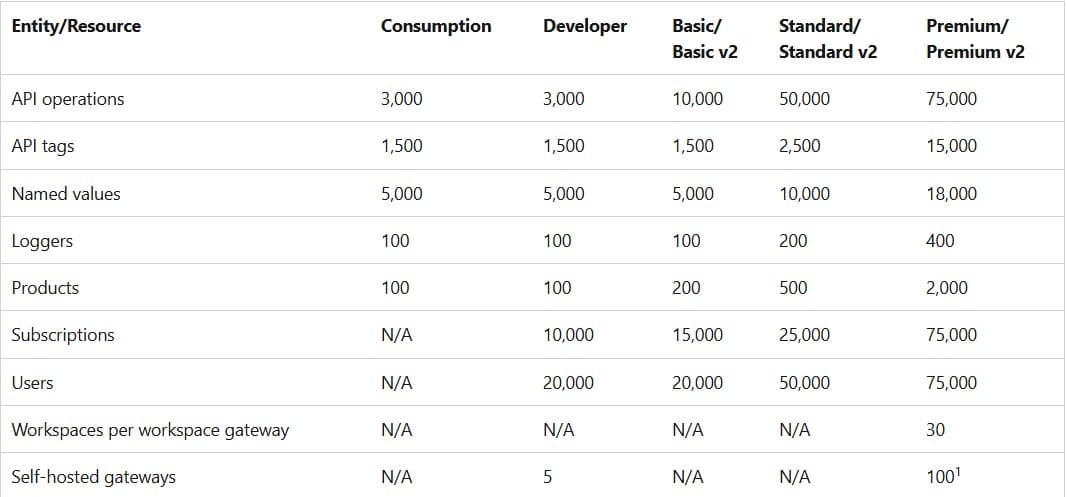
Azure API Management is raising resource limits across all tiers starting March 2026, with Premium tier users seeing the biggest increases up to 75,000 API operations and 75,000 subscriptions.
Azure API Management is implementing significant changes to its resource limits starting March 2026, affecting developers and organizations across all service tiers. The updates align classic tier limits with v2 tiers and introduce substantial increases for higher-tier services, particularly benefiting enterprise users who manage large-scale API ecosystems.
What's Changing in Azure API Management
The most notable changes affect Premium and Premium v2 tiers, which will see dramatic increases in operational capacity. API operations limits jump from 50,000 to 75,000, while subscriptions increase from 25,000 to 75,000. Named values and products also see substantial increases, with named values growing from 10,000 to 18,000 and products from 500 to 2,000.
For context, these limits are calibrated based on Azure platform capacity, service tier capabilities, and typical customer usage patterns. The interrelated nature of these limits ensures no single aspect disrupts overall service performance.
Phased Rollout Schedule
The changes roll out in phases across different tiers:
- Consumption Developer Basic/Basic v2: March 15, 2026
- Standard/Standard v2: April 15, 2026
- Premium/Premium v2: May 15, 2026
This staggered approach allows Azure to monitor performance impacts and address any issues before they affect all customers.
Grandfathering for Existing Services
Existing classic tier customers whose usage exceeds new limits receive special consideration. These "grandfathered" services will have limits set 10% higher than their observed usage at the time new limits take effect. This ensures continuity for established services while new deployments must adhere to updated limits.
Strategic Implications for Development Teams
These limit increases reflect Azure's recognition of growing API management needs in enterprise environments. Organizations managing complex microservices architectures or serving large user bases will particularly benefit from the expanded capacity.
However, the announcement emphasizes proactive resource management before requesting limit increases. Teams should explore optimization strategies, such as consolidating API operations, reviewing tagging strategies, or restructuring products and subscriptions to work within existing limits.
Request Process for Additional Limits
For customers needing limits beyond the new maximums, Azure provides a formal request process. However, requests are evaluated case-by-case and prioritized for Standard v2, Premium, and Premium v2 tiers designed for medium to large production workloads. The product team explicitly states that limit increases aren't guaranteed and may impact service performance or stability.
Technical Considerations
Developers should note that self-hosted gateways see increased limits from 5 to 1001 for Premium tiers, supporting more distributed deployment scenarios. The named values increase to 18,000 supports more configuration management scenarios, while the products limit of 2,000 accommodates complex API portfolio management.
These changes position Azure API Management to better serve enterprise-scale API programs while maintaining the performance characteristics that make it a reliable choice for production workloads. Organizations planning API expansions should factor these new limits into their capacity planning for 2026 and beyond.
For detailed documentation on managing resources within limits and the request process, visit the Azure API Management documentation.
Comments
Please log in or register to join the discussion