
Microsoft's Azure NetApp Files now offers S3-compatible object access to file-stored data, eliminating data duplication costs while enabling direct integration with analytics/AI platforms—a strategic shift impacting multi-cloud storage decisions.

Enterprise data teams face a persistent architectural tension: Mission-critical data resides in high-performance file systems like Azure NetApp Files (ANF), but modern analytics and AI platforms demand object storage access. Historically, this forced costly data duplication across storage tiers. Microsoft's new Azure NetApp Files object REST API fundamentally alters this equation by introducing file/object duality—enabling simultaneous NFS/SMB and S3-compatible access to the same physical dataset.
What Changed: The Dual-Access Revolution
The Object REST API creates an S3-compatible abstraction layer atop existing ANF volumes. Key technical shifts:
- Zero-Copy Data Access: Files become accessible as S3 objects without movement or restructuring, maintaining ANF's performance, security, and governance
- Bucket-Directory Mapping: Designated volume directories map to S3 buckets (e.g.,
/analytics/projectA→s3://projectA-bucket) - Certificate-Based Security: TLS with managed credentials ensures enterprise-grade access control
- Protocol Translation: Core S3 operations (GET/PUT/LIST) translate to underlying file operations

Provider Comparison: Strategic Implications
| Capability | Azure NetApp Files + Object REST API | Traditional Cloud Object Stores (AWS S3, GCP Cloud Storage) | Hybrid File/Object Solutions |
|---|---|---|---|
| Data Duplication | Eliminated - Single copy serves both protocols | Required for file-to-object workflows | Often requires gateway-induced copies |
| Performance | Sub-millisecond latency (leverages ANF SSD tiers) | Higher latency for large files/analytics | Variable (depends on gateway hardware) |
| Security Model | Integrated with Azure VNETs/RBAC + S3 credentials | Native object ACLs + IAM | Fragmented (separate file/object controls) |
| Cost Structure | Premium file storage cost only (no egress/API fees) | Storage + Egress + API Request costs | File storage + Gateway licensing + Object fees |
| Real-Time Analytics | Direct access to live file data | Stale until ETL completes | Delayed by sync intervals |
This positions ANF uniquely for enterprises with:
- Existing NFS/SMB investments needing object access
- Strict data governance requirements
- Latency-sensitive AI/analytics workloads
Migration & Pricing Considerations
Cost Impact Analysis While ANF's per-GB cost exceeds bulk object storage, TCO advantages emerge when factoring in:
- Eliminated Egress Fees: No charges for cross-storage data transfers
- Reduced Compute Costs: Avoid Spark jobs dedicated to data replication
- Operational Savings: Simplified pipeline maintenance and storage governance
Migration Pathways
- ANF-to-Cloud Object Store: No longer necessary for analytics access
- On-Prem to ANF: Accelerated by maintaining protocol compatibility during lift-and-shift
- Multi-Cloud Strategies: Reduces need for S3 replication across Azure/AWS/GCP
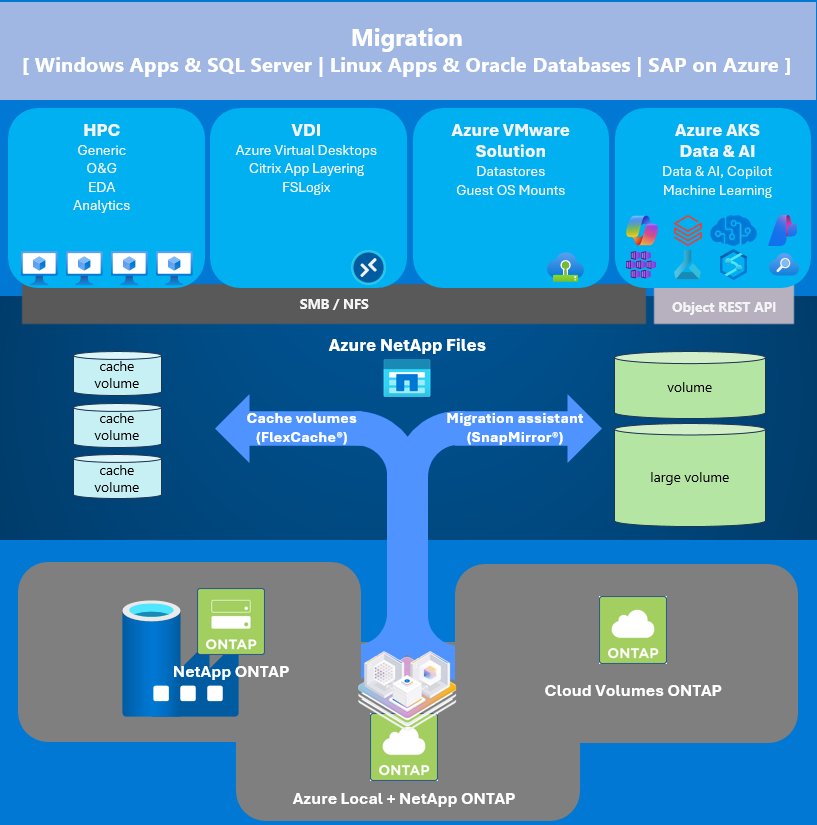
Business Impact: Analytics & AI Transformation
Use Case Patterns
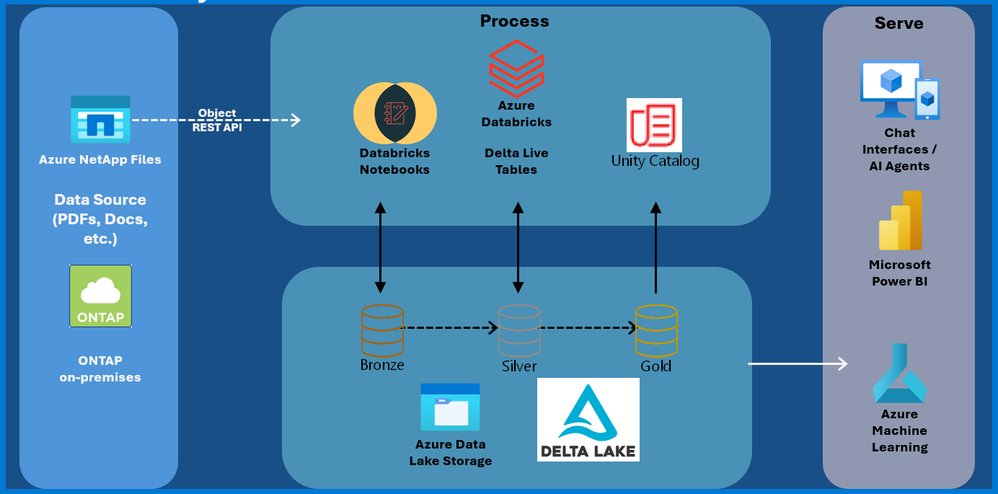
- Real-Time Lakehouse Integration Azure Databricks directly queries ANF-hosted data via S3, enabling:
- Training ML models on live transaction data
- Combining file/object datasets in single Spark jobs Demo: ANF + Databricks Integration
- Governed Data Virtualization Microsoft OneLake accesses ANF datasets via shortcuts, creating logical unity across storage tiers while preserving:
- Centralized access policies
- Regulatory compliance (data remains in original location) OneLake Integration Guide
- AI Agent Ecosystems
Discovery AI frameworks process HPC simulation outputs (stored as files) via object interfaces:
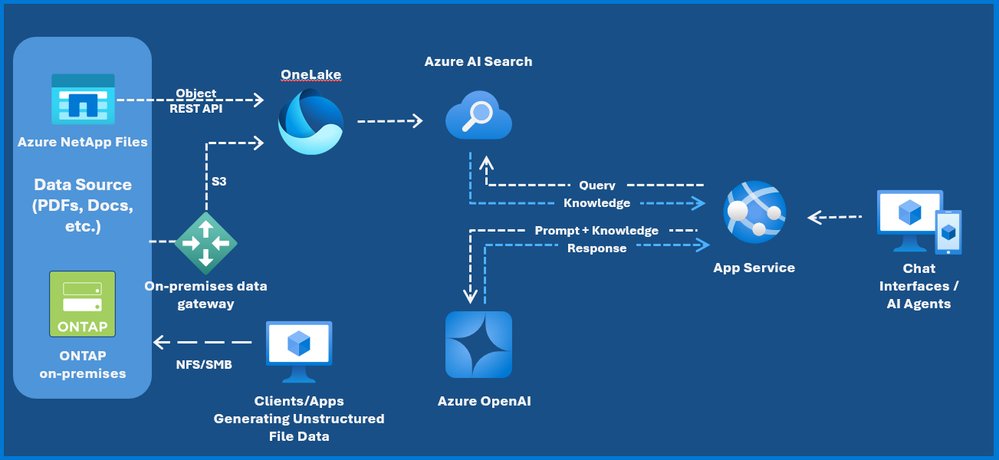
- No latency penalties from data migration
- Agents maintain security context via S3 credentials
Strategic Recommendations
- Evaluate Protocol Overlap: Audit analytics workloads requiring object access to file-resident data
- Benchmark TCO: Model current data movement costs against ANF's premium storage pricing
- Prioritize Governance-Sensitive Workloads: Implement first where data sovereignty matters most
- Validate Performance: Test mixed read/write patterns before full migration
The Bottom Line
Azure NetApp Files Object REST API delivers a cloud-native answer to the file/object divide. By eliminating data movement while preserving enterprise-grade controls, it reshapes storage economics for AI/analytics workloads. Competitors lack equivalent native dual-protocol implementation—forcing enterprises into costlier hybrid approaches. For Azure-centric organizations or multi-cloud deployments prioritizing data locality, this warrants strategic reevaluation of storage architectures.
Explore Further:
Comments
Please log in or register to join the discussion