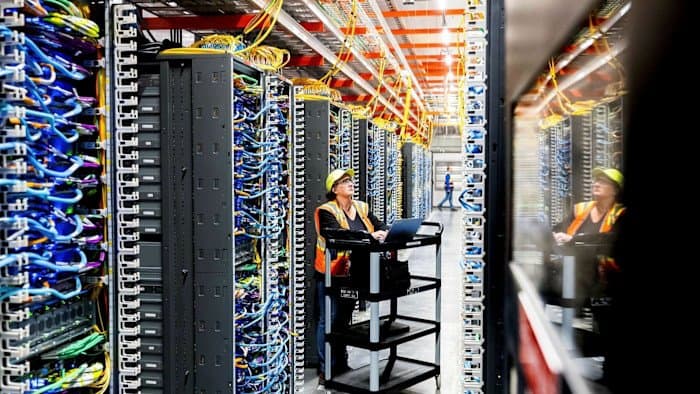
Amazon Web Services employees describe a shift toward AI-assisted workflows and new documentation mandates, reflecting broader industry pressures to streamline operations through automation.
Multiple Amazon Web Services developers say they are being asked to take on new roles with AI tools' assistance, and engineers are now required to complete technical writing tasks, according to a report in the Financial Times.
The push for "leaner" operations is piling pressure on employees but could serve as a playbook for rivals in the cloud computing industry. Amazon's HR chief last month sought to address concerns about the changes, emphasizing that the company is investing in AI to enhance productivity rather than replace workers outright.
What's Actually New
The changes at AWS reflect a broader trend across the tech industry where companies are leveraging AI tools to automate routine tasks and shift employee responsibilities. For AWS developers, this means:
- AI-assisted development workflows: Engineers are expected to use AI coding assistants and automated testing tools to accelerate their work
- Expanded documentation requirements: Technical writing has become a mandatory part of engineering roles, with developers needing to produce clearer documentation for AI-assisted systems
- Cross-functional responsibilities: Developers are taking on tasks traditionally handled by technical writers, product managers, and quality assurance specialists
The Financial Times report suggests these changes are part of Amazon's broader strategy to reduce operational costs while maintaining service quality. The company has been under pressure to improve profitability after years of heavy investment in cloud infrastructure and AI development.
The Bigger Picture
This shift mirrors what's happening across the tech industry. Companies like Microsoft, Google, and Meta are all pushing their engineering teams to adopt AI tools more aggressively. The goal is to reduce headcount while maintaining or even increasing output—a strategy that's becoming increasingly common as AI capabilities mature.
However, the transition isn't without friction. Engineers report that while AI tools can handle routine coding tasks, they often require significant oversight and debugging. The documentation requirements add another layer of work that many developers weren't previously responsible for.
What This Means for the Industry
If Amazon's approach proves successful, other cloud providers may follow suit. The company's scale means that even small efficiency gains can translate to significant cost savings. For AWS customers, this could eventually mean:
- More standardized documentation and API designs
- Faster feature releases as development cycles shorten
- Potential quality trade-offs as teams prioritize speed over thoroughness
The changes also raise questions about the future of technical writing as a profession. As engineers take on more documentation responsibilities, specialized technical writers may find their roles evolving or diminishing.
Looking Ahead
The pressure to adopt AI tools and expand documentation requirements isn't unique to AWS. Across the tech industry, companies are grappling with how to balance automation with quality, and how to retrain workers for AI-augmented roles.
For AWS developers, the immediate challenge is adapting to these new expectations while maintaining the high standards that enterprise customers expect. The long-term question is whether this model of AI-assisted, multi-skilled engineering teams will become the new norm across the industry.
The Financial Times report suggests that Amazon's HR chief is aware of the tensions these changes are creating and is working to address employee concerns. However, the underlying economic pressures driving these changes—the need to reduce costs while maintaining growth—remain unchanged.
As AI tools continue to improve, the balance between automation and human oversight will likely continue to shift. For now, AWS developers find themselves at the forefront of this transition, serving as test cases for how traditional tech roles might evolve in an AI-driven future.
Comments
Please log in or register to join the discussion