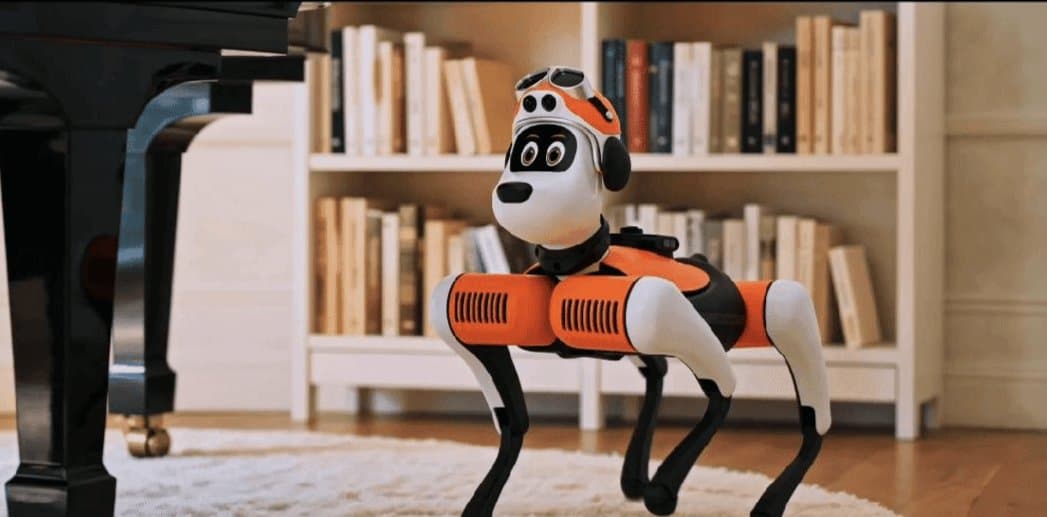
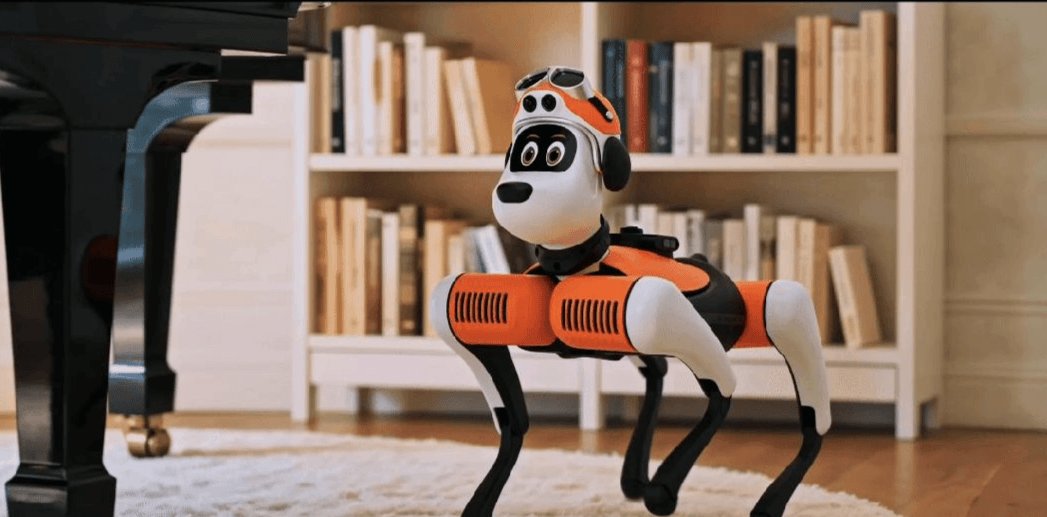
Weilan Tech's BabyAlpha A3 quadruped robot claims to deliver 10x computing efficiency at one-tenth the cost of industry leaders, featuring a novel heterogeneous computing architecture and advanced perception systems. While the specifications are impressive, a closer examination reveals both the technical innovations and potential limitations of this consumer-grade robotics contender.
Chinese robotics startup Weilan Tech has entered the competitive quadruped robot market with the BabyAlpha A3, a device that promises to disrupt the industry with its claimed 10x computing efficiency at approximately one-tenth the cost of Nvidia's Jetson Thor solution. The A3 represents an ambitious approach to edge computing for robotics, but a technical analysis reveals both significant innovations and potential limitations that potential buyers should consider.
Computing Architecture: Heterogeneous Approach vs. Industry Standards
The most striking claim about the BabyAlpha A3 is its computing efficiency advantage. Weilan Tech asserts that their "Edge-side Mixed Heterogeneous Computing Cluster" delivers 10x the computing efficiency of industry standards while costing roughly $300 compared to Nvidia's Jetson Thor T5000 at approximately $3,000. This price-performance ratio would indeed be remarkable if substantiated.
The architecture itself is noteworthy: rather than relying on a single monolithic chip, the A3 employs a six-chip configuration with two 5nm chips, two 8nm chips, and two 3D-stacked chips, totaling 22 CPU cores. This heterogeneous approach assigns different chips to specific tasks—perception, decision-making, and motion control—enabling real-time parallel processing. This design philosophy echoes research from institutions like MIT and Stanford that have explored specialized computing architectures for robotics, though the specific implementation details remain undisclosed.
However, the efficiency claim requires careful examination. Computing efficiency is a multifaceted metric that depends on not just raw processing power, but also power efficiency, thermal management, and algorithm optimization. Without standardized benchmarks comparing the A3 directly to competitors like Nvidia's Jetson series or Qualcomm's RB5, the 10x efficiency claim remains difficult to verify independently.
Perception Systems: Ambitious Specifications with Practical Implications
The BabyAlpha A3's perception capabilities are certainly impressive on paper. Its 66-megapixel visual sensing system—comprising a 50MP main camera, f/2.8 ultra-wide-angle lens, and 4K panoramic camera—surpasses most consumer-grade robots. The claimed 140dB HDR (high dynamic range) capability exceeds the theoretical human eye range of 100-120dB, which would theoretically allow operation in extreme lighting conditions that challenge other systems.
The spatial perception system is equally ambitious, with five groups of 3D ToF (time-of-flight) and 3D structured light sensors forming a 360° array. The claimed 2.232 million points per second point cloud density represents a significant leap over standard 16-line LiDAR solutions that typically deliver around 48,000 points per second—a nearly 46x increase. If accurate, this would enable unprecedented environmental mapping capabilities for a consumer device.
The 12-Mic 3D Mesh bionic stereo hearing system represents another innovative approach to auditory perception, potentially enabling the robot to localize sound sources in three dimensions. This could enhance human-robot interaction and environmental awareness.
However, the practical value of these specifications depends on implementation quality. Higher resolution and point density don't automatically translate to better performance without sophisticated sensor fusion algorithms, calibration, and noise reduction techniques. The real test would be how well these systems perform in diverse, real-world environments rather than controlled laboratory conditions.
Real-World Performance and Safety Considerations
In terms of physical capabilities, the BabyAlpha A3 claims respectable performance: a top speed of 3.5 meters per second, ability to climb 45° slopes, and obstacle clearance of 28cm. These figures place it in competitive territory with established quadruped robots like Boston Dynamics' Spot or Unitree's A1, though direct comparisons would require independent testing.
Safety features include hidden joints, cable management, pinch-proof design, and millisecond-level emergency braking. The dual end-cloud security architecture with 360° security brain and Level 3+ certification (backed by Alibaba Cloud and Azure DDoS protection) addresses growing concerns about robotic security and privacy.
Weilan Tech's background lends credibility to their technical claims. Founded by Liu Weichao, a three-time RoboCup champion, the company has already sold over 25,000 units of previous BabyAlpha models, making it the world's top-selling consumer quadruped robot. This market presence suggests they have refined their manufacturing and engineering processes.
Critical Assessment: Claims vs. Reality
While the BabyAlpha A3's specifications are undeniably ambitious, several questions remain:
Benchmark Transparency: Without independent verification of the 10x efficiency claim, we must rely on Weilan Tech's own metrics. The robotics industry lacks standardized benchmarks for comparing heterogeneous computing architectures, making objective comparisons difficult.
Software Ecosystem: A powerful hardware platform is only as good as its software. The availability and quality of development tools, APIs, and pre-built applications will determine the A3's practical utility for researchers and developers.
Long-term Reliability: The complexity of a six-chip heterogeneous system introduces potential points of failure. Long-term reliability data is not yet available for this specific architecture.
Power Consumption: While the efficiency claims suggest good power performance, the actual power consumption and battery life of the complete system remain unspecified. This is particularly important for mobile robots.
Thermal Management: Multiple chips operating in close quarters generate significant heat. The effectiveness of the thermal management system in maintaining performance during extended operation is a critical concern.
Strategic Context and Market Position
Weilan Tech's broader strategy reveals an interesting approach to the robotics market. By targeting consumer-grade quadruped robots, they aim to collect real-world data to train embodied intelligence models, potentially creating a valuable dataset that could accelerate development in the field. The ultimate goal is to drive down the cost of humanoid robots to below 10,000 RMB (approximately $1,400), addressing the cost barrier that has long limited consumer robotics adoption.
This data-centric approach aligns with trends in AI development, where large, diverse datasets have become increasingly valuable for training sophisticated models. However, it also raises privacy and ethical questions about data collection in home environments.
Conclusion
The BabyAlpha A3 represents an ambitious attempt to disrupt the consumer robotics market with a cost-effective, high-performance computing platform. Its heterogeneous architecture and advanced perception systems push the boundaries of what's possible at the consumer price point. If the claims hold up to independent testing, Weilan Tech could significantly accelerate the development of practical robotics applications.
However, potential buyers and developers should approach the marketing claims with appropriate skepticism. The robotics industry has a history of overpromising and underdelivering on specifications. The true test of the BabyAlpha A3 will come when independent researchers and developers can evaluate its performance in real-world scenarios against established benchmarks.
For more information, interested parties can visit Weilan Tech's official website when the A3 launches in Q3 2026. The company's track record with previous BabyAlpha models suggests they have the manufacturing experience to deliver on their promises, though the technical innovations in the A3 represent a significant leap forward that will require rigorous validation.
Comments
Please log in or register to join the discussion