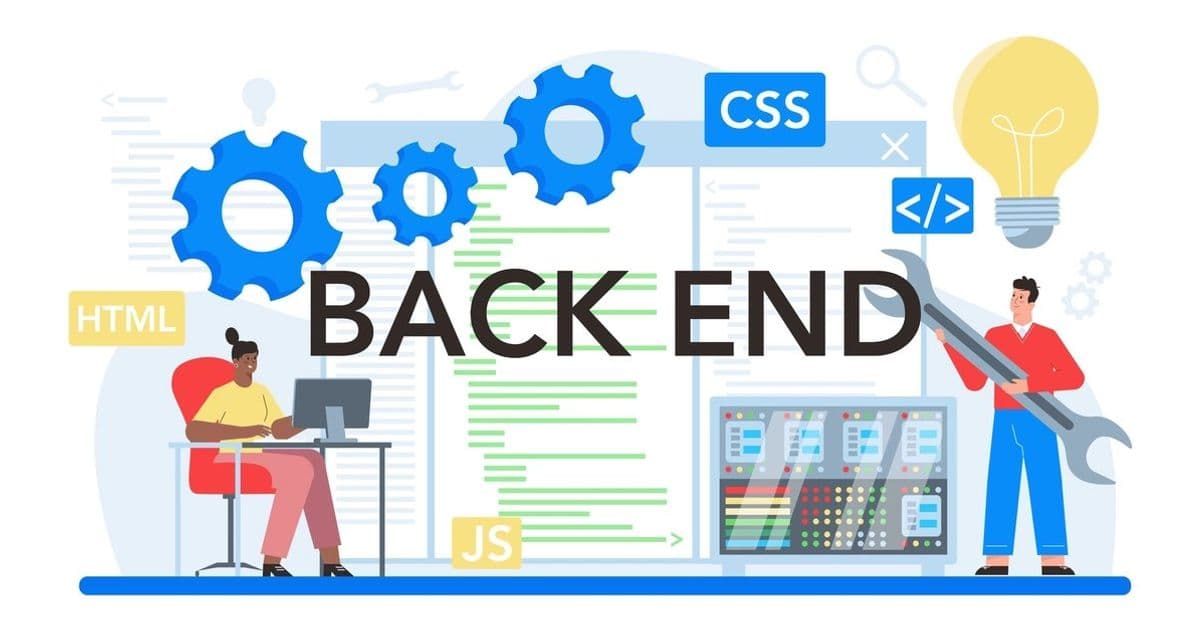
A structured guide to mastering backend development, covering programming fundamentals, APIs, databases, security, and deployment to build scalable web applications.
Backend development powers the functionality of modern digital products. From managing databases to processing user requests and securing applications, backend systems form the foundation of nearly every online platform. Although the field may initially seem complex, following a structured backend developer roadmap makes the learning journey far more manageable.
By mastering programming fundamentals, understanding web communication, building APIs, working with databases, and deploying real projects, developers gradually build the skills required for professional backend development. Consistency and hands-on practice remain the most important factors in mastering backend technologies.
Developers who steadily follow a clear backend developer roadmap can develop strong technical expertise and confidently move toward successful careers in backend engineering. For learners who prefer guided instruction with structured projects and real world development exposure, enrolling in a professional full stack developer course can provide valuable experience and help bridge the gap between learning concepts and building complete modern applications.
What Backend Development Actually Means
Before diving deeper into a backend developer roadmap, it is important to understand the role backend development plays in modern software systems. Backend development focuses on the server side of applications. It manages business logic, processes requests, communicates with databases, and ensures that applications function smoothly and securely.
In simple terms, the backend acts as the brain of an application. It performs operations that users do not see but rely on every time they interact with a digital product. Some of the major responsibilities of backend developers include:
- Managing databases and data storage
- Writing server side logic and application workflows
- Creating APIs for communication between systems
- Handling authentication and user access control
- Maintaining application performance and scalability
- Protecting systems from security vulnerabilities
Understanding these responsibilities is the foundation of a strong backend developer roadmap, because backend engineering requires both technical knowledge and logical problem solving. When developers understand the bigger picture of how applications operate, learning individual tools and technologies becomes much easier.
Why You Need a Backend Developer Roadmap
One of the most common problems beginners face is lack of direction. Many developers start learning frameworks or advanced tools without understanding the basic concepts behind them. A structured backend developer roadmap solves this issue by presenting a clear learning sequence.
Instead of randomly exploring technologies, developers follow a logical progression where each concept prepares them for the next. Following a proper backend developer roadmap offers several benefits:
- It builds strong programming foundations before advanced topics
- It helps developers understand real application architecture
- It reduces confusion when learning multiple technologies
- It allows learners to develop practical development skills gradually
Without a roadmap, beginners often spend months learning disconnected tools that never translate into real development ability. A well planned backend developer roadmap ensures that time and effort are invested in the right areas.
Step 1: Master Programming Fundamentals
The first and most important stage of any backend developer roadmap is learning programming fundamentals. Backend development relies heavily on logic and structured thinking. If the basic concepts of programming are not clear, understanding backend frameworks and system architecture becomes extremely difficult.
At this stage, beginners should choose a programming language that is commonly used for backend development. Popular options include Python, JavaScript, Java, and Go. Regardless of the language chosen, developers should focus on mastering the following fundamentals:
- Core programming concepts
- Variables and data types
- Conditional statements
- Loops and iteration
- Functions and modular code
- Basic object oriented programming
These topics may appear simple at first, but they form the foundation of all backend logic. Developers should also practice solving coding problems during this stage. Writing small programs and experimenting with logic improves problem solving ability and prepares learners for real development challenges.
A strong foundation in programming significantly strengthens the backend developer roadmap, because almost every backend task requires clear logical thinking and structured code.
Step 2: Understand How the Web Works
Once programming basics are clear, the next stage of the backend developer roadmap is learning how web applications communicate over the internet. Every modern web application follows a client server model. In this system:
The client is typically the browser or application used by the user.
The server processes requests and returns responses.
Whenever users interact with a website, a request is sent to the server. The backend processes that request and sends back the required data. To understand this interaction, developers should learn the fundamentals of HTTP and HTTPS protocols. Important concepts at this stage include:
- HTTP requests and responses
- Common request methods such as GET, POST, PUT, and DELETE
- HTTP status codes that indicate request results
- Headers and data transfer formats
Understanding these concepts helps developers see how backend systems respond to real user actions. Another key topic in this stage of the backend developer roadmap is understanding the lifecycle of a request. Every time a user performs an action on a website, the request travels from the client to the server, the backend processes it, and the response returns to the user interface.
Once developers understand this request response cycle, backend concepts such as APIs and server side logic become much easier to grasp.
Step 3: Learn Version Control with Git
Modern software development rarely happens in isolation. Most applications are built by teams where multiple developers collaborate on the same project. This is why version control systems are an important part of the backend developer roadmap.
Version control allows developers to track changes in code, maintain different versions of a project, and collaborate without accidentally overwriting each other's work. The most widely used version control system today is Git. While learning Git, developers should become comfortable with several key operations:
- Creating repositories
- Tracking code changes through commits
- Creating and managing branches
- Merging code updates
- Resolving version conflicts
Platforms such as GitHub and GitLab are commonly used to host repositories and manage collaborative projects. Including version control early in the backend developer roadmap prepares developers for real development environments where collaboration and code management are essential.
Additionally, maintaining projects on platforms like GitHub also helps developers build a public portfolio that showcases their coding skills.
Step 4: Learn the Basics of Databases
Almost every modern application relies on data. User profiles, product catalogs, blog posts, and transaction records are all stored in databases. Because of this, database knowledge is a fundamental stage in the backend developer roadmap.
Backend developers interact with databases to store, update, and retrieve information required by applications. There are two primary types of databases that developers should understand:
- Relational databases: These databases store structured data using tables and relationships between records. Popular relational databases include MySQL and PostgreSQL.
- NoSQL databases: These databases are designed for flexible or unstructured data. MongoDB is one of the most widely used NoSQL databases.
While learning databases, developers should focus on several important concepts:
- Creating and managing data tables or collections
- Performing CRUD operations (Create, Read, Update, Delete)
- Writing queries to retrieve specific data
- Understanding database relationships and indexing
Strong database knowledge strengthens the backend developer roadmap because almost every backend application depends on efficient data management. Developers who become comfortable with database operations can build more powerful and scalable backend systems.
Step 5: Learn APIs and Backend Frameworks
As you move further along the backend developer roadmap, one of the most important skills to develop is working with APIs. APIs, or Application Programming Interfaces, allow different software systems to communicate with each other. In most modern applications, the frontend interface interacts with the backend through APIs.
When users request information, submit forms, or update data, the frontend sends requests to backend APIs which process those requests and return the appropriate response. Understanding APIs is essential because they form the bridge between the client interface and the server logic.
While learning APIs, developers should become familiar with:
- REST API architecture
- JSON as a data exchange format
- Request and response structures
- Error handling in APIs
REST based APIs are widely used in modern applications because they follow simple and scalable design principles. Learning how REST APIs function is therefore an important milestone in the backend developer roadmap.
Along with APIs, developers should start exploring backend frameworks. Frameworks simplify development by providing ready made tools for routing, request handling, and application structure. Instead of writing everything from scratch, frameworks allow developers to build applications more efficiently while following industry best practices.
Learning how to design APIs using frameworks adds practical depth to the backend developer roadmap, because developers begin building systems that mirror real world applications.
Step 6: Learn Authentication and Application Security
Security is a critical responsibility in backend engineering, which makes it an important step in the backend developer roadmap. Modern applications handle sensitive user information such as personal data, login credentials, and financial transactions. Backend developers must ensure that this information is protected against unauthorized access.
One of the first security concepts developers should understand is password protection. Instead of storing raw passwords, applications store encrypted versions of passwords using hashing techniques. Authentication systems are also essential in backend development. These systems verify the identity of users before granting access to certain parts of an application. Key authentication concepts to learn include:
- Password hashing and encryption
- Token based authentication systems
- Session management
- User authorization and access control
Another important security practice is data validation. Backend systems must validate incoming data to prevent malicious input from damaging the application. By learning these security practices, developers strengthen their backend developer roadmap and build safer applications that protect both users and systems.
Step 7: Build Real Backend Projects
Practical experience is what truly transforms knowledge into skill. That is why building projects is one of the most important stages in the backend developer roadmap. While tutorials and courses provide valuable guidance, real learning happens when developers build systems on their own.
Projects allow developers to combine programming logic, databases, APIs, and authentication into a complete backend application. Some beginner friendly backend projects include:
- A user authentication system with login and registration
- A simple blog API where users can create and manage posts
- A task management backend that stores and updates tasks
- A REST API for managing product data
Working on projects helps developers understand how different components interact in real applications. Projects also allow developers to experiment with error handling, database design, and API structures, which are all essential parts of the backend developer roadmap.
Another major advantage of building projects is that they create a portfolio. A strong portfolio helps developers demonstrate their abilities when applying for jobs or freelance work.
Step 8: Learn Performance Optimization
As applications grow and attract more users, performance becomes increasingly important. This is why performance optimization is another key step in the backend developer roadmap. Poorly optimized backend systems can lead to slow response times and inefficient resource usage. Developers must learn how to design systems that handle requests efficiently.
One technique commonly used to improve performance is caching. Caching temporarily stores frequently requested data so that it can be delivered quickly without repeatedly querying the database. Important optimization practices include:
- Reducing unnecessary database queries
- Using caching mechanisms for repeated data
- Improving API response efficiency
- Monitoring application performance
Learning these techniques prepares developers to work on applications that handle large volumes of traffic. By incorporating performance optimization skills into the backend developer roadmap, developers move beyond basic functionality and begin building systems that are both reliable and efficient.
Step 9: Understand Deployment and Hosting
After building backend applications locally, the next step is learning how to deploy them so they can be accessed by real users. Deployment is an essential part of the backend developer roadmap because it teaches developers how applications operate in production environments.
Developers should understand how servers host applications and how different services interact within production systems. Some key concepts to explore include:
- Server environments and configuration
- Environment variables and application settings
- Application builds and production deployment
- Cloud hosting platforms
Cloud services have become the standard infrastructure for modern applications. Platforms such as Amazon Web Services, Google Cloud, and Microsoft Azure provide tools for deploying and scaling backend systems. Even a basic understanding of cloud deployment strengthens the backend developer roadmap and prepares developers for real industry environments.
Once developers deploy their projects successfully, they gain valuable experience in running applications outside local development environments.
Backend Developer Career Progression
After completing the major stages of the backend developer roadmap, developers can start exploring professional opportunities in backend engineering. Most backend careers progress through several levels. At the beginning, developers typically work as junior backend engineers. In this role they contribute to small modules, fix bugs, and assist in maintaining backend services.
With experience, developers progress to mid level backend roles where they design larger application components and contribute to system architecture decisions. Senior backend engineers focus on building scalable systems, improving application performance, and guiding development teams.
Following a structured backend developer roadmap helps developers develop the technical depth required to grow through these stages and succeed in backend focused careers.
Common Mistakes Beginners Should Avoid
While learning backend development, beginners often make mistakes that slow down their progress. One common mistake is skipping the basics and jumping directly into complex frameworks. Without strong programming fundamentals, advanced backend concepts become difficult to understand.
Another common issue is trying to learn too many technologies simultaneously. Backend development requires depth rather than superficial knowledge of many tools. Developers should also avoid relying only on tutorials. Watching lessons without building projects leads to passive learning and weak practical skills.
Avoiding these mistakes allows learners to follow the backend developer roadmap more effectively and build stronger development capabilities.
Conclusion
Backend development powers the functionality of modern digital products. From managing databases to processing user requests and securing applications, backend systems form the foundation of nearly every online platform. Although the field may initially seem complex, following a structured backend developer roadmap makes the learning journey far more manageable.
By mastering programming fundamentals, understanding web communication, building APIs, working with databases, and deploying real projects, developers gradually build the skills required for professional backend development. Consistency and hands-on practice remain the most important factors in mastering backend technologies.
Developers who steadily follow a clear backend developer roadmap can develop strong technical expertise and confidently move toward successful careers in backend engineering. For learners who prefer guided instruction with structured projects and real world development exposure, enrolling in a professional full stack developer course can provide valuable experience and help bridge the gap between learning concepts and building complete modern applications.
Comments
Please log in or register to join the discussion