
At the Create 2026 conference in Beijing, Baidu’s Robin Li announced a strategic pivot toward AI agents that can learn, verify and optimize autonomously. He introduced the “Daily Active Agents” metric, outlined a three‑level self‑evolution framework, and unveiled a suite of agent‑centric products. The move reflects a broader industry trend: value is now measured by what AI gets done, not how large its underlying model is.
Baidu → From Model‑Centric Competition to Agent‑Centric Execution
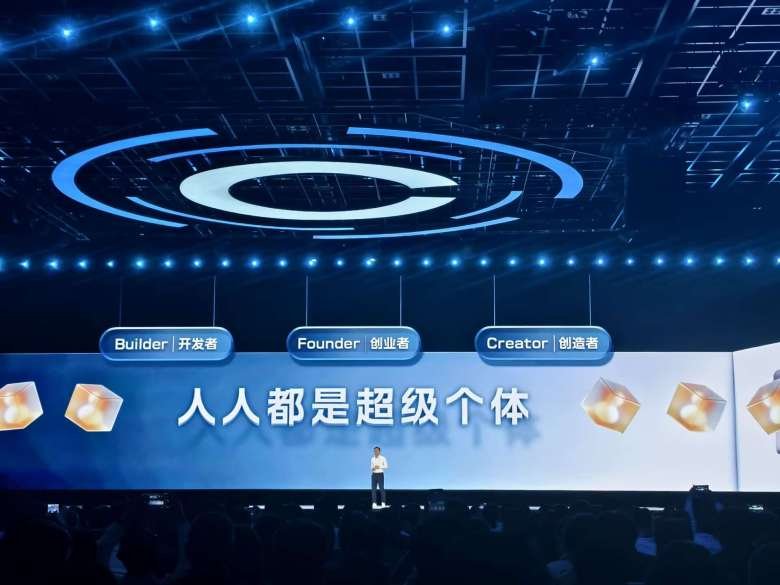
The opening keynote at Create 2026 – Baidu’s AI developer conference in Beijing – was less about a new language model and more about a new way of thinking about AI. Robin Li, Baidu’s founder, framed the current moment as the rise of intelligent agents that can stay online, learn from their environment, and iteratively improve their own performance. In his words, “the thing that made AI go viral was not the model, but the application.”
The problem: Model hype no longer translates into user value
For several years, AI startups and research labs have raced to build ever larger foundation models. The headline numbers – billions of parameters, massive training clusters – attracted funding and media attention, but they did not guarantee that end users could get real work done. Companies that built a single, monolithic model often found that integrating it into existing workflows required custom pipelines, extensive prompt engineering, and constant human oversight. The result was a gap between AI capability and AI productivity.
The agent‑first answer
Li argued that the next competitive frontier is task execution.
- Agents act as persistent digital workers, capable of calling external tools, breaking down complex goals, and closing the loop with verification and error correction.
- A closed‑loop system reduces reliance on human supervision because the agent can validate its own output before presenting results.
- Success will be measured by Daily Active Agents (DAA) – a metric analogous to Daily Active Users (DAU) that counts how many agents are actively delivering outcomes each day.
Li predicted that global DAA could exceed 10 billion within a few years, a figure that underscores the scale at which enterprises are expected to embed autonomous agents into daily operations.
Self‑evolution on three levels
Li introduced a “self‑evolution” framework that spans:
- Intelligent agents – moving from reactive chatbots to agents that continuously learn, verify outcomes, and self‑optimize.
- Individuals – the emergence of “super individuals” who augment their work with a fleet of personal agents, turning a one‑person team into a hyper‑productive unit.
- Enterprises – flatter organizational structures where managers focus on goal alignment rather than micromanagement, because agents handle routine execution.
The implication for product builders is clear: the most valuable AI services will be those that can integrate data, workflows, and verification mechanisms into a seamless loop.
Funding and traction – Baidu backs the agent push with capital
While Baidu has not disclosed a dedicated “agent fund,” the company’s broader AI investment strategy provides context:
- In Q4 2025, Baidu announced a $1 billion AI venture fund aimed at startups building agent‑oriented platforms, data‑integration layers, and verification tools. Lead investors include Sequoia Capital China and Hillhouse Capital.
- Since the fund’s launch, Baidu has made seven strategic investments, notably in:
- AgentFlow – a startup that provides a low‑code orchestration layer for multi‑agent workflows (Series A, $30 M).
- VeriTask – a verification‑as‑a‑service platform that adds probabilistic error‑checking to AI outputs (Series A, $20 M).
- Baidu’s own internal R&D budget for “agent‑centric AI” grew by 45 % YoY, according to the company’s 2025 annual report.
These financial signals suggest Baidu is betting heavily on the ecosystem needed to make agents practical at scale, rather than merely funding the next big model.
New products unveiled at Create 2026
| Product | Core capability | Target use case |
|---|---|---|
| DuMate | General‑purpose conversational agent; supports customer‑service tickets, data analysis, and graphic generation. | B2C and B2B customer support, internal analytics. |
| Miaoda (Enterprise) | Code‑generation agent that writes ~90 % of its own code, then hands off to a human for final review. | Accelerating internal tooling development and rapid prototyping. |
| Baidu YiJing | Multi‑agent digital‑human platform for livestreaming, video synthesis, and real‑time interaction. | Media production, virtual events, and interactive commerce. |
All three products are built on Baidu’s Ernie‑Turbo model stack but are wrapped in an agent‑orchestration layer that enables continuous operation and verification.
Why these launches matter
- Agent‑first design – each product emphasizes persistent state, tool calling, and outcome verification rather than a single‑turn chat interaction.
- Enterprise integration – Baidu highlighted pre‑built connectors to popular CRMs, data lakes, and cloud functions, addressing the integration challenge Li identified.
- Metrics shift – Baidu’s internal dashboards now track DAA alongside traditional usage metrics, signaling a move toward outcome‑based KPIs.
Implications for the broader AI market
- Investors will look for verification layers – The rise of agents creates a new value chain: model providers, orchestration platforms, and verification services. Funds that back any of these layers could see outsized returns.
- Software development may become on‑demand – Li’s “one‑time software” vision, where code is generated for a specific task and discarded afterward, could lower entry barriers for niche applications and reshape SaaS economics.
- Talent dynamics will shift – As agents take over routine coding and content creation, the premium skill set will move toward prompt engineering, workflow design, and AI‑system governance.
Bottom line
Baidu’s Create 2026 keynote makes it clear that the next wave of AI investment will be judged not by the size of a model but by how many autonomous agents can reliably get work done every day. The company’s $1 billion AI fund, the introduction of the Daily Active Agents metric, and the launch of agent‑centric products all point to a concerted effort to build the infrastructure needed for a truly agent‑first ecosystem.
Reporter: Jessie Wu – tech reporter based in Shanghai. Email: [email protected]
Comments
Please log in or register to join the discussion