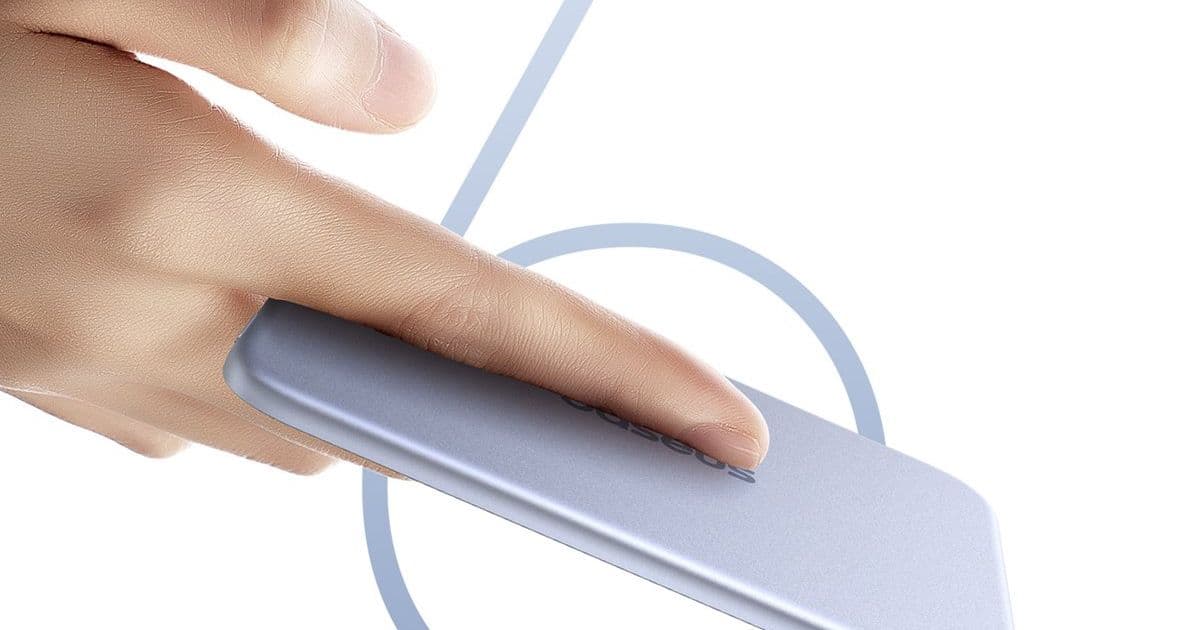
Baseus introduces its new PicoGo Air magnetic power bank in China, featuring a slim 6.9mm design, 22.5W fast charging, and innovative NFC battery monitoring capabilities.
Baseus has unveiled its latest portable charging solution in China - the PicoGo Air magnetic power bank. This new accessory enters a competitive market where slim profiles and fast charging capabilities are becoming increasingly important for mobile users.
Design and Build Quality
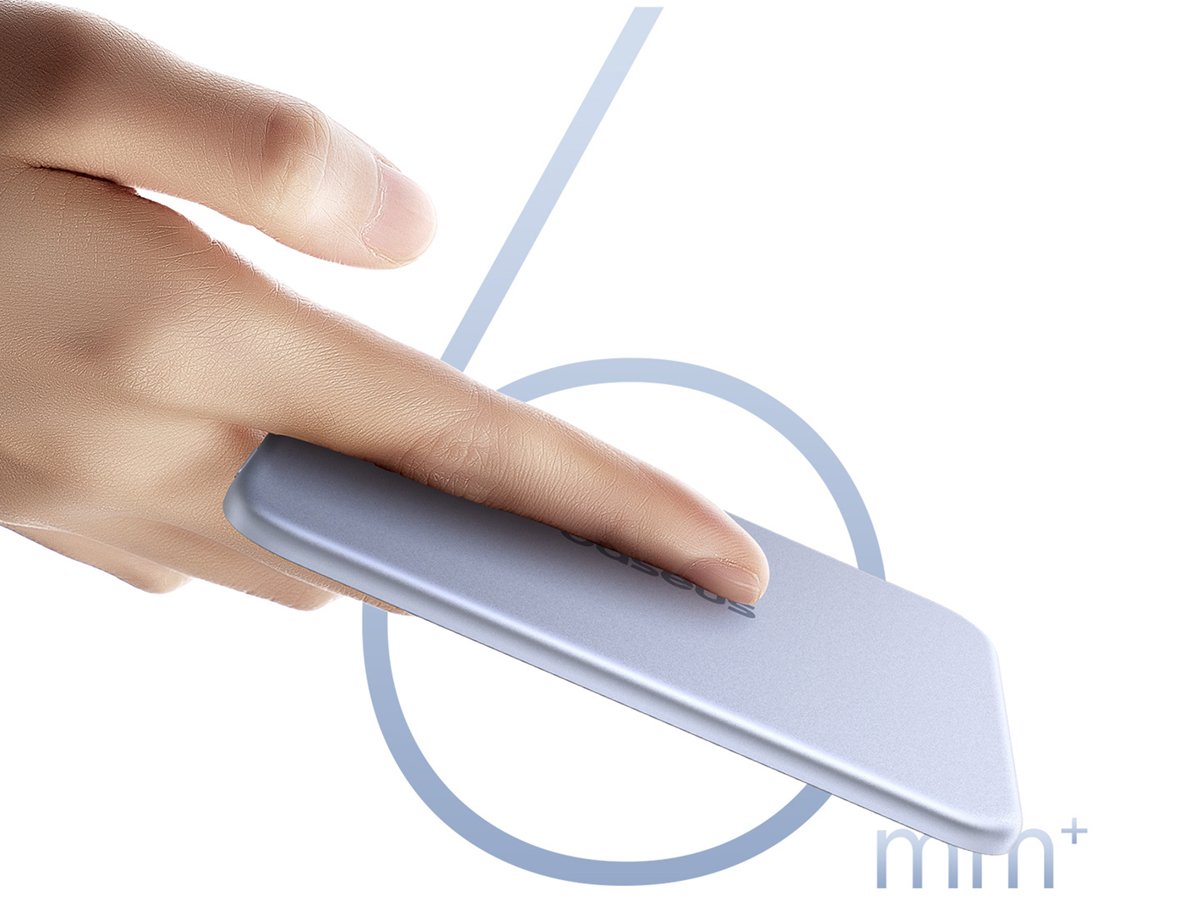
The standout feature of the PicoGo Air is undoubtedly its ultra-slim profile. At just 6.9mm thick, it's remarkably thin for a power bank with this capacity. To put this in perspective, it's only 0.9mm thicker than Xiaomi's recently released UltraThin Magnetic Power Bank 5000, which measures 6mm. However, this slimness comes with a slight weight penalty - the Baseus model is marginally heavier than its Xiaomi counterpart.
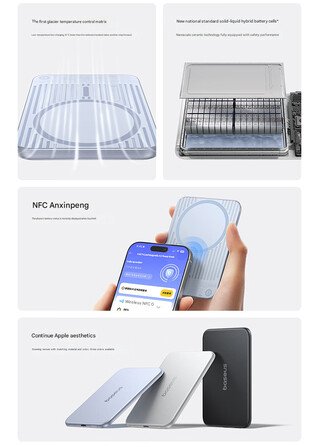
Baseus has clearly taken design cues from Apple products, incorporating an R-angle curved design that provides a comfortable grip and prevents sharp edges from catching on pockets or bags. The power bank is available in three sleek metallic finishes, giving users options to match their personal style or device color.
Charging Capabilities
Despite its slim form factor, the PicoGo Air doesn't compromise on charging performance. The device supports up to 22.5W wired charging, matching Xiaomi's offering in this category. This makes it suitable for fast charging most modern smartphones, tablets, and other USB-C devices.
For wireless charging, the PicoGo Air offers up to 15W through its magnetic attachment system. While this is impressive for a device of this size, it's worth noting that it doesn't support the newer Qi 2.2 standard - instead relying on the established Qi wireless charging protocol.
The magnetic attachment system is strong and reliable, ensuring the power bank stays firmly attached to compatible devices during use. This is particularly important for maintaining consistent wireless charging performance and preventing accidental disconnections.
Smart Features and Temperature Management
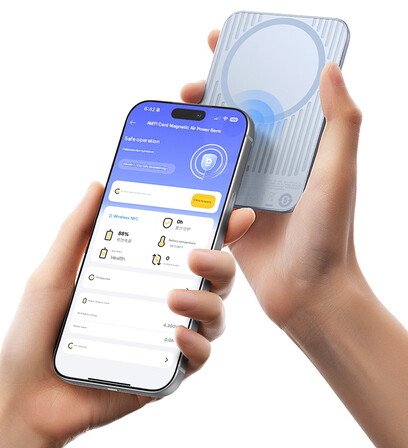
One of the most interesting aspects of the PicoGo Air is its PowerSense NFC feature. This allows users to check detailed battery status information through a companion smartphone app. By simply tapping the power bank with an NFC-enabled phone, users can access real-time data about remaining battery capacity, charging status, and other relevant information. This adds a layer of convenience that many traditional power banks lack.
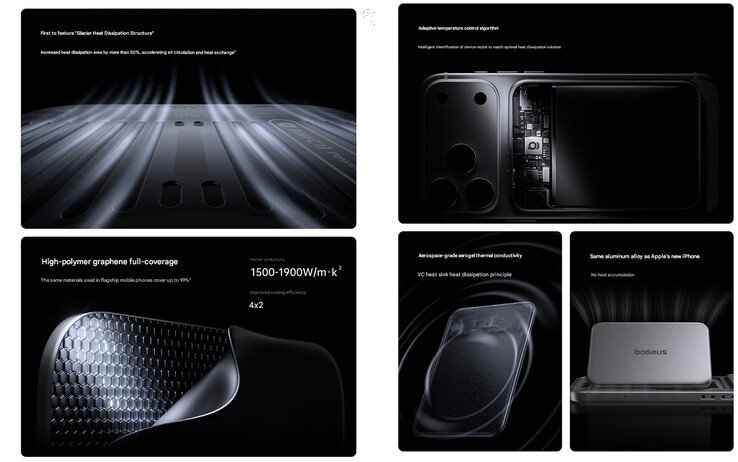
Baseus has also paid significant attention to thermal management. The company highlights its "Glacier Heat Dissipation Structure," which combines with an advanced vapor chamber (VC) heat sink and aluminum alloy construction to maintain optimal operating temperatures during charging. This is crucial for both safety and charging efficiency, as excessive heat can degrade battery performance and longevity.
Additionally, the PicoGo Air features adaptive temperature control technology that promises stable and safe charging under various conditions. This intelligent system monitors temperature in real-time and adjusts charging parameters accordingly to prevent overheating.
Practical Considerations
Baseus includes a short cable with the PicoGo Air, which is a thoughtful addition for users who prefer wired charging. The company claims this bundled cable supports up to 60W fast charging, making it versatile enough for various charging scenarios. For reference, this performance level is comparable to premium chargers like the 65W Ugreen Nexode Pro slim charger currently priced at $44.99 on Amazon.
The power bank has a rated capacity of 5,000mAh, which is standard for devices in this category. This capacity is sufficient for at least one full charge of most modern smartphones, with some capacity remaining for partial top-ups.
Market Position and Availability
The Baseus PicoGo Air is priced at CNY 299 in China, approximately $43.44. This positions it competitively against similar offerings from other brands, considering its feature set and build quality.
Currently, the power bank is only available in China, with no official announcement regarding international launch plans. However, Baseus has a track record of bringing most of its PicoGo-branded products to global markets, so international availability seems likely in the coming months.
Comparison with Competitors
When compared to Xiaomi's UltraThin Magnetic Power Bank 5000, the Baseus PicoGo Air offers similar core specifications - both feature 5,000mAh capacity, 15W wireless charging, and 22.5W wired charging. The key differentiators are:
- Slightly thicker profile (6.9mm vs 6mm)
- Slightly heavier weight
- NFC battery monitoring capability
- Different thermal management approach
- Distinct design language
The NFC feature could be a significant selling point for users who value detailed battery information and smart device integration. However, those prioritizing absolute slimness might prefer Xiaomi's offering.
Conclusion
The Baseus PicoGo Air represents a solid entry in the competitive magnetic power bank market. Its combination of slim design, fast charging capabilities, smart features like NFC monitoring, and robust thermal management makes it an attractive option for users seeking a reliable portable charging solution.
While it doesn't break new ground in terms of raw charging speeds or capacity, the thoughtful addition of features like PowerSense NFC and the attention to thermal management demonstrate Baseus's commitment to creating well-rounded products rather than simply chasing specifications.
As the market for magnetic power banks continues to grow, devices like the PicoGo Air show how manufacturers are finding ways to differentiate through features, design, and user experience rather than just competing on price or basic specifications.
Comments
Please log in or register to join the discussion