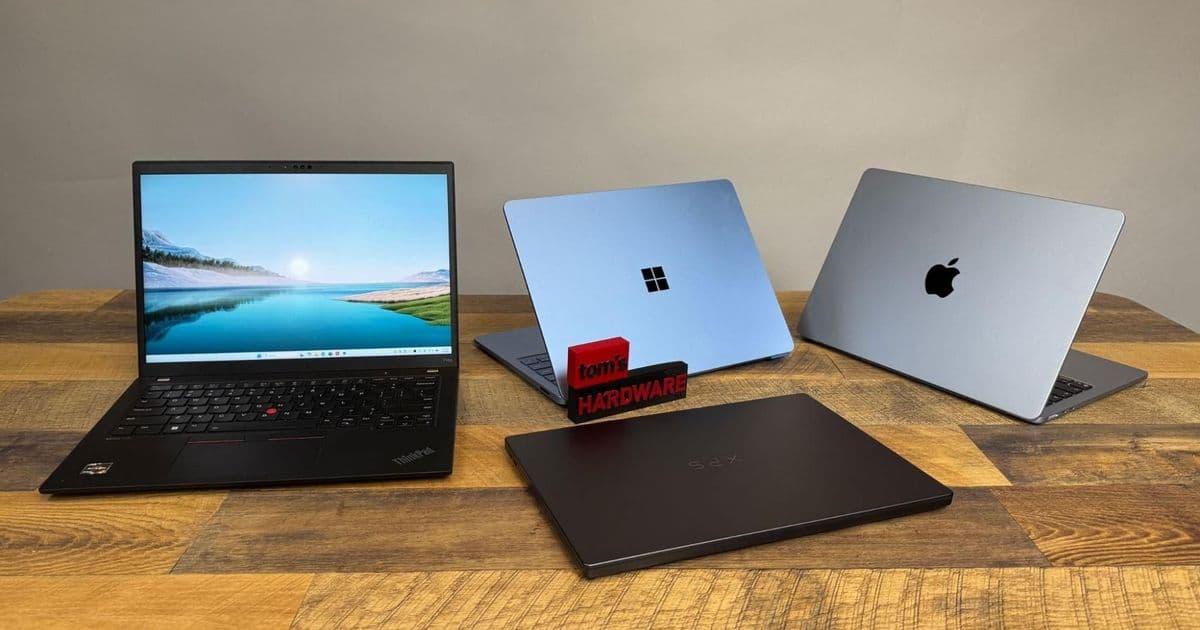
Tom's Hardware's comprehensive 2026 laptop guide compares the latest Intel Core Ultra, AMD Ryzen AI, Apple M5, and Qualcomm Snapdragon processors across premium, budget, and gaming categories, with detailed performance benchmarks and battery life tests.
The laptop market in 2026 has reached unprecedented levels of competition, with manufacturers pushing the boundaries of performance, portability, and battery life across multiple processor architectures. From Apple's M5 series to Intel's Panther Lake chips and AMD's Gorgon Point processors, consumers now have more choices than ever before.
The Processor Landscape
The current generation of laptop processors represents a significant leap forward in computing capabilities. Intel's Core Ultra (Series 3) chips, codenamed Panther Lake, offer enhanced AI processing capabilities alongside traditional CPU and GPU performance. AMD has entered the fray with its "Gorgon Point" Ryzen AI processors, which were unveiled at CES and promise competitive performance in the ultraportable segment.
Apple continues to dominate the premium laptop space with its M5 series, including the M5 Pro and M5 Max variants that power the MacBook Pro lineup. These chips have shown remarkable single and multi-core performance, often outpacing their Windows counterparts in both synthetic benchmarks and real-world usage scenarios.
Qualcomm's Snapdragon Elite Extreme, Elite, and Plus series chips are pushing the boundaries of Windows on Arm, with the second generation now available. These processors offer exceptional battery life and integrated AI capabilities, though software compatibility remains a consideration for some users.
Premium Performance: MacBook Air (M5)
The MacBook Air with M5 processor continues to set the standard for premium ultraportables. Starting at $1,099 with 512GB of storage, it offers a compelling combination of performance, battery life, and build quality. The M5 chip delivers excellent single and multi-core performance, with the fanless design maintaining cool temperatures during typical workloads.
Key specifications include:
- Apple M5 (10-core CPU)
- 10-core integrated GPU
- 13.6-inch Liquid Retina display (2560 x 1664)
- 16GB RAM minimum
- 2.7 pounds weight
The system excels at everyday tasks including web browsing, document editing, photo processing, and light creative work. However, under sustained heavy loads like video rendering, the system may throttle performance to maintain thermal limits.
Windows Excellence: Dell XPS 14
Dell's XPS 14 represents the pinnacle of Windows laptop design and engineering. The standout feature is its exceptional battery life, lasting over 20 hours with the base 1920 x 1200 display configuration. This is achieved through a variable refresh rate that can drop as low as 1 Hz when idle.
Specifications include:
- Intel Core Ultra 7 355 processor
- Integrated Intel Graphics
- 14-inch 1920 x 1200 non-touch display
- 3-pound chassis
- Physical function row keyboard
The XPS 14 combines premium build quality with practical features like a physical function row and excellent speakers. Higher-end configurations offer OLED displays with superior color accuracy and Arc B390 integrated graphics for enhanced visual performance.
The 2-in-1 Champion: Lenovo Yoga 9i
Lenovo's Yoga 9i 2-in-1 Aura Edition stands out in the convertible laptop category with its combination of premium features and versatile design. The OLED display delivers stunning visuals, while the included stylus adds creative functionality.
Key features include:
- Intel Core Ultra 7 258V processor
- AMD Radeon 890M integrated graphics
- 14-inch 2880 x 1800 OLED touch display
- 120Hz refresh rate
- 2.91-pound weight
The Yoga 9i offers solid battery life for a Windows PC and includes a 5MP webcam with privacy shutter. The "cosmic" blue color option provides a professional yet distinctive appearance.
Budget-Friendly Excellence: MacBook Neo
Apple's MacBook Neo redefines the budget laptop segment, starting at just $599 ($499 with education discount). Despite its affordable price point, it delivers a premium experience with an all-metal chassis, bright display, and custom mechanical trackpad.
Specifications include:
- Apple A18 Pro processor (6-core CPU)
- 5-core integrated GPU
- 13-inch Liquid Retina display (2408 x 1506)
- 8GB RAM (16GB available)
- 2.7-pound weight
The Neo sacrifices some features like a backlit keyboard and labeled ports, but maintains Apple's renowned build quality and macOS experience. It's particularly well-suited for students and users with light workloads who prioritize portability and battery life.
Workhorse Performance: ThinkPad X1 Carbon
Lenovo's ThinkPad X1 Carbon (Gen 11) continues its legacy as the premier business laptop. The latest iteration features Intel's 13th Gen Core processors and maintains the legendary ThinkPad keyboard quality that professionals demand.
Key specifications:
- Intel Core i7-1355U processor
- Intel Iris Xe integrated graphics
- 14-inch 1920 x 1200 touchscreen
- 2.48-pound weight
- TrackPoint pointing device
The X1 Carbon offers excellent battery life, premium build quality, and the familiar ThinkPad design language. The keyboard remains one of the best in the industry, with satisfying key travel and responsive feedback.
Windows Tablet Innovation: Surface Pro (11th Edition)
Microsoft's Surface Pro (11th Edition) represents the evolution of the Windows tablet form factor. With Qualcomm's Snapdragon X Elite processor, it delivers improved performance and battery life compared to previous Intel-based models.
Specifications include:
- Qualcomm Snapdragon X Elite X1E-80-100 processor
- Adreno integrated GPU
- 13-inch PixelSense Flow OLED display (2880 x 1920)
- Dynamic refresh rate up to 120Hz
- 1.97-pound weight (without keyboard)
The Surface Pro offers excellent battery life and a beautiful OLED display, though the Type Cover keyboard remains a separate purchase. The Arm-based architecture provides improved efficiency but may encounter compatibility issues with some x86 applications.
Power User Choice: MacBook Pro (14-inch, M5)
The 14-inch MacBook Pro with M5 processor offers additional features over the Air model, including a micro LED display with ProMotion technology and three Thunderbolt ports. The nano-texture display option provides excellent outdoor visibility.
Key features:
- Apple M5 (10-core) processor
- 10-core integrated GPU
- 14.2-inch Liquid Retina XDR display
- Up to 120Hz refresh rate
- 3.4-pound weight
The MacBook Pro delivers enhanced performance for demanding workloads while maintaining excellent battery life. However, storage and memory upgrades come at a premium price point.
Gaming Excellence: Razer Blade 18
Razer's Blade 18 sets the standard for gaming laptops in 2026, combining desktop-class performance with premium build quality. The dual-mode display offers versatility for both high-resolution gaming and competitive esports.
Specifications include:
- Intel Core Ultra 9 275HX processor
- Nvidia GeForce RTX 5090 Laptop GPU
- 18-inch dual-mode IPS display (3840 x 2400 at 240Hz or 1920 x 1200 at 440Hz)
- 7.06-pound weight
- Thunderbolt 5 ports
The Blade 18 delivers exceptional gaming performance and build quality, though at a premium price point. The dual-mode display allows users to optimize for either visual fidelity or competitive frame rates.
Shopping Considerations
When selecting a laptop in 2026, several factors deserve careful consideration:
Keyboard Quality: The keyboard remains a critical component for productivity. Look for responsive keys with appropriate travel distance and tactile feedback. Low-travel keyboards can be acceptable if they provide good overall typing experience.
Display Technology: Modern laptops offer various display options including 1080p, 4K, OLED, and variable refresh rate panels. Consider your usage patterns when choosing between resolution, battery life, and visual quality trade-offs.
Upgradeability: Some laptops allow RAM and storage upgrades, while others have soldered components. Consider your future needs and whether the ability to upgrade is important for your use case.
Battery Life: Aim for at least 12 hours of battery life for portable use, though gaming laptops may have shorter battery life due to their powerful components. Be cautious of manufacturer claims and look for independent testing results.
Port Selection: Consider your connectivity needs, including USB-C, Thunderbolt, HDMI, and SD card readers. Some laptops offer extensive port selection while others prioritize slim profiles with fewer ports.
Market Trends and Future Outlook
The laptop market in 2026 shows several clear trends:
AI Integration: Processors increasingly include dedicated AI accelerators for tasks like image processing, voice recognition, and productivity enhancements. This trend is likely to continue as AI becomes more integrated into everyday computing tasks.
Arm Architecture: Windows on Arm continues to mature, with improved performance and broader application compatibility. Qualcomm's Snapdragon processors are becoming increasingly competitive with traditional x86 architectures.
Display Innovation: Variable refresh rate displays, higher resolutions, and improved color accuracy are becoming standard features even in mid-range laptops. OLED technology is becoming more prevalent across price segments.
Battery Technology: Advances in battery chemistry and power management are enabling longer battery life without sacrificing performance. Fast charging capabilities are also improving, allowing users to quickly top up their devices.
Sustainability: Manufacturers are increasingly focusing on sustainable materials and repairability. Some companies are designing laptops with modular components to extend product lifespan and reduce electronic waste.
Conclusion
The 2026 laptop market offers exceptional choices across all price segments and use cases. Whether you prioritize performance, portability, battery life, or specific features like touchscreens or gaming capabilities, there are compelling options available.
Apple continues to lead in the premium segment with its M-series processors, while Windows manufacturers offer strong competition with Intel, AMD, and Qualcomm processors. The choice between these ecosystems often comes down to software requirements, ecosystem preferences, and budget considerations.
For most users, the MacBook Air (M5) represents the best overall value, offering excellent performance, battery life, and build quality. However, specific use cases may favor other options, such as the Dell XPS 14 for Windows users who prioritize battery life, or the Razer Blade 18 for gaming enthusiasts.
As the market continues to evolve, consumers can expect further improvements in performance, battery life, and features across all price segments. The competition between processor architectures and manufacturers continues to drive innovation, ultimately benefiting consumers with better products and more choices.
Comments
Please log in or register to join the discussion