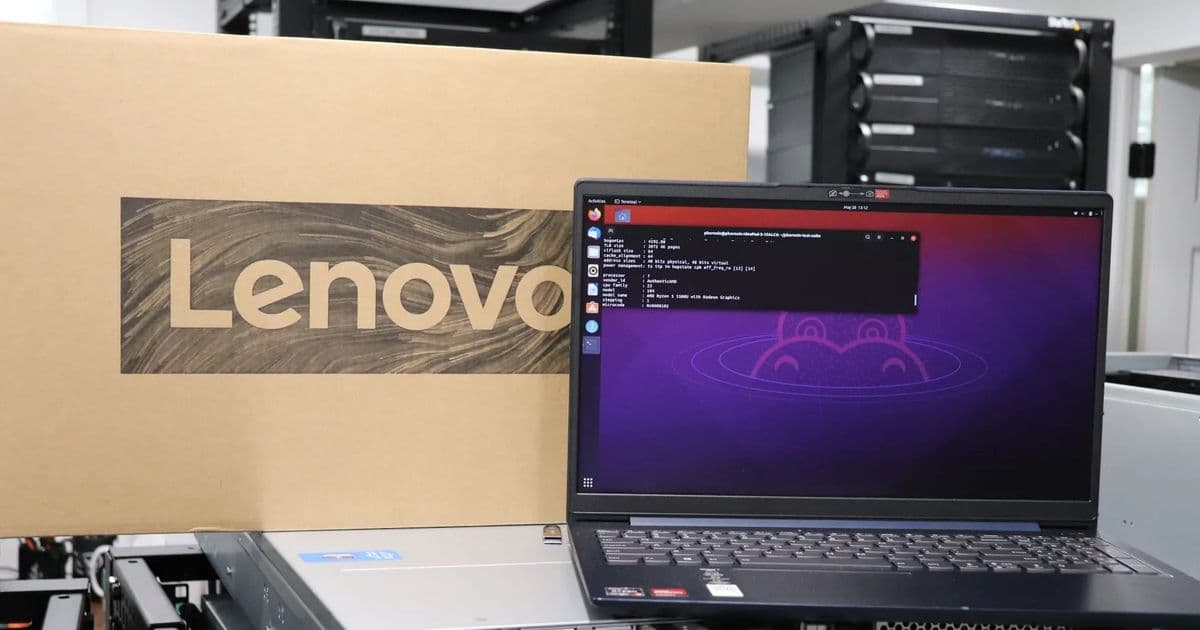
New Yogafan driver will bring comprehensive fan speed monitoring to Yoga, Legion, and IdeaPad laptops through ACPI EC interface.
Lenovo laptop owners running Linux will soon have access to more accurate and comprehensive fan speed monitoring thanks to the new "Yogafan" hardware monitoring driver slated for inclusion in the upcoming Linux 7.1 kernel. This development represents a significant improvement for Linux users who have long struggled with limited thermal management capabilities on Lenovo hardware.
The Problem With Lenovo Hardware Monitoring
Unlike many laptop manufacturers that use dedicated hardware monitoring chips connected via the LPC (Low Pin Count) bus, Lenovo relies on an Embedded Controller (EC) interface exposed through ACPI (Advanced Configuration and Power Interface). This architectural choice has historically made it difficult for Linux to access detailed fan speed information, leaving users with incomplete thermal data and limited control over cooling performance.
The Yogafan driver addresses this fundamental limitation by providing direct access to fan speed monitoring through the ACPI EC interface that Lenovo laptops already use for various system functions. This approach leverages existing hardware capabilities rather than requiring additional monitoring chips.
Broad Device Support
The driver's compatibility spans a wide range of Lenovo laptop lines, making it relevant for a large portion of the Linux user base:
- Yoga series: Including Yoga 14cACN, Yoga 710/720, Yoga Pro 7/9, and Yoga Slim 7
- Legion gaming laptops: Such as Legion 5 AMD, Legion 7i Intel
- IdeaPad lineup: Including IdeaPad 5
- Flex series: Like Flex 5
- ThinkBook: Including ThinkBook G6
- LOQ series: LOQ 15/16 models
- Legacy support: Various pre-2020 models using a legacy interface
This extensive coverage ensures that both modern and older Lenovo laptops will benefit from improved thermal monitoring capabilities.
Technical Implementation
The Yogafan driver has been developed as part of the hardware monitoring subsystem (HWMON) and is currently queued in the "hwmon-next" Git branch. This placement within the kernel's hardware monitoring framework ensures proper integration with existing thermal management tools and interfaces that Linux users rely on.
By exposing fan speed data through standardized HWMON interfaces, the driver will work seamlessly with popular monitoring tools like lm-sensors, psensor, and various desktop environment widgets. This means users won't need to learn new tools or interfaces to take advantage of the improved monitoring capabilities.
Performance and Testing
The driver has undergone testing across multiple Lenovo laptop models to ensure reliability and accuracy. The testing matrix includes both AMD and Intel configurations, as well as different form factors from ultrabooks to gaming laptops. This comprehensive testing approach helps ensure that the driver will work reliably across the diverse range of Lenovo hardware in use today.
For Linux users who rely on precise thermal monitoring for tasks like gaming, content creation, or simply maintaining optimal system performance, the Yogafan driver represents a meaningful improvement in the platform's ability to manage and monitor Lenovo hardware.
Timeline and Availability
The driver is scheduled for inclusion in the Linux 7.1 kernel, which will enter its merge window following the release of Linux 7.0. Users can expect to see this functionality available in distributions that update to kernel 7.1, likely in the coming months.
For those who can't wait, the driver is already available in the hwmon-next branch, allowing enthusiasts and distribution maintainers to test and potentially backport the functionality to earlier kernel versions.
This development underscores the ongoing improvements in Linux hardware support and demonstrates how the open-source community continues to address platform-specific challenges through targeted driver development.
Comments
Please log in or register to join the discussion