Discover how rethinking daily stand-ups can shift them from dreaded status reports to powerful collaboration tools. Learn a proven three-part framework focusing on forward planning, PR triage, and system health that boosts developer productivity and team trust.
The Daily Stand-up Revolution: From Status Theater to Sprint Catalyst
For years, daily stand-ups have been the sacred cow of agile development—yet many teams secretly dread them. What begins as a 15-minute sync often decays into a soul-sapping ritual where developers justify their existence while managers check boxes. But what if this meeting could become your team's most valuable weapon?
Why Traditional Stand-ups Fail Developers
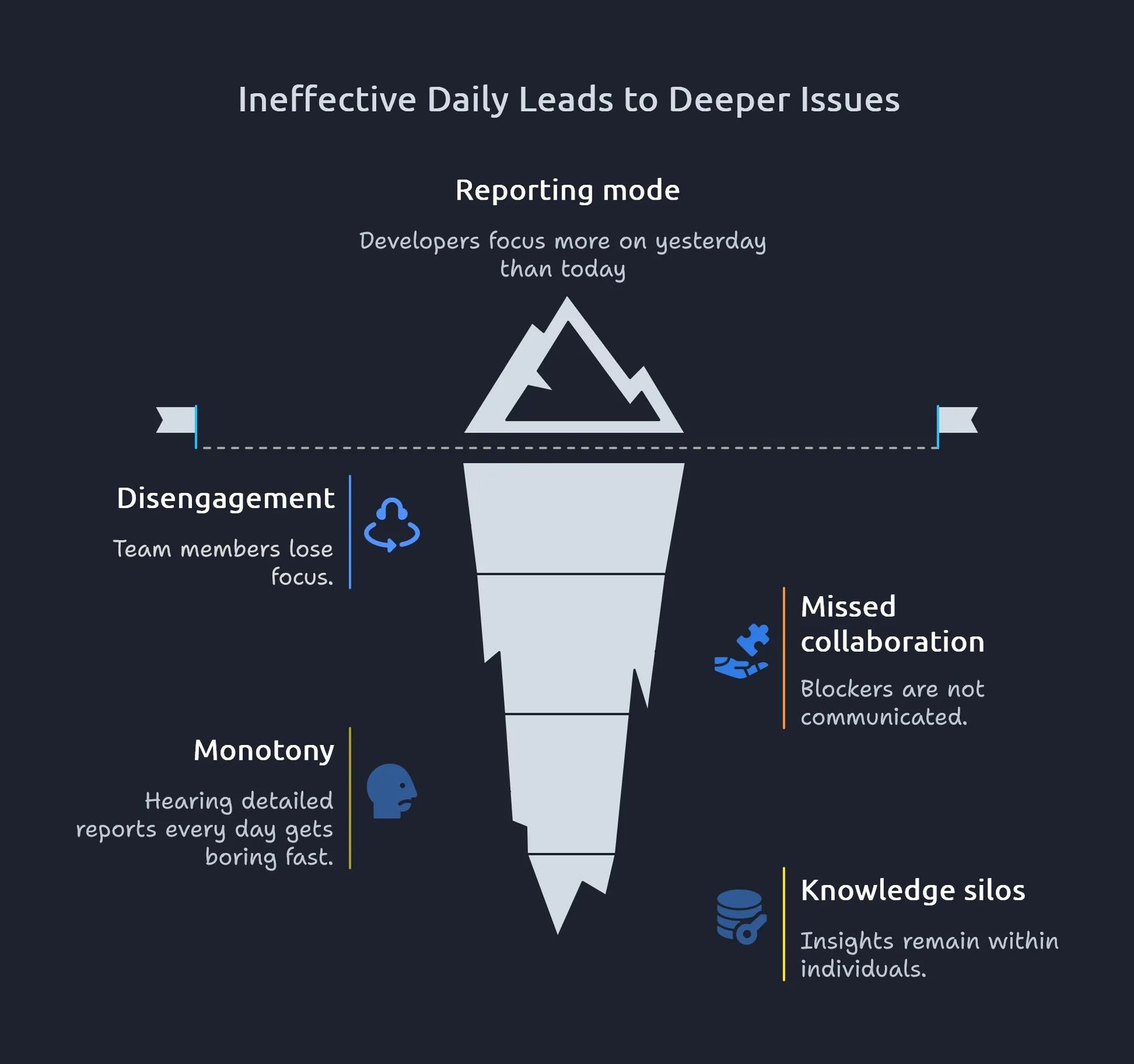
The root problem lies in misalignment. Stand-ups frequently devolve into:
- Reporting mode: Detailed recaps of yesterday's work that invite justification
- Knowledge silos: Critical insights trapped with individuals
- Passive listening: Teams mentally checking out during monologues
- Missed opportunities: Blockers hidden beneath vague status updates
As one practitioner observes:
"Purely reporting meetings spread mistrust. I wanted a meeting where we plan the upcoming day to spend time productively."
Anatomy of a High-Value Stand-up: The Three-Part Framework
1. Daily Updates: Laser Focus on Today
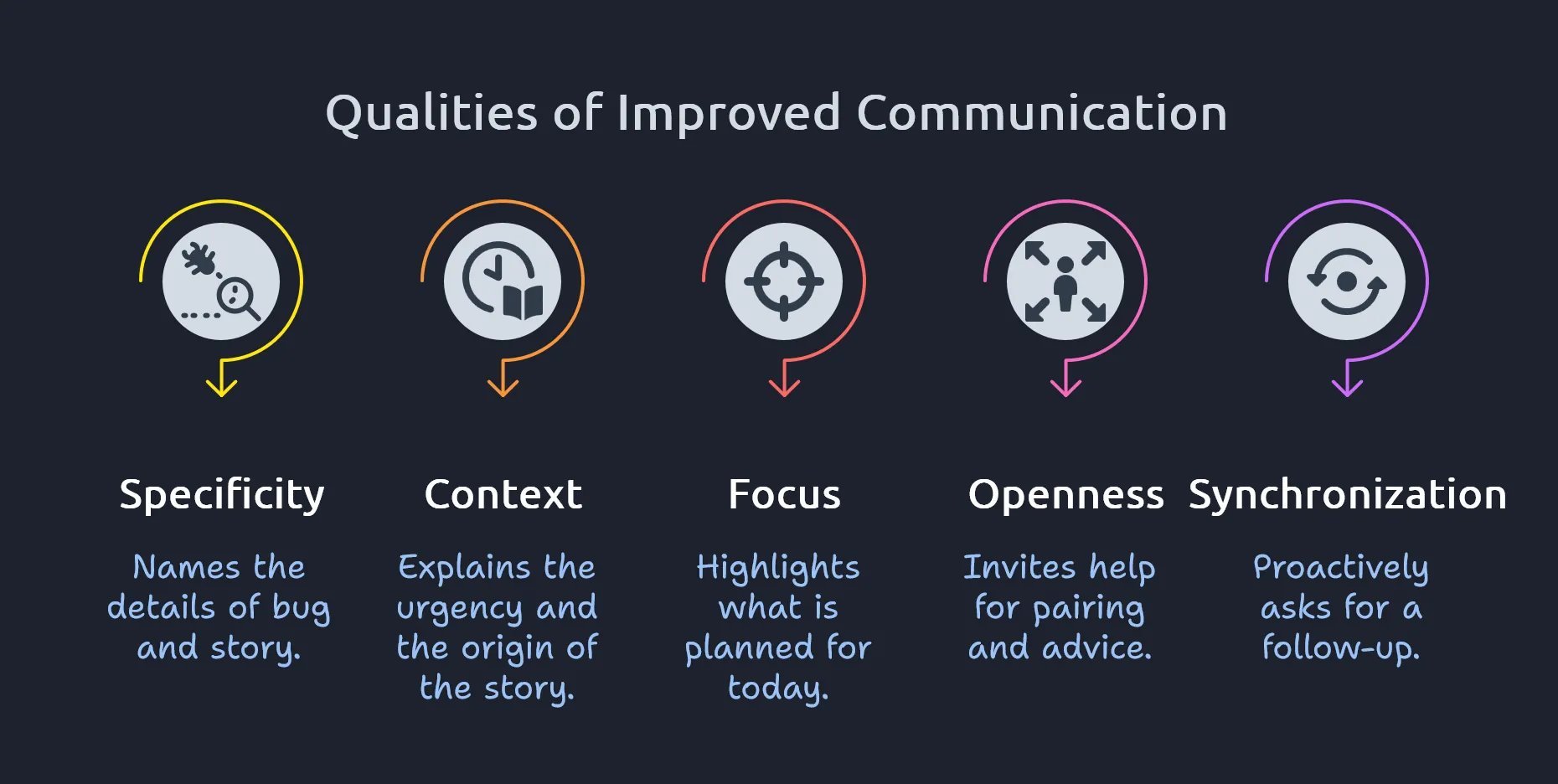
Structure: Each member shares:
- Today's key priorities
- Current blockers
- Requests/offers for help
Why it works: By shifting focus from yesterday's activities to today's objectives, teams create immediate actionability. Example:
"I'm wiring the play/pause API today but need help debugging video latency. Can someone pair after stand-up?"
2. PR Triage: Preventing Bottlenecks
Process: Visually scan all open pull requests:
- Identify urgent reviews
- Surface complex PRs needing extra eyes
- Assign ownership for follow-up
Key benefit: Reduces merge delays by making review bottlenecks visible to the entire team during the meeting.
3. System Health Check: Shared Ownership
Execution: Rotating "bugmaster" shares:
- Critical production issues
- Emerging error trends
- Customer-impacting anomalies
"Shared awareness keeps quality top of mind for everyone—not just QA."
The Secret Weapon: The Rotating Facilitator
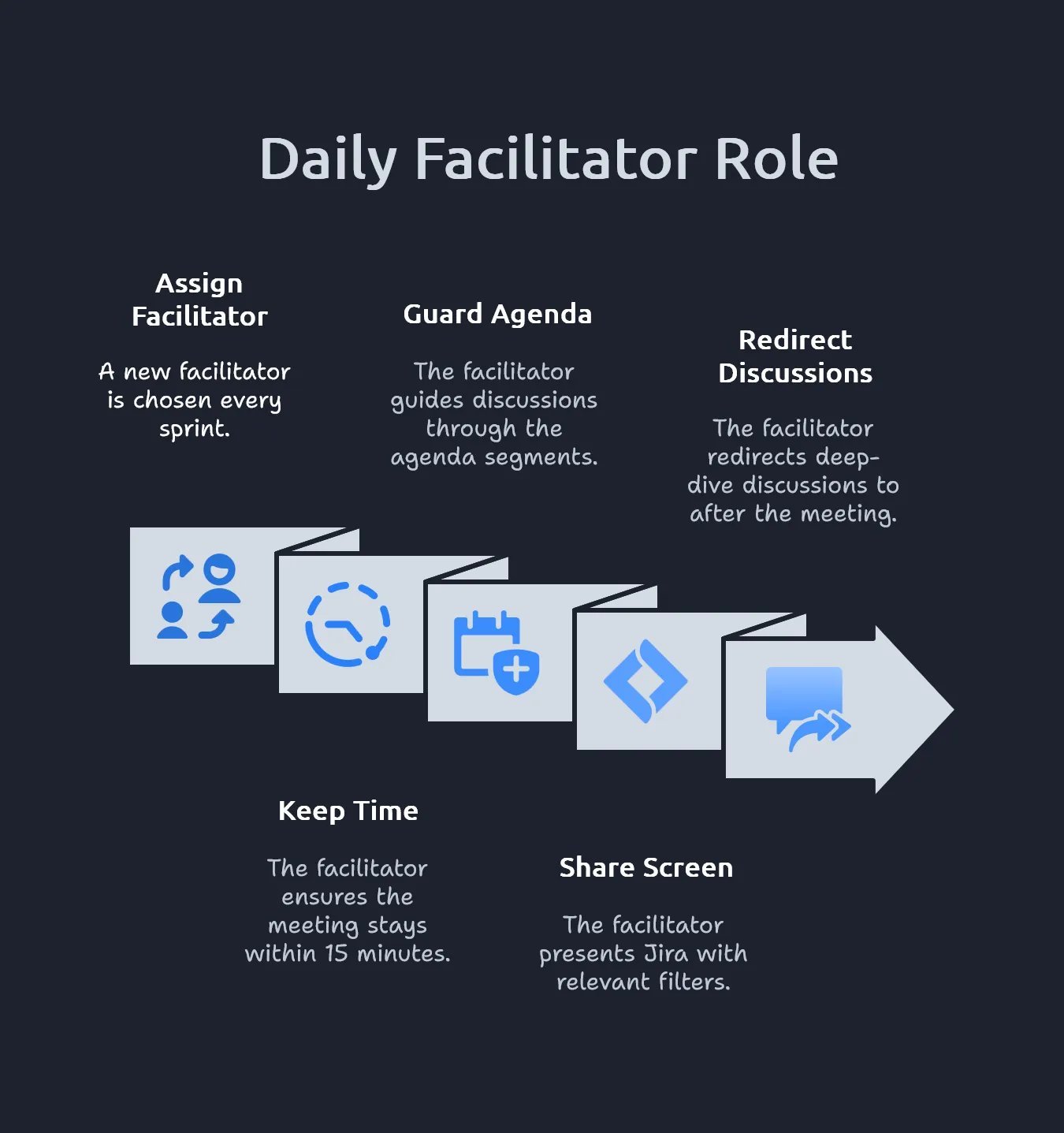
A critical innovation: Rotate facilitation duties every sprint. This role:
- Enforces time discipline (strict 15-minute limit)
- Manages shared screens (Jira filters, PR dashboards)
- Redirects deep-dive discussions to follow-up sessions
- Maintains focus on the three-part agenda
"When database indexing debates erupt, we pause and say: 'Let's take this offline with interested folks.'"
Measurable Impact Across the Stack
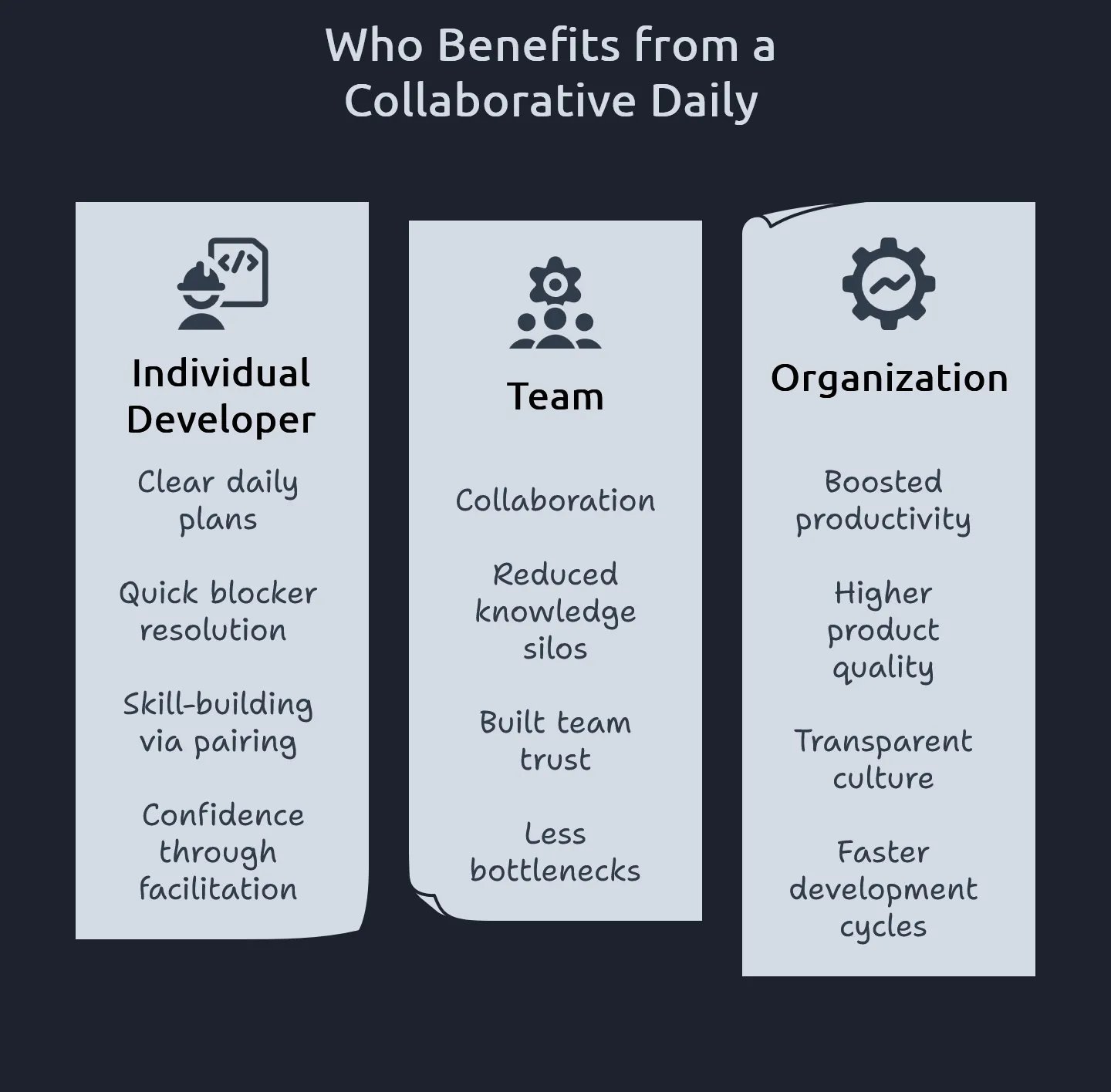
| Level | Benefits |
|---|---|
| Developer | Clear daily focus; faster blocker resolution; growth through pairing |
| Team | Broken silos; collective ownership; reduced bottlenecks |
| Organization | 15%+ productivity gain; faster cycle times; improved quality |
Making It Stick: Tactical Tips
- Prep work: Require pre-meeting ticket reviews
- Tool hygiene: Display filtered Jira views during updates
- Async fallback: For remote teams, use shared notes with timestamped comments
- Blockers first: Train teams to lead with impediments
- No-solution rule: Discuss problems in stand-up, solutions afterward
The New Stand-up Ethos
The most effective stand-ups transform reporting chains into problem-solving networks. By focusing on forward momentum, shared tools, and rotating ownership, teams convert 15 daily minutes into compounded productivity gains. As the data shows, when developers stop justifying yesterday and start orchestrating today, velocity follows.
Comments
Please log in or register to join the discussion