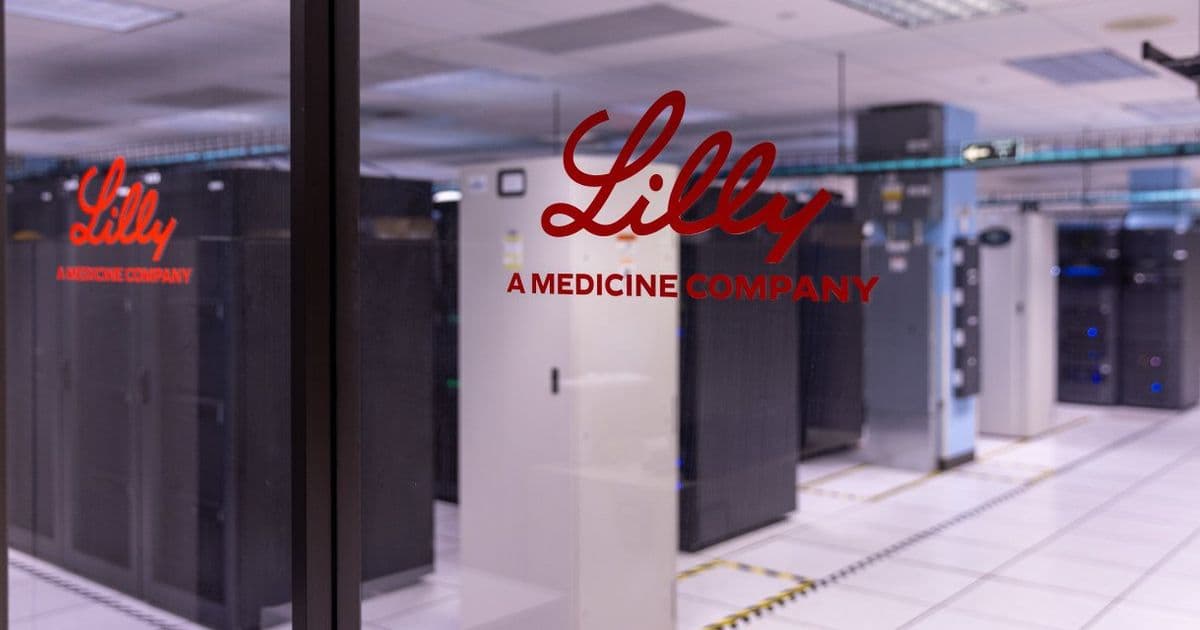
While AI promises revolutionary drug discovery, the pharmaceutical industry is experiencing more immediate and measurable benefits from back-office automation and manufacturing optimization, with companies like Eli Lilly and Roche investing heavily in supercomputers to address the industry's 90% drug failure rate.
The pharmaceutical industry's embrace of artificial intelligence has largely focused on the promise of accelerating drug discovery and development. However, a closer examination reveals that the most substantial gains from AI implementation are coming from operational efficiencies rather than scientific breakthroughs. Drug companies are finding that AI delivers greater ROI when applied to back-office streamlining, manufacturing optimization, and clinical trial management rather than directly to the complex challenge of novel drug discovery.
The Operational Revolution
Pharmaceutical giants like Eli Lilly and Roche are racing to build supercomputing infrastructure not primarily for drug discovery, but for optimizing their existing operations. These companies are deploying AI systems to tackle the industry's notorious 90% failure rate in drug development by improving efficiency at every stage of the process. The financial incentives are clear: reducing operational waste and accelerating time-to-market for drugs that have already shown promise.
"We're seeing AI create value in areas where the data is more structured and the problems are better defined," explains Dr. Sarah Chen, former head of digital transformation at a major pharmaceutical firm. "Clinical trial optimization, supply chain management, and regulatory compliance are yielding faster, more measurable results than the more nebulous promise of AI-driven drug discovery."
Measurable Gains in Manufacturing
One of the most significant areas of AI impact is in pharmaceutical manufacturing. Companies are implementing AI-driven quality control systems that can detect anomalies in real-time, reducing waste and ensuring compliance with stringent regulatory standards. These systems analyze sensor data from production lines to predict equipment failures before they occur, minimizing costly downtime.
"The ROI on manufacturing AI is compelling," notes James Wilson, supply chain director at a mid-sized biotech firm. "We've seen a 23% reduction in batch failures and a 15% increase in production efficiency since implementing our AI monitoring system. These are numbers that executives understand and appreciate."
Clinical Trial Optimization
AI is also transforming clinical trial management, where it helps in patient recruitment, site selection, and data monitoring. Machine learning algorithms can identify suitable trial participants from electronic health records with greater accuracy than traditional methods, while predictive models help forecast trial completion timelines more accurately.
"Patient recruitment remains one of the biggest bottlenecks in drug development," says Dr. Michael Torres, clinical research director. "AI has helped us reduce recruitment times by an average of 40% across our trials, which translates to millions in savings and gets treatments to patients faster."
Back-Office Streamlining
Behind the scenes, AI is automating routine tasks in finance, HR, and regulatory affairs. Natural language processing systems are extracting key information from scientific literature and regulatory documents, while robotic process automation is handling invoice processing and compliance reporting.
"The back-office applications of AI are often overlooked, but they're delivering consistent value," observes Lisa Park, a pharmaceutical industry consultant. "These systems don't promise cures for diseases, but they do free up valuable human capital to focus on higher-value activities."
Counter-Perspectives and Limitations
Despite these operational successes, some experts caution against overstating AI's current capabilities in pharmaceutical settings. The complexity of biological systems and the need for interpretability in drug development pose significant challenges that current AI technologies struggle to overcome.
"There's a fundamental mismatch between what AI does well—pattern recognition in large datasets—and what drug discovery requires—deep mechanistic understanding," argues Dr. Robert Kim, a pharmacologist with 20 years of industry experience. "AI can identify correlations, but understanding causation in biological systems remains a human endeavor."
Others point out that the pharmaceutical industry's regulatory environment creates unique barriers to AI adoption. Unlike other sectors, pharmaceutical companies must maintain complete transparency and explainability in their decision-making processes, which conflicts with the "black box" nature of many advanced AI models.
The Future Trajectory
Looking ahead, the pharmaceutical industry appears to be taking a pragmatic approach to AI adoption. Rather than pursuing revolutionary breakthroughs, companies are focusing on incremental improvements across their operations. The consensus among industry leaders is that AI will continue to deliver value through operational optimization for the foreseeable future, with drug discovery applications remaining longer-term goals.
"The most successful pharmaceutical AI initiatives are those that solve specific, well-defined problems," concludes Dr. Elena Rodriguez, head of digital innovation at a major drug manufacturer. "We're not replacing scientists with algorithms; we're giving them better tools to make faster, more informed decisions. That's where the real value lies."
As the industry continues to evolve, the distinction between AI's potential and its practical applications becomes increasingly clear. While the promise of AI-accelerated drug discovery captures headlines, the quiet revolution in pharmaceutical operations may ultimately prove to be the more significant transformation.
Comments
Please log in or register to join the discussion