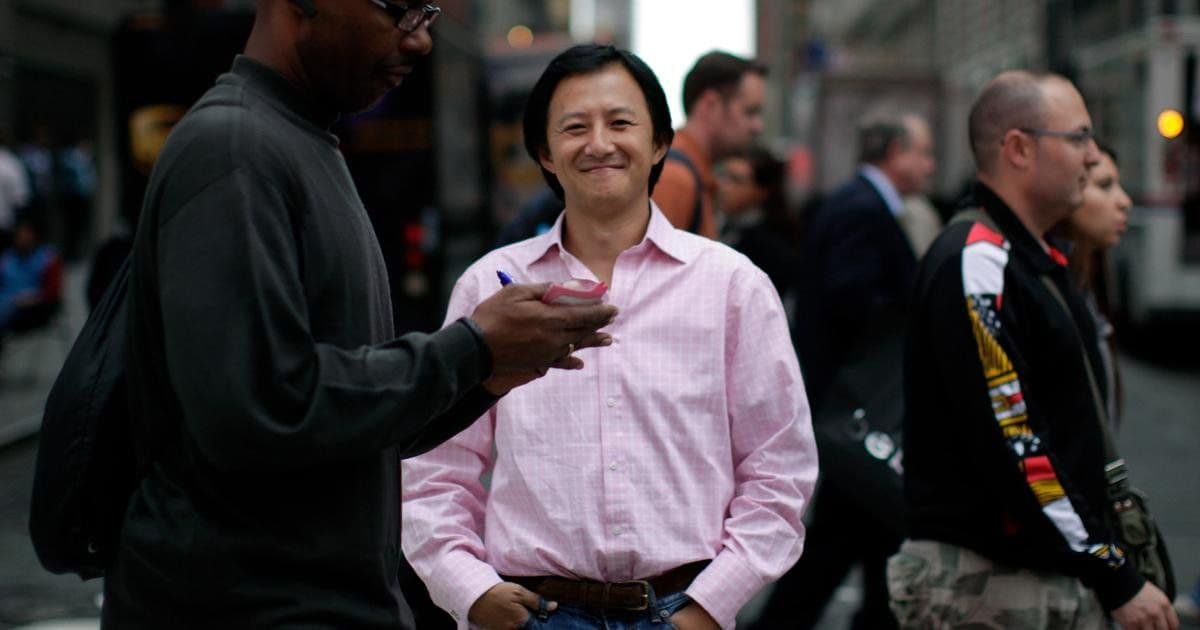
Tech entrepreneur Bill Nguyen is radically outsourcing parts of his daily life to AI assistants in an attempt to create a functional virtual body double, raising questions about the current capabilities and limitations of AI in personal and professional contexts.
In a bold experiment pushing the boundaries of human-AI collaboration, tech entrepreneur Bill Nguyen is attempting to create a functional virtual body double by outsourcing significant portions of his life to AI assistants. Nguyen, known for founding successful tech companies, recently detailed his approach in an interview with Semafor, revealing how he's leveraging advanced AI systems to manage everything from scheduling to communications in an effort to clone his digital presence.
The core of Nguyen's experiment involves using multiple specialized AI agents working in concert. He employs a combination of large language models for content generation, voice cloning systems for communications, and specialized reasoning models for complex decision-making. "I'm treating my AI assistants as an extension of myself," Nguyen explained, "but with specific capabilities that augment rather than replace human judgment."
What's particularly interesting about Nguyen's approach is the practical implementation. He's using a high-end desktop computer system to run multiple AI models simultaneously, allowing his virtual assistant to handle routine tasks while maintaining his personal brand and communication style. The system includes voice cloning technology that can mimic Nguyen's speaking patterns, enabling the AI to attend meetings and make phone calls in his voice.
"The technology behind voice cloning has advanced significantly in the past two years," notes Dr. Elena Rodriguez, a voice synthesis researcher at Stanford. "Systems like ElevenLabs can now create remarkably accurate vocal clones with just minutes of sample audio. However, maintaining consistent personality and contextual awareness across different situations remains a significant challenge."
Nguyen's experiment highlights both the capabilities and limitations of current AI technology. On one hand, his AI assistant can manage his calendar, draft emails, and even participate in business meetings. On the other hand, complex decision-making, creative problem-solving, and nuanced social interactions still require human intervention.
"What Nguyen is doing isn't entirely new," explains Dr. Marcus Chen, AI ethics researcher at MIT. "We've seen similar experiments from entrepreneurs and researchers for years. What's different is the sophistication of the tools now available. However, there are serious ethical and practical concerns about creating virtual representations of individuals without proper disclosure and consent."
The practical applications of such technology extend beyond personal assistants. Companies like Collov Labs are developing similar systems that can analyze visual input and take real-world actions, potentially revolutionizing fields from customer service to healthcare. However, these systems currently operate within narrow domains and struggle with unexpected situations.
Nguen acknowledges the limitations of his current setup. "My AI double can handle about 70% of my routine tasks," he admits, "but the remaining 30%—particularly creative work and complex negotiations—still require my direct involvement. The technology isn't yet sophisticated enough to fully replicate human intuition and experience."
The broader implications of such experiments raise important questions about the future of work and human identity. As AI systems become more capable of mimicking human behavior, the line between human and digital representation becomes increasingly blurred. This has significant implications for authentication, privacy, and the very nature of personal relationships.
From a technical perspective, Nguyen's experiment relies on several key components:
- Large language models for content generation and understanding
- Voice synthesis systems for communication
- Specialized reasoning models for decision-making
- Integration frameworks to coordinate multiple AI systems
The performance of these systems varies across different tasks. While they excel at information processing and routine communications, they struggle with genuine creativity, emotional intelligence, and contextual understanding that humans take for granted.
"The benchmark results for current AI systems show significant progress in specific domains," notes Dr. Sarah Jenkins, AI benchmarking specialist. "However, we're still far from creating systems that can truly understand nuance, context, and human emotion. The Turing test remains largely unpassed in meaningful ways."
Nguyen's experiment serves as both a demonstration of current AI capabilities and a cautionary tale about overestimating their abilities. While his virtual assistant can handle many routine tasks, the complexity of human life and work continues to present significant challenges for even the most advanced AI systems.
As the field continues to evolve, Nguyen plans to refine his approach, incorporating more sophisticated models and better integration techniques. "This is just the beginning," he suggests. "In five years, the capabilities of AI assistants will be dramatically different, and experiments like this will seem primitive."
For now, however, Nguyen's experiment stands as a fascinating case study in the current state of AI technology and its potential to augment human capabilities rather than replace them entirely. The virtual body double remains an aspirational concept rather than a fully realized reality, highlighting both the remarkable progress and significant limitations of current AI systems.
Comments
Please log in or register to join the discussion