A significant week in mobile tech brings foldable innovation, camera advancements, and competitive pricing across multiple brands.
Week 17 in mobile tech delivered several significant announcements that are shaping the current market landscape. Huawei unveiled its reimagined Pura series, featuring a foldable that many observers believe directly targets Apple's anticipated iPhone Fold. Meanwhile, Motorola entered the premium mid-range with its Edge 70 Pro, and Honor expanded its global portfolio with new models that draw design inspiration from Apple's latest Pro series.
Huawei's Pura Series Redesign
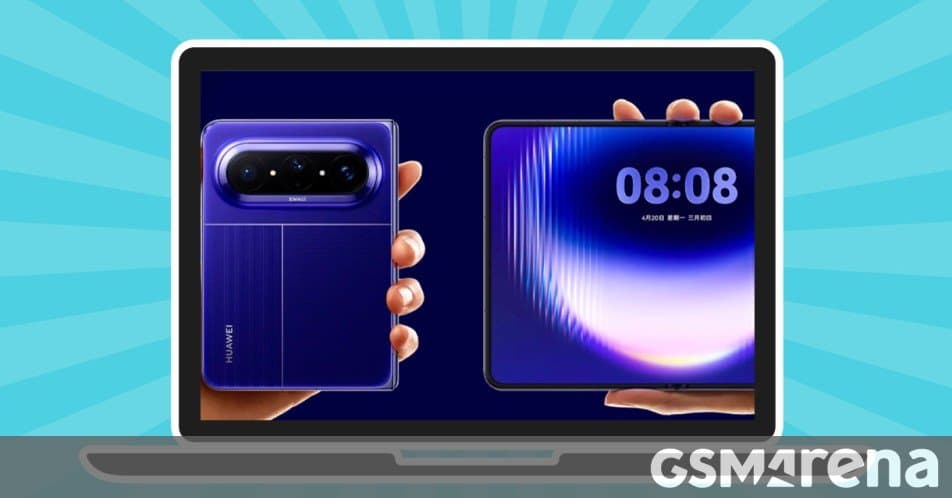
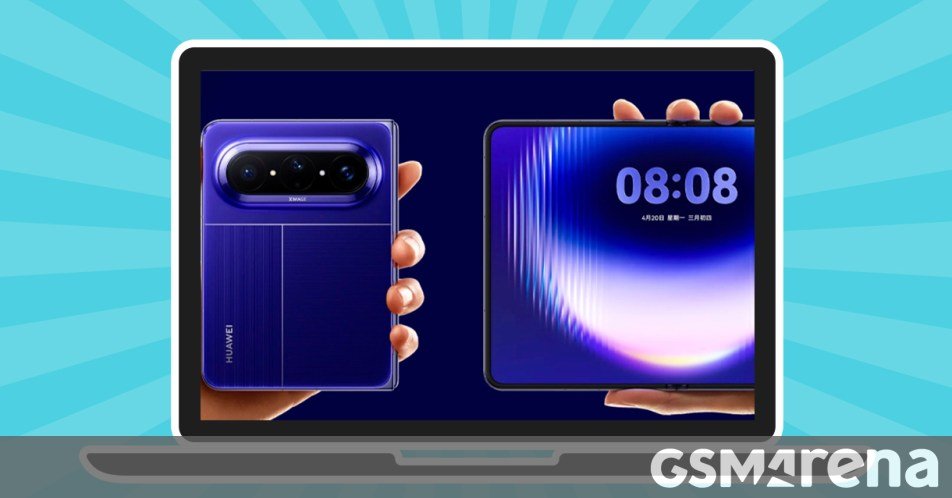
Perhaps the most talked-about announcement was the Huawei Pura X Max foldable smartphone. This device represents a significant departure from previous foldable designs with its shorter and wider form factor, positioning it as a direct competitor to the anticipated iPhone Fold. The Pura X Max features a 5.4-inch cover display that unfolds to reveal a 7.7-inch internal screen, both with relatively square proportions that many users prefer for productivity and media consumption.
The internal display supports Huawei's M-Pen 3 Mini stylus, which fits in a special case designed for the phone. This stylus support enhances the device's productivity capabilities, making it a viable option for note-taking and creative work. Battery capacity stands at 5,300mAh, supported by 66W wired charging and 50W wireless charging, ensuring users can quickly power up the device.
Under the hood, the Pura X Max is powered by the Kirin 9030 Pro SoC, continuing Huawei's chip development despite external challenges. The device represents a notable evolution from its predecessor, increasing the internal display size from 6.3 inches to 7.7 inches while reducing thickness from 15.1mm to 11.2mm—a significant improvement in portability.
Joining the X Max in Huawei's refreshed lineup are the Pura 90 Pro Max and Pura 90 Pro, both featuring 120Hz LTPO OLED displays (6.9-inch for the Pro Max, 6.6-inch for the Pro). These models boast triple rear camera systems and substantial batteries—6,000mAh for both the Pro and Pro Max models. The standard Pura 90 rounds out the series with a 6.8-inch display and a larger 6,500mAh battery.
The Pura 90 Pro Max stands out as Huawei's first phone to feature a LOFIC (Low-Noise Full-Well Capacity) main camera sensor, which should improve low-light performance and dynamic range. Additionally, the Pro Max includes a 200MP 4x telephoto camera, bringing professional-grade zoom capabilities to the series.
Motorola's Edge 70 Pro Enters the Mid-Range Arena
Motorola made waves with its Edge 70 Pro, positioning it as a premium mid-range device with flagship-level features. The phone is powered by the Dimensity 8500 Extreme SoC, MediaTek's latest offering that provides competitive performance at a more accessible price point.
Battery capacity is a standout feature at 6,500mAh, addressing one of the most common consumer complaints about smartphone longevity. The camera system consists of three 50MP sensors—a wide-angle main unit, an ultrawide lens, and a front-facing selfie camera. This approach represents Motorola's strategy to provide consistent camera quality across different shooting scenarios.
Priced at INR 38,999 (approximately $415) for the 8GB/256GB variant, the Edge 70 Pro targets consumers who desire premium features without flagship pricing. This competitive positioning could disrupt the mid-range market, particularly in regions like India where Motorola has a strong presence.
Honor's Global Expansion with iPhone-Inspired Design
Honor continued its international expansion with the announcement of the Honor 600 and 600 Pro models. These devices feature a distinctive design that takes clear inspiration from the iPhone 17 Pro series, evidenced by the oversized camera island and vibrant orange color option. However, beyond the aesthetic similarities, Honor's new phones offer substantial specifications that justify their place in the market.
Both models feature a 6.57-inch display and impressive 7,000mAh batteries (6,400mAh in European variants), with top-tier IP69K ingress protection rating—significantly higher than the typical IP68 rating found in most smartphones. The camera system centers around a 200MP main sensor, ensuring high-quality photography across various conditions.
The key differences between the standard 600 and Pro models lie in the camera and chipset. The vanilla version lacks a dedicated zoom lens and is equipped with a Snapdragon 7 Gen 4 SoC, while the Pro includes a 50MP 3.5x zoom camera and the more powerful Snapdragon 8 Elite processor. Pricing starts from MYR 2,599 (approximately $657/€560 converted) for the 600 and MYR 3,099 (approximately $784/€667 converted) for the Pro, positioning them as competitive options in the upper mid-range segment.
Oppo's Camera-Focused Flagship
Oppo rounded out the week's announcements with the Find X9 Ultra, a camera-centric flagship that pushes the boundaries of mobile photography. The device features dual 200MP cameras—one serving as the 23mm main camera and another as the 70mm telephoto lens—complemented by two 50MP shooters for the 14mm ultrawide and 230mm 10x optical zoom capabilities.
Powering the Ultra is a substantial 7,050mAh battery supported by 100W wired charging and 50W wireless charging, addressing both capacity and speed concerns. The device is set to go global with a price tag of €1,699 (approximately $1,999) for the 12GB/512GB variant, positioning it as a premium offering in the competitive flagship market.
Market Implications and Ecosystem Considerations
These announcements reflect several interesting trends in the mobile industry. First, the continued refinement of foldable designs suggests that this form factor is moving beyond early adoption into mainstream consideration. Huawei's Pura X Max, with its more compact dimensions, indicates manufacturers are learning from early foldable limitations and optimizing for portability.
The camera capabilities across these new devices also reveal an industry-wide focus on computational photography and versatile shooting systems. From Huawei's LOFIC sensor to Oppo's dual 200MP setup, manufacturers are investing heavily in imaging technology as a key differentiator.
Pricing strategies are particularly noteworthy, with Motorola's Edge 70 Pro offering flagship-level features at mid-range prices, while Honor's global expansion suggests increasing confidence in competing directly with established brands. These developments could intensify competition in the mid-range segment, potentially forcing other manufacturers to adjust their positioning.
For consumers, these announcements bring more choices across various price points and form factors. The ecosystem lock-in considerations remain relevant, with Huawei continuing to develop its own chips and software solutions despite external challenges, while Motorola and Honor align more closely with Qualcomm's Snapdragon ecosystem.
As we move further into 2026, these devices will serve as important indicators of market direction and consumer preferences. The balance between innovation, practicality, and value will continue to shape the mobile landscape, with manufacturers increasingly targeting specific user needs rather than attempting to create universally appealing devices.

Comments
Please log in or register to join the discussion