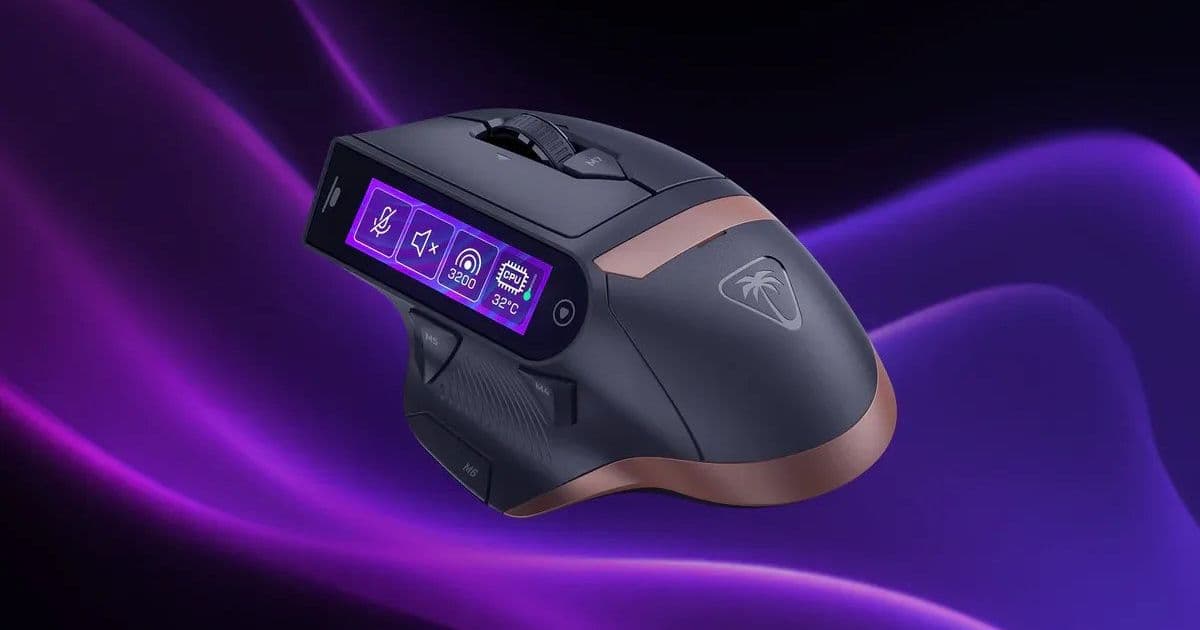
Turtle Beach's new MC7 gaming mouse represents a convergence of multiple advanced semiconductor technologies, including touch controllers, power management ICs, and wireless communication chips. This analysis examines the chip architecture powering the peripheral's standout features and assesses the implications for the semiconductor supply chain in the gaming peripheral market.
Turtle Beach has recently entered the high-end gaming peripheral market with its Command Series, headlined by the MC7 mouse featuring a 2.25-inch LCD touchscreen and hotswap battery system. Beyond the consumer-facing features lies a sophisticated semiconductor architecture that warrants closer examination from an industry perspective.
Touchscreen Controller and Display Architecture
The centerpiece of the MC7 is its 2.25-inch LCD touchscreen, a component that requires a dedicated display driver IC (DDI) and touch controller. For a display of this size, Turtle Beach likely utilizes a mid-range DDI from manufacturers like Novatek or Richtek, capable of handling resolutions up to 480x240 pixels with 16-bit color depth. These chips typically require 20-50mA of current during operation, contributing to the power budget that determines the 15-hour battery life specification.
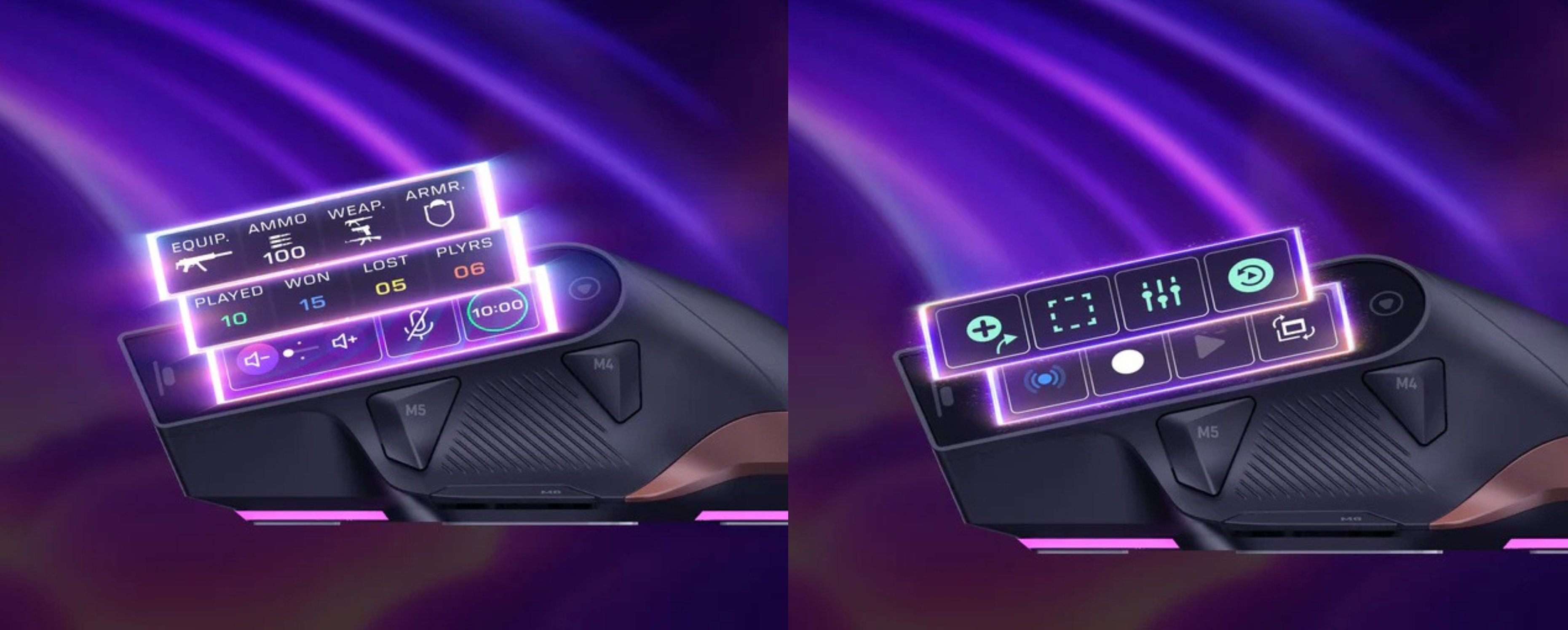
The touch controller, responsible for translating capacitive input data to actionable commands, likely employs a proprietary firmware stack optimized for gaming macros and telemetry functions. This component must process touch inputs with latency under 20ms to maintain responsiveness during gaming sessions. The integration with OBS and Streamlabs suggests a specialized API implementation that bypasses standard operating system input pathways for direct application control.
Hotswap Battery System and Power Management
The MC7's dual 1,000mAh hotswap battery system represents an interesting engineering challenge in power management. The implementation requires a power management IC (PMIC) capable of seamless switching between battery sources while maintaining stable power delivery to the system. Texas Instruments and Analog Devices offer PMICs with sub-microsecond switchover times that could meet these requirements.
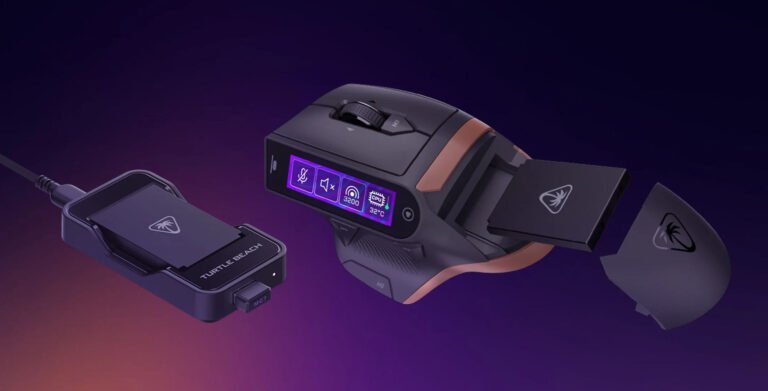
The charging base likely employs a dedicated charging controller supporting USB Power Delivery (PD) 2.0 or 3.0 protocols, enabling faster charging times. With 1,000mAh cells, we can estimate charging times of approximately 1.5-2 hours using a 5V/2A input, though Turtle Beach hasn't specified exact charging durations in their materials.
Wireless Communication and Polling Rate Technology
The MC7's tri-mode connectivity with 8K polling rate on its 2.4GHz wireless connection requires a sophisticated RF transceiver chip. This component must maintain stable communication while minimizing power consumption. Nordic Semiconductor nRF52 series or Qualcomm QCC series chips are commonly used in high-end peripherals for their balance of performance and power efficiency.
Achieving true 8K polling (8,000Hz) requires the RF chip to process and transmit data every 125 microseconds, a significant technical challenge. This is approximately 4× faster than the standard 1,000Hz polling rate found in most gaming mice, requiring more robust error correction and interference mitigation techniques.
Optical Sensor and Switch Architecture
The "Owl-Eye" 30,000 DPI optical sensor likely originates from PixArt, a dominant supplier in the gaming sensor market. This sensor combines a CMOS image sensor with dedicated processing circuitry to track movement at high resolution. The 30,000 DPI specification represents the maximum sensitivity setting, with actual in-game performance depending on the chosen sensitivity profile.
The optical switches on both left and right clicks employ infrared beam interruption technology rather than traditional mechanical contacts. This implementation requires IR LEDs and photodetectors paired with signal processing circuitry to register clicks. While this technology offers advantages in terms of longevity and tactile consistency, it typically requires more complex PCB layout and higher power consumption than mechanical alternatives.
System Architecture and Component Integration
The MC7's system architecture likely employs a multi-chip design with a main microcontroller handling overall coordination, separate chips for each major subsystem (display, touch, wireless, sensors), and a power management unit overseeing energy distribution. This distributed approach allows for specialized optimization of each function while maintaining system responsiveness.
The PCB layout must carefully manage signal integrity between components, particularly between the high-frequency wireless module and the sensitive optical sensor. This requires strategic ground plane partitioning and impedance-controlled routing to prevent electromagnetic interference that could degrade sensor performance or wireless reliability.
Manufacturing and Supply Chain Implications
The MC7's component requirements place it in the premium segment of the gaming peripheral market, with a Bill of Materials (BOM) cost estimated at $60-80 for the core semiconductor components. This represents approximately 40-50% of the $160 retail price, leaving room for mechanical components, assembly, and margin.
The touch display subsystem alone likely accounts for $15-20 of the BOM cost, making it one of the most expensive components in the design. This reflects the higher costs of smaller production runs for touch-enabled displays compared to standard peripheral displays.
Market Context and Competitive Positioning
Turtle Beach's entry into the high-end gaming peripheral market comes at a time when semiconductor supply chains are stabilizing post-pandemic constraints. The company's ability to source these specialized components suggests improved supply chain access compared to earlier periods of global chip shortages.
Compared to similar products from Razer and Logitech, the MC7's touchscreen implementation represents a different approach to peripheral customization. While competitors focus more on software customization, Turtle Beach has invested heavily in hardware-based customization through the touchscreen interface, requiring a more complex semiconductor architecture.
The inclusion of hotswap batteries addresses a key pain point in wireless gaming peripherals: battery anxiety. This feature requires additional semiconductor components but enhances the product's value proposition for extended gaming sessions.
Performance Analysis and Power Efficiency
The MC7's power consumption profile reveals an interesting engineering trade-off. With the touchscreen disabled, the mouse achieves 15 hours of battery life, suggesting a base power draw of approximately 67mA (1,000mAh ÷ 15h). With the touchscreen active, battery life would likely drop to 6-8 hours based on similar products in the market, indicating the touchscreen adds 40-60mA to the power budget.
The 8K polling rate requires approximately 10-15mA of additional power compared to standard 1K polling, representing a significant but necessary investment for the target gaming audience. This higher polling rate reduces input latency by approximately 87.5% (from 1ms to 0.125ms), a critical factor in competitive gaming scenarios.
Future Implications for Peripheral Semiconductors
The MC7's design points toward several emerging trends in gaming peripheral semiconductors:
- Increasing integration of display interfaces for on-device customization
- More sophisticated power management systems supporting hotswap capabilities
- Higher polling rates becoming standard in premium products
- Greater emphasis on haptic feedback requiring dedicated driver ICs
- Enhanced telemetry capabilities requiring sensor fusion from multiple data sources
As gaming continues to blur the lines between entertainment and professional competition, the semiconductor architecture in peripherals will become increasingly sophisticated. The MC7 represents an early example of this trend, with its touchscreen interface and advanced wireless capabilities setting a new standard for gaming peripheral technology.
Comments
Please log in or register to join the discussion