Domain investor Mike Carson acquired Friendster.com and its trademarks for $30k, then built a unique social network where users must physically tap phones to connect. The platform aims to recreate the positive early social networking experience while encouraging real-world interactions.
Reviving Friendster: The $30k Social Network Built on Physical Connections
In April 2026, Mike Carson became the proud owner of Friendster.com, the original social network that had been dormant since 2015. What makes this acquisition particularly interesting isn't just Carson's $30k investment (in Bitcoin plus a valuable domain), but his ambitious plan to rebuild Friendster around a radical concept: physical connections.
The Acquisition Story
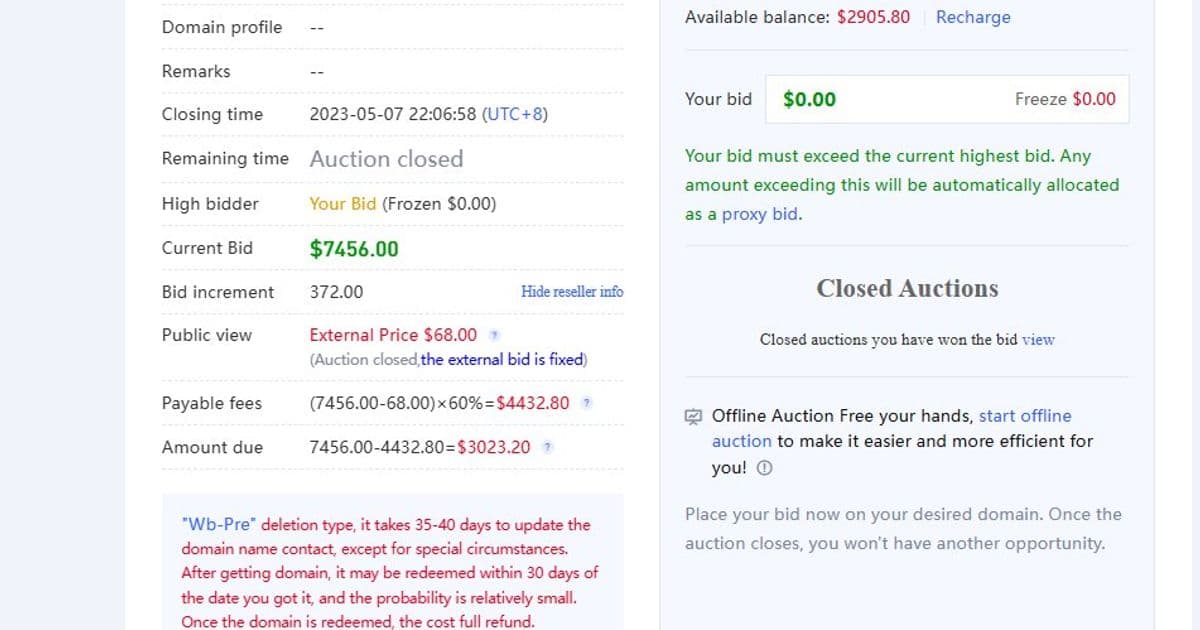
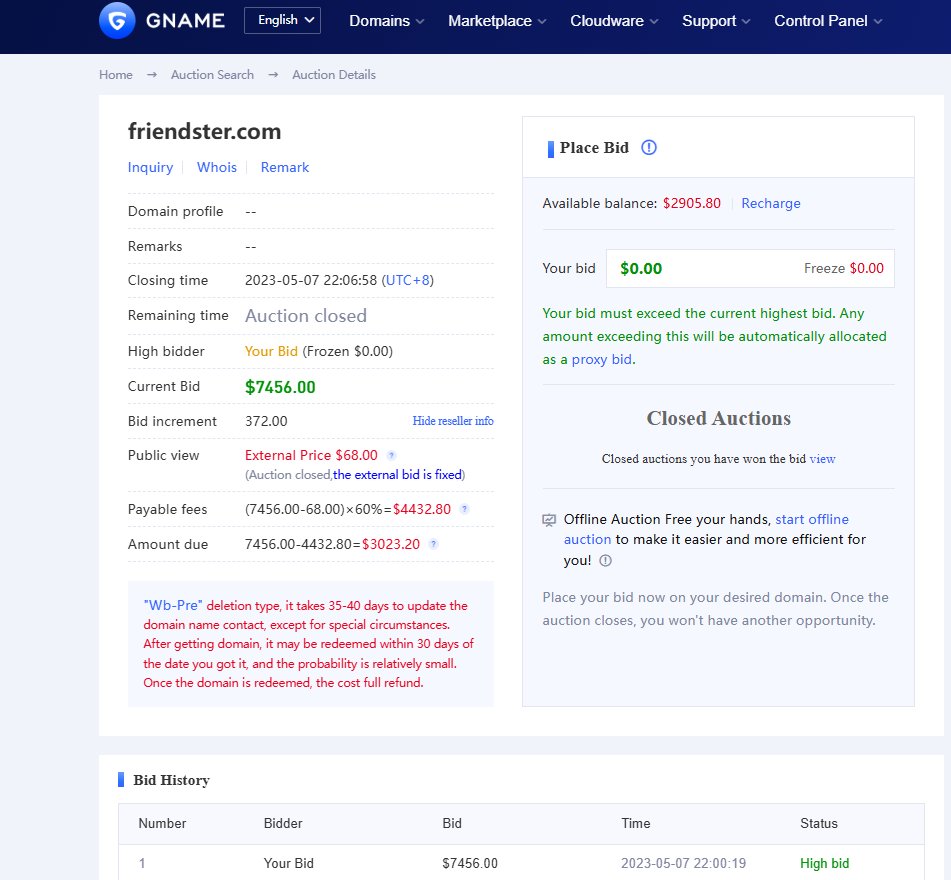
The journey began in October 2023 when Carson noticed friendster.com was resolving again, though displaying popup ads. Through WHOIS information, he discovered the domain was owned by a customer of park.io, a domain parking service Carson had founded in 2014. After reaching out, Carson learned the owner had acquired the domain at gname.com, a Chinese/Asian registrar specializing in expired domain auctions, for just $7,456.
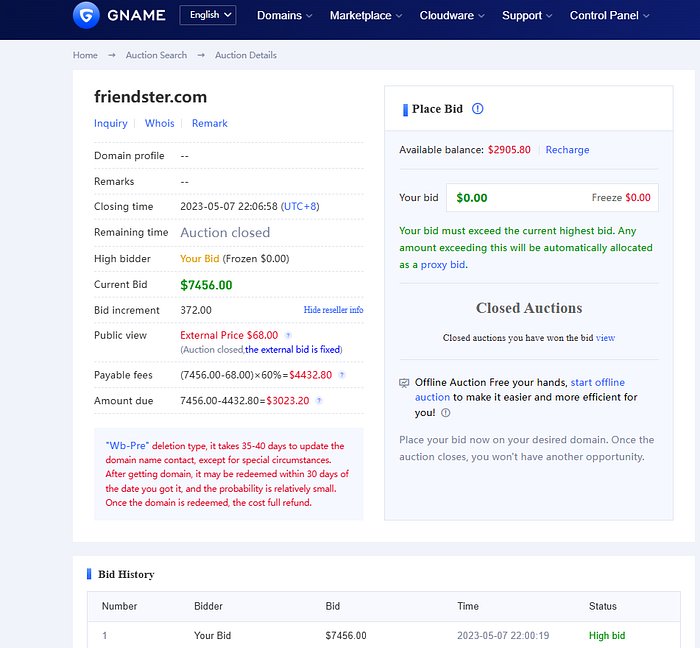
"I'm in the domain name business and I check domain name auctions almost daily, but I still didn't see this one," Carson wrote. "You'd have to be specifically watching the domain friendster.com at the right time to find and participate in the auction, or you'd have to actively watch gname.com daily to see this auction."
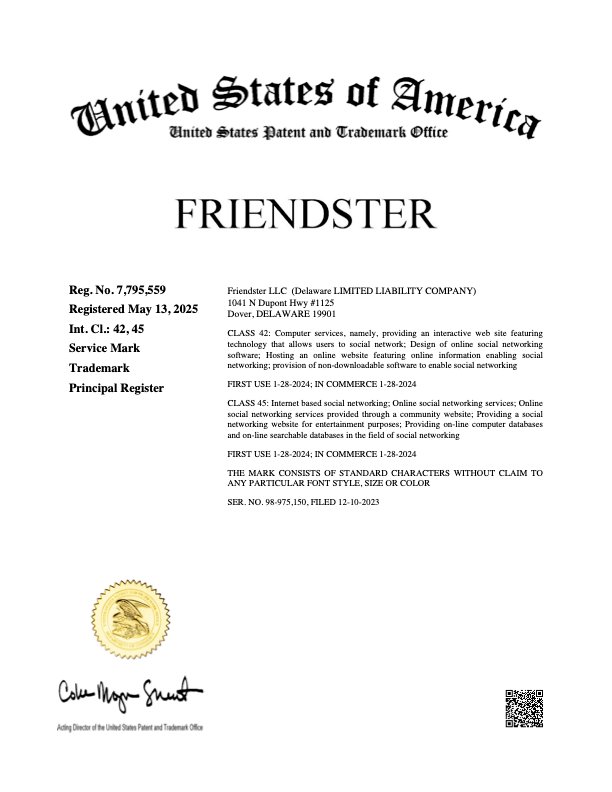
After negotiations, Carson secured the domain for $20,000 in Bitcoin plus a domain generating approximately $9,000 annually in ad revenue. The owner also mentioned that Friendster's trademarks were expiring, prompting Carson to initiate a trademark acquisition process that concluded successfully on May 13, 2025.
Building a Different Kind of Social Network
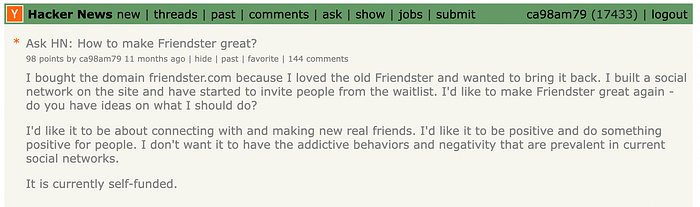
Carson's vision for Friendster differs significantly from modern social platforms. "Today I feel that social networks foster a lot of negativity, but I remembered Friendster as being a really positive and enjoyable experience," he explained. His goal was to create something positive without the data collection, algorithms, and advertising that dominate today's social media landscape.
His initial attempt to build a web-based social network received lukewarm response from a waitlist. "Not selling data, no algorithms, ads, etc.. was nice but didn't seem enough of a draw," Carson noted. This led him to explore alternative approaches.
The Physical Connection Concept
After posting on Hacker News and receiving valuable feedback, Carson hit upon a unique idea: requiring users to physically tap their phones together to become friends.

"The idea that the only way to connect as friends on Friendster is by tapping phones was fun because it would promote people meeting in person," Carson wrote. "It would also verify that you are connecting to real people, and people that you actually want to connect with."
This concept materialized into an iOS app where users must physically tap devices to establish connections. Initially, Carson designed the app so that new users could only join by tapping with existing members, but this approach was rejected by Apple's App Store review team for violating Guideline 4.2 regarding minimum functionality.
After modifying the app to allow open signups while maintaining the physical connection requirement for becoming friends, Carson successfully navigated Apple's review process, which took one to two months. The Friendster app is now live in the Apple App Store.
Unique Features and Philosophy
Friendster's core features reinforce its emphasis on real-world connections:
Friends of Friends: Users can see their friends' connections and request to message them, potentially serving as a catalyst for in-person meetings.
Fading Connections: If two friends go a full year without tapping phones, their digital connection softens. This isn't punitive but rather "a gentle nudge that real friendships are kept alive in person, not online."
These features are built around Carson's fundamental belief that "real friendships happen when you actually meet in person."
Business Model and Vision
While Carson isn't currently focused on monetization, he acknowledges the need for sustainability. "I don't really care about making money from Friendster, but I'd like it to eventually pay for itself. I'll probably offer a paid plan for premium features down the road — but that's a problem for later."
His personal experiences with online connections shape his vision: "My wife and I met on OkCupid. I wouldn't have my kids without it. Websites like that genuinely change the course of people's lives — people meet, fall in love, build families. That's incredible to me. If Friendster helps even a few people find that kind of connection, it will have been worth it."
Market Positioning
In an era dominated by algorithm-driven, engagement-maximizing social platforms, Friendster's approach represents a deliberate counter-movement. By requiring physical proximity for connections, the platform inherently limits growth velocity but potentially increases connection quality.
The question remains whether such a model can scale meaningfully in today's digital-first world. Carson's experiment touches on deeper questions about how social networks might evolve to foster more authentic connections while maintaining the convenience that made social platforms popular in the first place.
As Friendster begins its new chapter, it offers an intriguing case study in digital nostalgia reimagined for contemporary concerns about online authenticity and real-world connection.
Comments
Please log in or register to join the discussion